
Safety Data Sheets / 3M™ Novec™ Contact Cleaner
Safety Data Sheet
3M™ Novec™ Contact Cleaner
1. Identification
Product Identifiers
- Product Name
- 3M Novec Contact Cleaner - DISCONTINUED
- Other Names
- N/A
- Product Number(s)
- M051
- CAS Number
- -
Recommended use of the chemical and restriction on use
Laboratory use.
Company Details
ProSciTech Pty Ltd
11 Carlton Street
KIRWAN QLD 4817
Australia
(07) 4773 9444
pst@proscitech.com
proscitech.com.au
11 Carlton Street
KIRWAN QLD 4817
Australia
(07) 4773 9444
pst@proscitech.com
proscitech.com.au
Emergency Contact Details
ProSciTech Pty Ltd
11 Carlton Street
KIRWAN QLD 4817
Australia
(07) 4773 9444
pst@proscitech.com
proscitech.com.au
11 Carlton Street
KIRWAN QLD 4817
Australia
(07) 4773 9444
pst@proscitech.com
proscitech.com.au
2. Hazards Identification
Classification of the substance or mixture
Gas Under Pressure: Liquefied gas.
Label Elements
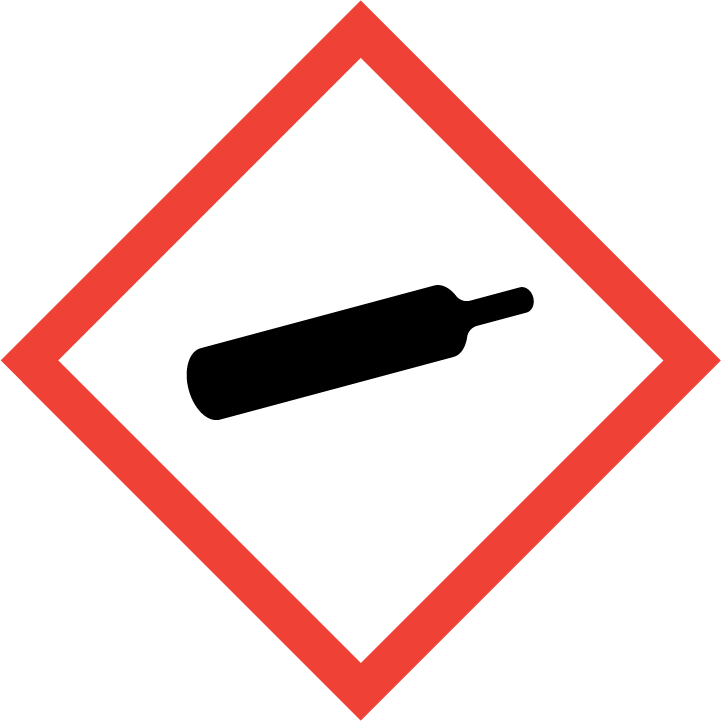
- Signal Words
- Warning
- Hazard Statement(s)
- Contains gas under pressure; may explode if heated.
- Precautionary Statement(s)
- Protect from sunlight. Store in a well-ventilated place. Dispose of contents/container in accordance with applicable regulations.
Primary route(s) of entry
Not available.
Human Health
- Inhalation
- Intentional misuse by deliberately concentrating and inhaling contents can be harmful or fatal.
- Ingestion
- Not available.
- Eyes
- Not available.
- Skin
- Not available.
Environment
Not available.
3. Composition / Information on Ingredients
| Name | CAS No. | Content (w/w) | Classification |
|---|---|---|---|
| Methyl Nonafluoroisobutyl Ether | 163702-08-7 | 50 - 70 | - |
| Methyl Nonafluorobutyl Ether | 163702-07-6 | 9.7-43.65 | - |
| Carbon Dioxide | 124-38-9 | 1 - 5 | - |
4. First Aid Measures
- Ingestion
- No need for first aid is anticipated.
- Inhalation
- No need for first aid is anticipated.
- Skin Contact
- No need for first aid is anticipated.
- Eye Contact
- No need for first aid is anticipated.
- Other Information
- See Section 11.1. Information on toxicological effects.
5. Firefighting Measures
Suitable extinguishing equipment
- Fire
- Material will not burn. Use a fire fighting agent suitable for the surrounding fire.
- HAZCHEM
- Closed containers exposed to heat from fire may build pressure and explode. Exposure to extreme heat can give rise to thermal decomposition.
Special protective equipment and precautions for fire fighters
When fire fighting conditions are severe and total thermal decomposition of the product is possible, wear full protective clothing, including helmet, self-contained, positive pressure or pressure demand breathing apparatus, bunker coat and pants,bands around arms, waist and legs, face mask, and protective covering for exposed areas of the head.
6. Accidental Release Measures
- Personal precautions, protective equipment and emergency procedures
- Evacuate area. Keep away from heat/sparks/open flames/hot surfaces. - No smoking. Ventilate the area with fresh air.
- For large spill, or spills in confined spaces, provide mechanical ventilation to disperse or exhaust vapours, in accordance with
- good industrial hygiene practice. Refer to other sections of this SDS for information regarding physical and health hazards,
- respiratory protection, ventilation, and personal protective equipment.
- Environmental precautions
- Avoid release to the environment.
- Methods and materials for containment and clean up
- If possible, seal leaking container. Place leaking containers in a well-ventilated area, preferably an operating exhaust hood, or if necessary outdoors on an impermeable surface until appropriate packaging for the leaking container or its contents is available. Contain spill. Working from around the edges of the spill inward, cover with bentonite, vermiculite, or commercially available inorganic absorbent material. Mix in sufficient absorbent until it appears dry. Remember, adding an absorbent material does not remove a physical, health, or environmental hazard. Collect as much of the spilled material as possible. Place in a closed container approved for transportation by appropriate authorities. Clean up residue with an appropriate solvent selected by a qualified and authorised person. Ventilate the area with fresh air. Read and follow safety precautions on the solvent label and SDS. Seal the container. Dispose of collected material as soon as possible in accordance with applicable local/regional/national/international regulations.
7. Handling and Storage
- Precautions for safe handling
- Do not breathe thermal decomposition products. Avoid skin contact with hot material. For industrial or professional use only. Store work clothes separately from other clothing, food and tobacco products. Do not pierce or burn, even after use. No smoking: Smoking while using this product can result in contamination of the tobacco and/or smoke and lead to the formation of hazardous decomposition products.
- Conditions for safe storage
- Protect from sunlight. Do not expose to temperatures exceeding 50C/122F. Protect from sunlight. Store in a well ventilated place. Store away from strong bases.
8. Exposure Controls / Personal Protection
Exposure Standards
| Material | TWA ppm | TWA mg/m³ | STEL ppm | STEL mg/m³ |
|---|---|---|---|---|
| Carbon Dioxide | 5000 ppm | 9000 | 30000 | - |
| Methyl Nonafluorobutyl Ether | 750 ppm | - | - | - |
| Methyl Nonafluoroisobutyl Ether | 750 ppm | - | - | - |
| - | - | - | - | - |
- Engineering controls
- Provide appropriate local exhaust when product is heated. For those situations where the material might be exposed to extreme overheating due to misuse or equipment failure, use with appropriate local exhaust ventilation sufficient to maintain levels of thermal decomposition products below their exposure guidelines. Do not remain in area where available oxygen may be reduced. Use general dilution ventilation and/or local exhaust ventilation to control airborne exposures to below relevant Exposure Limits and/or control dust/fume/gas/mist/vapours/spray. If ventilation is not adequate, use respiratory protection equipment.
Personal protective equipment
- Eye and face protection
- Select and use eye/face protection to prevent contact based on the results of an exposure assessment. The following eye/face protection(s) are recommended:
- Full Face Shield
- Indirect Vented Goggles
- Skin protection
- No chemical protective gloves are required.
- Body protection
- Wear heat insulating gloves when handling hot material to prevent thermal burns.
- Respiratory protection
- During heating:
- Use a positive pressure supplied-air respirator if there is a potential for over exposure from an uncontrolled release, exposure levels are not known, or under any other circumstances where air-purifying respirators may not provide adequate protection.
9. Physical and Chemical Properties
General information
- Appearance
- Liquid/Aerosol
- Odour
- Clear, Colourless, Liquid with Slight Ethereal Odor, Contents Under Pressure.
- pH
- Not Applicable.
- Vapour Pressure
- 200 mmHg [@ 25 °C] [Details:Internal Pressure for Aerosol Can
- is approximately 75 psig @25C].
- Density
- 1.52 g/ml
- Boiling Point
- 61 °C
- Melting Point
- Not Applicable.
- Solubility
- In Water < 12 ppm
- Specific Gravity of Density
- Not available.
- Flash Point
- No flash point.
- Flammable (Explosive) Limits
- No Data Available
- Ignition Temperature
- 405 °C [Details:per ASTM E659-84 method]
- Formula
- Not available.
10. Stability and Reactivity
- Reactivity
- This material may be reactive with certain agents under certain conditions - see the remaining headings in this section.
- Chemical stability
- No further relevant information available.
- Possibility of hazardous reactions
- Hazardous polymerisation will not occur.
- If the product is exposed to extreme condition of heat from misuse or equipment failure, toxic decomposition products that include hydrogen fluoride and perfluoroisobutylene can occur.
- Conditions to avoid
- Perfluoroisobutylene (PFIB) at Elevated Temperatures - extreme condition of heat.
- Incompatible materials
- Hazardous polymerisation will not occur
11. Toxicological Information
- Acute effects
- No further relevant information available.
- Eye contact
- Methyl Nonafluoroisobutyl Ether Rabbit No significant irritation
- Methyl Nonafluorobutyl Ether Rabbit No significant irritation
- Skin contact
- Name Species Value
- Methyl Nonafluoroisobutyl Ether Rabbit No significant irritation
- Methyl Nonafluorobutyl Ether Rabbit No significant irritation
- Ingestion
- No further relevant information available.
- Inhalation
- For the component/components, either no data are currently available or the data are not sufficient for classification.
- Toxicity and irritation
- Name Route Species Value
- Overall product Ingestion No data available; calculated ATE >5,000 mg/kg
- Methyl Nonafluoroisobutyl Ether Dermal LD50 estimated to be > 5,000 mg/kg
- Methyl Nonafluoroisobutyl Ether Inhalation Vapor (4 hours) Rat LC50 > 1,000 mg/l
- Methyl Nonafluoroisobutyl Ether Ingestion Rat LD50 > 5,000 mg/kg
- Methyl Nonafluorobutyl Ether Dermal LD50 estimated to be > 5,000 mg/kg
- Methyl Nonafluorobutyl Ether Inhalation Vapor (4 hours) Rat LC50 > 1,000 mg/l
- Methyl Nonafluorobutyl Ether Ingestion Rat LD50 > 5,000 mg/kg
- Carbon Dioxide Inhalation Gas (4 hours) Rat LC50 > 53,000 ppm
- ATE = acute toxicity estimate
12. Ecological Information
- Ecotoxicity
- No further relevant information available.
- Persistence and degradability
- No further relevant information available.
- Bioaccumulative potential
- No further relevant information available.
- Other adverse effects
- Please contact the address or phone number listed on the first page of the SDS for additional ecotoxicological information on this material
- and/or its components.
13. Disposal Considerations
General information
- Dispose of contents/ container in accordance with the local/regional/national/international regulations.Prior to disposal, consult all applicable authorities and regulations to insure proper classification. Dispose of waste product in a permitted industrial waste facility. As a disposal alternative, incinerate in a permitted waste incineration facility. Properdestruction may require the use of additional fuel during incineration processes. Facility must be capable of handling aerosol
- cans. Combustion products will include halogen acid (HCl/HF/HBr). Facility must be capable of handling halogenated
- materials. Empty and clean product containers may be disposed as non-hazardous waste. Consult your specific regulations and service providers to determine available options and requirements.
14. Transport Information
ADG label required
- HAZCHEM
- Closed containers exposed to heat from fire may build pressure and explode. Exposure to extreme heat can give rise to thermal decomposition.
- UN Number
- None
- Proper shipping name
- Not regulated.
- Transport hazard class
- 0
- Packing group
- None.
- Environmental hazard
- No information available.
- Special precautions for users
- No information available.
- Additional information
- No information available.
15. Regulatory Information
- Poisons Schedule Number
- Not listed.
- Other Information
- EPCRA 311/312 Hazard Classifications:
- Physical Hazards
- Gas under pressure
- Health Hazards
- Not applicable
- 15.2. State Regulations
- Contact 3M for more information.
16. Other Information
- SDS preparation date
- 17 February 2026
- Comments
- This information is based on our present knowledge. However, this shall not constitute a guarantee for any specific product features and shall not establish a legally valid contractual relationship.