
Safety Data Sheets / Azure B-Eosin Y
Safety Data Sheet
Azure B-Eosin Y
1. Identification
Product Identifiers
- Product Name
- Azure B-Eosin Y - DISCONTINUED
- Other Names
- Azure I haematology stain for ISCH
- Product Number(s)
- AAZUB-500
- CAS Number
- -
Recommended use of the chemical and restriction on use
- Laboratory use.
- Used in Hospital and Pathology Haematology Laboratories for blood film staining similar to the method for the International Society of Clinical Haematology Used in Hospital and Pathology Haematology Laboratories for blood film staining similar to the method for the International Society of Clinical Haematology.
Company Details
ProSciTech Pty Ltd
11 Carlton Street
KIRWAN QLD 4817
Australia
(07) 4773 9444
pst@proscitech.com
proscitech.com.au
11 Carlton Street
KIRWAN QLD 4817
Australia
(07) 4773 9444
pst@proscitech.com
proscitech.com.au
Emergency Contact Details
ProSciTech Pty Ltd
11 Carlton Street
KIRWAN QLD 4817
Australia
(07) 4773 9444
pst@proscitech.com
proscitech.com.au
11 Carlton Street
KIRWAN QLD 4817
Australia
(07) 4773 9444
pst@proscitech.com
proscitech.com.au
2. Hazards Identification
Classification of the substance or mixture
Hazardous according to the criteria of Worksafe Australia.
Label Elements
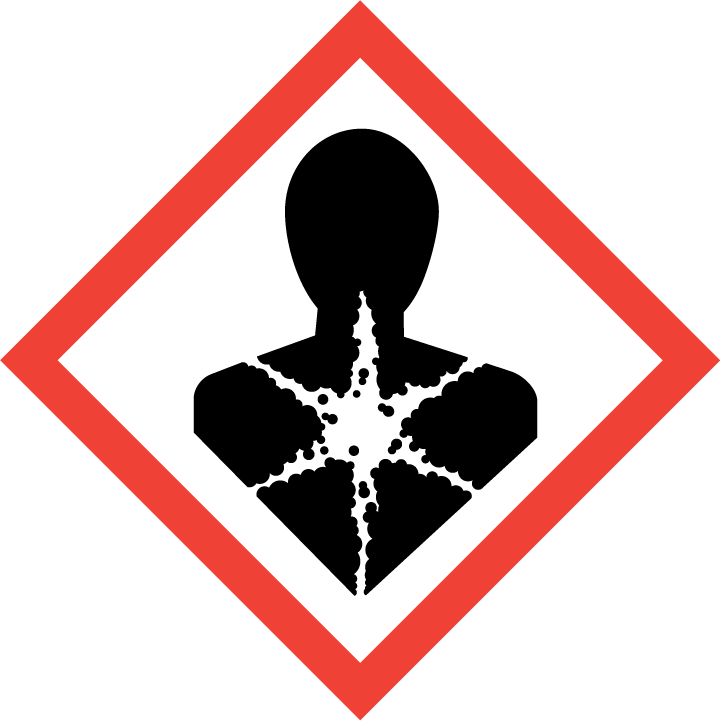
- Signal Words
- None
- Hazard Statement(s)
- Prolonged or repeated skin contact may lead to dermatitis. This product may cause severe eye irritation and depending upon duration of exposure, some form of permanent eye damage may occur. Prolonged or repeated exposure or deliberately concentrating and inhaling the vapour(s) may result in lung function incapacity or death.
- Precautionary Statement(s)
- Not available.
Primary route(s) of entry
Not available.
Human Health
- Inhalation
- Will cause irritation to the nose, throat and respiratory system with effects including: Dizziness, headache, incoordination, chest pains and coughing.
- Ingestion
- May cause irritation to mouth, throat and stomach with effects including mucous build up, irritation to the tongue and lips and pains in the stomach.
- Eyes
- Will cause irritation to the eyes, with effects including: tearing, pain, stinging and blurred vision. Depending upon duration of exposure, eye damage may occur.
- Skin
- May cause irritation to the skin, with effects including; Redness and itchiness.
Environment
Not available.
3. Composition / Information on Ingredients
| Name | CAS No. | Content (w/w) | Classification |
|---|---|---|---|
| Azure B C.I.52010 | 531-55-5 | 0.75% | - |
| DIMETHYL SULFOXIDE | 67-68-5 | 99% | - |
| METHANOL | 67-56-1 | 0.25% | - |
4. First Aid Measures
- Ingestion
- If swallowed, DO NOT induce vomiting. Seek urgent medical assistance.
- Inhalation
- Remove victim to fresh air. Apply resuscitation if victim is not breathing - DO NOT USE DIRECT MOUTH - TO - MOUTH METHOD if victim ingested or inhaled substance; use alternative respiratory method or proper respiratory device - Administer oxygen if breathing is difficult.
- Skin Contact
- If material is splashed onto the skin, remove any contaminated clothing and wash skin thoroughly with water and soap if available. Urgently transport to hospital or doctor.
- Eye Contact
- If material is splashed into eyes, flush with plenty of water for at least 15 minutes, ensuring eyelids are held open. Immediately transport to hospital or doctor.
- Other Information
- First Aid Facilities: Eye wash fountain, safety shower and normal washroom facilities.
5. Firefighting Measures
Suitable extinguishing equipment
- Fire
- Use dry chemical, carbon dioxide, foam or water spray.
- HAZCHEM
- Not available.
Special protective equipment and precautions for fire fighters
- Vapours from this product may travel or be moved by air currents and be ignited by pilot lights, other flames, smoking, sparks, heaters, electrical equipment, static discharge or other ignition sources at locations distant from the point of handling.
- Fire or heat will produce irritating, toxic and/or corrosive gases.
- Emits acrid smoke and fumes when heated to decomposition. Self-contained breathing apparatus (SCBA) required for fire-fighting personnel. If possible to do so safely, shut off fuel to fire. Use water spray to spray to cool fire-exposed surfaces and to protect personnel. Avoid spreading burning liquid with water used for cooling fire exposed containers when using water spray, boil-over may occur when the product temperature reaches the boiling point of water.
6. Accidental Release Measures
- Personal precautions, protective equipment and emergency procedures
- Keep unnecessary people away; Isolate hazard area and deny entry. Stay upwind; Keep out of low areas. Isolate for 100 m in all directions if tank, rail car or tanker truck is involved in fire.
- Personal Protective equipment as highlighted in this MSDS. Blanket the spill with foam or use water fog to disperse vapour clouds. Consult an expert regarding disposal of this product.
- Environmental precautions
- Not available.
- Methods and materials for containment and clean up
- SMALL SPILLS:
- Take up with sand, dirt or vermiculite. DO NOT use sawdust. Use non-sparking tools. Place into labelled drum(s) for later disposal.
- LARGE SPILLS:
- Notify Emergency Services (Police or Fire Brigade). Tell them location, nature and any information that would be helpful. Contain spill. Remove all ignition sources and safely stop flow of spill.
- Bund area.
- Trained personnel should wear Personal Protective equipment as highlighted in this MSDS. Blanket the spill with foam or use water fog to disperse vapour clouds. Consult an expert regarding disposal of this product.
7. Handling and Storage
- Precautions for safe handling
- Keep locked up and out of reach of children.
- Keep container tightly closed.
- Conditions for safe storage
- Store in a cool place and out of direct sunlight. Store away from sources of heat or ignition, strong alkalis, acids, combustibles and oxidising agents. All equipment must be earthed. Store in original packages as approved by manufacturer. Check all fittings, valves, reticulation (piping) and any ancillary equipment for leaks. A supplied air respirator or a Self-Contained Breathing Apparatus (SCBA) for emergencies should be available and checked regularly. For further information please refer to the Engineering Controls of this MSDS.
8. Exposure Controls / Personal Protection
Exposure Standards
| Material | TWA ppm | TWA mg/m³ | STEL ppm | STEL mg/m³ |
|---|---|---|---|---|
| METHANOL | 200 ppm | 262 mg/m³ | 250 ppm | 328 mg/m³ |
| - | - | - | - | - |
- Engineering controls
- Toxic material. Single significant exposure may cause death. Maintain adequate ventilation at all times. Prevent accumulation of gas(es) in hollows or sumps. Eliminate any sources of ignition. DO NOT enter room unless monitored by another person (ie buddy-buddy system). Sampling of the atmosphere if possible should be conducted automatically instead of human operator and any leaks discovered should then be directed digitally to a command centre where the event can be acted upon, with all appropriate procedures being implemented and including any protective equipment as outlined in this MSDS.
Personal protective equipment
- Eye and face protection
- Chemical goggles or faceshield to protect eyes.
- Skin protection
- PVC, Nitrile, Neoprene, Natural rubber or any other type of glove as recommended by the manufacturer.
- Body protection
- Nitrile, Neoprene, Natural rubber or any other type of apron or splash suit as recommended by the manufacturer.
- Respiratory protection
- Avoid breathing of gases. Select and use respirators in accordance with AS/NZS 1715/1716. When gases exceed the exposure standards then the use of an atmosphere-supplied, positive pressure demand self-contained or airline breathing apparatus supplied air respirator complying with the requirements of AS/NZS 1715 is recommended. Filter capacity and respirator type depends on exposure levels. If entering spaces where the airborne concentration of a contaminant is unknown then the use of a Self-contained breathing apparatus (SCBA) with positive pressure air supply complying with AS/NZS 1715 / 1716, or any other acceptable International Standard is recommended.
9. Physical and Chemical Properties
General information
- Appearance
- Dark Blue Liquid
- Odour
- Not available.
- pH
- Not available.
- Vapour Pressure
- 0.6hPa @20°C
- Density
- L=1.10kg
- Boiling Point
- 189°C
- Melting Point
- 18°C
- Solubility
- Miscible in water.
- Specific Gravity of Density
- Not available.
- Flash Point
- 95°C open cup
- Flammable (Explosive) Limits
- Not available.
- Ignition Temperature
- Material does not burn.
- Formula
- Not available.
10. Stability and Reactivity
- Reactivity
- No further relevant information available.
- Chemical stability
- Stable under normal conditions of use.
- Possibility of hazardous reactions
- Will not occur.
- Conditions to avoid
- Heat, flames, ignition sources and incompatibles.
- Incompatible materials
- Strong alkalis, acids, nitrates and oxidising agents.
11. Toxicological Information
- Acute effects
- In case of accident or if you feel unwell, contact a doctor or Poisons Information Centre immediately and show this container or label.
- Eye contact
- In case of contact with eyes, rinse immediately with plenty of water and contact a doctor or Poisons Information Centre.
- Wear suitable gloves and eye/face protection.
- Skin contact
- Avoid contact with skin.
- Ingestion
- No further relevant information available.
- Inhalation
- Irritating to eyes and respiratory system.
- Toxicity and irritation
- DIMETHYL SULFOXIDE
- LD50 17.9ml/kg (rat)
- No other Exposure details available.
12. Ecological Information
- Ecotoxicity
- This substance may cause long term adverse effects in the environment.
- Persistence and degradability
- No further relevant information available.
- Bioaccumulative potential
- No further relevant information available.
- Other adverse effects
- No further relevant information available.
13. Disposal Considerations
General information
Whatever cannot be saved for recovery or recycling should be handled as hazardous waste by an approved waste agency. Processing, use or contamination of this product may change the waste management options. Dispose of container and unused contents in accordance with federal, state and local requirements.
14. Transport Information
ADG label required
- HAZCHEM
- Not available.
- UN Number
- UN 160
- Proper shipping name
- DYE, LIQUID, TOXIC, N.O.S. (DimethylSulphoxide / AzureB dye).
- Transport hazard class
- 6.1
- Packing group
- III
- Environmental hazard
- No information available.
- Special precautions for users
- No information available.
- Additional information
- Hazchem Code: 2X
- Classified as a CLASS 6 (TOXIC) Dangerous Good according to the Australian Code for the Transport of Dangerous Goods by Road and Rail, 6th Edition. If non toxic solvent is used this product may not list as UN1602.
- Dangerous goods of Class 6 (Toxic) are incompatible in a placard load with any of the following: - Class 1
- Class 3, if the Class 3 dangerous goods are nitromethane
- Class 8, if the Class 6 dangerous goods are cyanides and the Class 8 dangerous goods are acids; and are incompatible with food and food packaging in any quantity.
- Emergency information(Transport):
- Dangerous Goods - Initial Emergency Response Guide (SAA/SNZ HB76:1997)
- For TOXIC SUBSTANCES - Guide No: 34
15. Regulatory Information
- Poisons Schedule Number
- S6
- Other Information
- No further relevant information available.
16. Other Information
- SDS preparation date
- 18 February 2026
- Comments
- This information is based on our present knowledge. However, this shall not constitute a guarantee for any specific product features and shall not establish a legally valid contractual relationship.