
Safety Data Sheets / Cargille Immersion Oil, Type 37
Safety Data Sheet
Cargille Immersion Oil, Type 37
1. Identification
Product Identifiers
- Product Name
- Cargille Immersion Oil, Type 37
- Other Names
- N/A
- Product Number(s)
- IC137, IC1372, IC1375
- CAS Number
- -
Recommended use of the chemical and restriction on use
This SDS or an accurate copy is an integral part of using Immersion Oil Type 37. Only use Immersion Oil Type 37 if the SDS is present. Conditions prevailing in this document, unless otherwise noted: Temperature = 23°C(73°F), Pressure = 1013.25 hPa (760 mm Hg) For Professional and R&D use only. Conditions of Intended Use: (ABBR. C.I.U.) As a Microscope Immersion Oil at normal room pressure 101.32 kPa (760 mm Hg), temperature 7°C to 40°C (45°F to 104°F) in a non misted / non airborne state in a room having normal air changes (2) / HR., in a trained and supervised laboratory / industrial setting using standard Good Laboratory/Good Manufacturing procedures.
Company Details
ProSciTech Pty Ltd
11 Carlton Street
KIRWAN QLD 4817
Australia
(07) 4773 9444
pst@proscitech.com
proscitech.com.au
11 Carlton Street
KIRWAN QLD 4817
Australia
(07) 4773 9444
pst@proscitech.com
proscitech.com.au
Emergency Contact Details
ProSciTech Pty Ltd
11 Carlton Street
KIRWAN QLD 4817
Australia
(07) 4773 9444
pst@proscitech.com
proscitech.com.au
11 Carlton Street
KIRWAN QLD 4817
Australia
(07) 4773 9444
pst@proscitech.com
proscitech.com.au
2. Hazards Identification
Classification of the substance or mixture
Skin Irrit. 2 H315 Causes skin irritation.
Label Elements

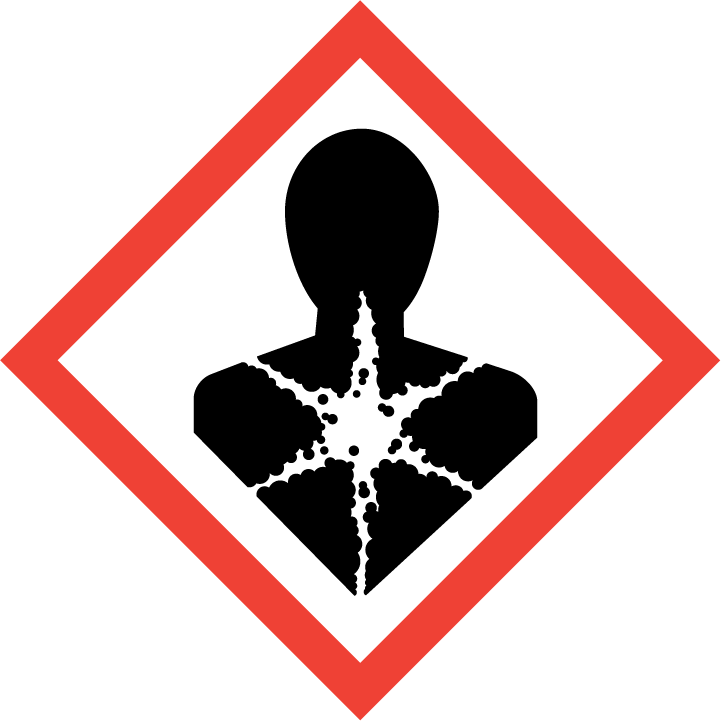
- Signal Words
- Warning
- Hazard Statement(s)
- H315 Causes skin irritation.
- Precautionary Statement(s)
- P264 Wash thoroughly after handling.
- P280 Wear protective gloves and eye protection.
- P302±P352 IF ON SKIN: Wash with plenty of water.
- P332±P313 If skin irritation occurs: Get medical advice/attention.
- P362±P364 Take off contaminated clothing and wash it before reuse.
Primary route(s) of entry
- Ingestion.
- Inhalation.
- Eye contact.
- Skin contact.
Human Health
- Inhalation
- Not available.
- Ingestion
- Not available.
- Eyes
- Not available.
- Skin
- Not available.
Environment
Not available.
3. Composition / Information on Ingredients
| Name | CAS No. | Content (w/w) | Classification |
|---|---|---|---|
| Trade Secret | - | 60-80% | Asp. Tox. 1, H304Skin Irrit. 2, H315Flam. Liq. 4, H227 |
4. First Aid Measures
- Ingestion
- Rinse out mouth and then drink plenty of water. Do not induce vomiting; immediately call for medical help.
- Inhalation
- Supply fresh air; consult doctor in case of complaints.
- Skin Contact
- Immediately wash with water and soap and rinse thoroughly. If skin irritation continues, consult a doctor.
- Eye Contact
- Remove contact lenses if worn. Rinse opened eye for several minutes under running water. If symptoms persist, consult a doctor.
- Other Information
- Gastric or intestinal disorders when ingested.
- Irritant to skin and mucous membranes.
- Indication of any immediate medical attention and special treatment needed.
- If medical advice is needed, have product container or label at hand.
5. Firefighting Measures
Suitable extinguishing equipment
- Fire
- Foam
- Fire-extinguishing powder
- Gaseous extinguishing agents
- Carbon dioxide
- Water fog / haze
- HAZCHEM
- Not available.
Special protective equipment and precautions for fire fighters
- For safety reasons unsuitable extinguishing agents: Water stream.
- Formation of toxic gases is possible during heating or in case of fire. Wear self-contained respiratory protective device. Wear fully protective suit.
6. Accidental Release Measures
- Personal precautions, protective equipment and emergency procedures
- Wear protective equipment. Keep unprotected persons away. Ensure adequate ventilation.
- Environmental precautions
- Do not allow to enter sewers/ surface or ground water. Inform respective authorities in case of seepage into water course or sewage system.
- Methods and materials for containment and clean up
- Absorb with liquid-binding material (sand, diatomite, acid binders, universal binders, sawdust). Send for recovery or disposal in suitable receptacles.
7. Handling and Storage
- Precautions for safe handling
- Avoid splashes or spray in enclosed areas. Avoid contact with the eyes and skin.
- Conditions for safe storage
- Requirements to be met by storerooms and receptacles:
- Avoid storage near extreme heat, ignition sources or open flame.
- Store in a well-ventilated place. Keep cool.
- Information about storage in one common storage facility:
- Store away from foodstuffs.
- Store away from oxidisers, strong acids, strong bases.
- Further information about storage conditions:
- Storage Temperatures : 65 - 90 ?F / 18 - 32 ?C.
- Keep containers tightly sealed.
8. Exposure Controls / Personal Protection
Exposure Standards
- Engineering controls
- No information available.
Personal protective equipment
- Eye and face protection
- Safety glasses.
- Follow relevant national guidelines concerning the use of protective eyewear.
- Skin protection
- Protective gloves The glove material has to be impermeable and resistant to the product/ the substance/ the preparation.
- Body protection
- General protective and hygienic measures:
- The usual precautionary measures for handling chemicals should be followed.
- Keep away from foodstuffs, beverages and feed.
- Immediately remove all soiled and contaminated clothing.
- Wash hands before breaks and at the end of work.
- Do not inhale gases / fumes / aerosols.
- Avoid contact with the eyes and skin.
- Respiratory protection
- Not required under normal conditions of use.
9. Physical and Chemical Properties
General information
- Appearance
- Light yellow liquid
- Odour
- Slight Characteristic
- pH
- Not applicable.
- Vapour Pressure
- <??0.133 hPa (??<0mmHg)
- Density
- Relative density: 0.9 (water = 1)
- Boiling Point
- 340 °C (644 °F) (1 atm)
- Melting Point
- ???????????<0 °C (??<32 F)
- Solubility
- Not miscible or difficult to mix with water.
- Specific Gravity of Density
- Not available.
- Flash Point
- >163 °C (>325 °F) (Open Cup)
- Flammable (Explosive) Limits
- Not determined.
- Ignition Temperature
- Not determined.
- Formula
- Not available.
10. Stability and Reactivity
- Reactivity
- No further relevant information available.
- Chemical stability
- Stable under normal temperatures and pressures.
- Possibility of hazardous reactions
- Can form explosive mixtures in air if heated above flash point and/or when sprayed or atomized.
- Reacts with strong oxidising agents.
- Reacts with strong acids and alkali.
- Hazardous decomposition products: Under fire conditions only
- Carbon monoxide and carbon dioxide.
- Conditions to avoid
- Excessive heat.
- Incompatible materials
- Oxidizers, strong bases, strong acids.
11. Toxicological Information
- Acute effects
- LD/LC50 values that are relevant for classification: None
- Eye contact
- Based on available data, the classification criteria are not met.
- Skin contact
- Irritant to skin and mucous membranes.
- Ingestion
- No further relevant information available.
- Inhalation
- Based on available data, the classification criteria are not met.
- Toxicity and irritation
- Acute effects (acute toxicity, irritation and corrosivity): Irritating to skin.
12. Ecological Information
- Ecotoxicity
- Harmful to fish.
- Toxic for water fleas.
- Persistence and degradability
- No further relevant information available.
- Bioaccumulative potential
- Due to the distribution coefficient n-octanol/water an accumulation in organisms is not expected.
- Other adverse effects
- Aquatic toxicity Toxic to aquatic life with long lasting effects.
- General notes:
- Do not allow undiluted product or large quantities of it to reach ground water, water course or sewage system.
- Due to available data on eliminability/decomposition and bioaccumulation potential prolonged term damage of the environment can not be excluded.
13. Disposal Considerations
General information
The user of this material has the responsibility to dispose of unused material, residues and containers in compliance with all relevant local, state and federal laws and regulations regarding treatment, storage and disposal for hazardous and nonhazardous wastes. Uncleaned packagings Recommendation: Disposal must be made according to official regulations.
14. Transport Information
ADG label required


- HAZCHEM
- Not available.
- UN Number
- UN3082
- Proper shipping name
- ENVIRONMENTALLY HAZARDOUS SUBSTANCE, LIQUID, N.O.S. (TERPHENYL)
- Transport hazard class
- 9
- Packing group
- III
- Environmental hazard
- No information available.
- Special precautions for users
- Warning: Miscellaneous dangerous substances and articles
- Danger code (Kemler): 90
- EMS Number: F-A,S-F
- Additional information
- Not regulated when carried in single or combination packaging containing a net quantity of 5L or less for liquids or 5 kg or less for solids per the following:
- DOT: 171.4©(2)
- ADR: SP 375
- IMDG: 2.10.2.7
- IATA: special provision A197
15. Regulatory Information
- Poisons Schedule Number
- None of the ingredients are listed.
- Other Information
- No further relevant information available.
16. Other Information
- SDS preparation date
- 16 February 2026
- Comments
- This information is based on our present knowledge. However, this shall not constitute a guarantee for any specific product features and shall not establish a legally valid contractual relationship.