
Safety Data Sheets / Chem-Det Cleaning and Decontamination Agent
Safety Data Sheet
Chem-Det Cleaning and Decontamination Agent
1. Identification
Product Identifiers
- Product Name
- Chem-Det Cleaning and Decontamination Agent
- Other Names
- CHEM-DET
- Product Number(s)
- M039
- CAS Number
- -
Recommended use of the chemical and restriction on use
Laboratory use.
Company Details
ProSciTech Pty Ltd
11 Carlton Street
KIRWAN QLD 4817
Australia
(07) 4773 9444
pst@proscitech.com
proscitech.com.au
11 Carlton Street
KIRWAN QLD 4817
Australia
(07) 4773 9444
pst@proscitech.com
proscitech.com.au
Emergency Contact Details
ProSciTech Pty Ltd
11 Carlton Street
KIRWAN QLD 4817
Australia
(07) 4773 9444
pst@proscitech.com
proscitech.com.au
11 Carlton Street
KIRWAN QLD 4817
Australia
(07) 4773 9444
pst@proscitech.com
proscitech.com.au
2. Hazards Identification
Classification of the substance or mixture
- Eye Damage/Irritation: Category 2A .
- Skin Corrosion/Irritation: Category 2.
Label Elements
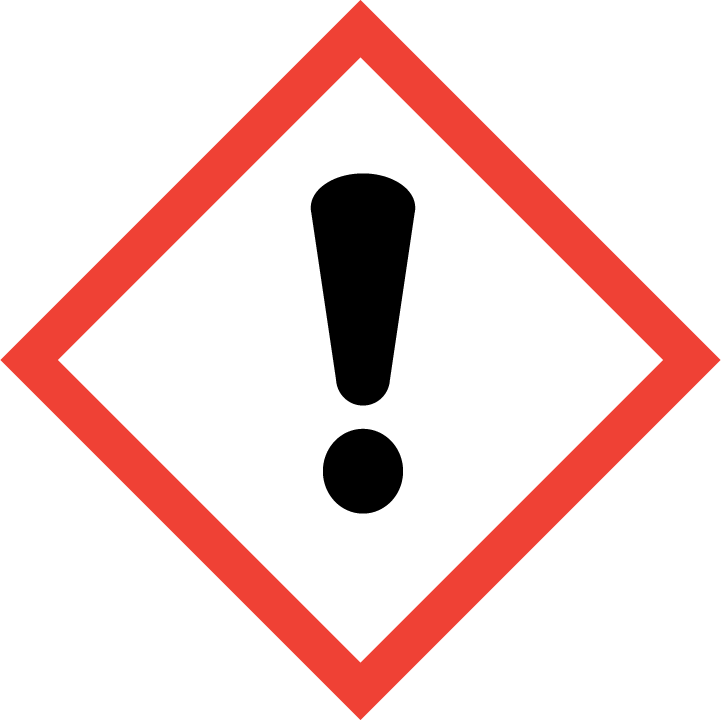
- Signal Words
- Warning
- Hazard Statement(s)
- H315 Causes skin irritation.
- H319 Causes serious eye irritation.
- Precautionary Statement(s)
- P264 Wash thoroughly after handling.
- P280 Wear protective gloves/protective clothing/eye protection/face protection.
Primary route(s) of entry
Not available.
Human Health
- Inhalation
- Not available.
- Ingestion
- Not available.
- Eyes
- Rinse cautiously with water for several minutes. Remove contact lenses,if present and easy to do. Continue rinsing.
- If eye irritation persists: Get medical advice/attention.
- Skin
- Wash with plenty of soap and water.
- If skin irritation or rash occurs: Get medical advice/attention.
Environment
No further relevant information available.
3. Composition / Information on Ingredients
| Name | CAS No. | Content (w/w) | Classification |
|---|---|---|---|
| Surfactants | - | 10-30 % | - |
| Seguestering agents | - | 10-20 % | - |
| Sodium Hydroxide | 1310-73-2 | 2 % | Xi |
| Water to make a total of 100% | - | - | - |
4. First Aid Measures
- Ingestion
- Wash out mouth with water and obtain medical attention.
- Inhalation
- Remove to fresh air. If breathing has stopped, apply artificial respiration. Seek medical advice.
- Skin Contact
- Remove contaminated clothing and wash affected skin with soap and water. If irritation occurs seek medical advice. Wash clothing before reuse.
- Eye Contact
- Immediately irrigate with copious quantity of water for at least 15 minutes. Eyelids to be held open. Seek medical attention.
- Other Information
- No further relevant information available.
5. Firefighting Measures
Suitable extinguishing equipment
- Fire
- Small fire: Use dry chemical, CO₂, water spray or appropiate foam.
- Large fire: use water spray, fog or foam.
- If safe to do so, move undamaged containers from the fire area. Cool containers with flooding quantities of water until well after the fire is out.
- HAZCHEM
- Not available.
Special protective equipment and precautions for fire fighters
Solutions will not burn or support combustion. However contact with aluminium, zinc or tin may generate explosive hydrogen gas. Decomposition products include sodium oxide and oxides of carbon. Fire fighters and others who may be exposed to combustion products during fire should wear full protective clothing including positive pressure self-contained breathing apparatus (SCBA). Wear SCBA with full face-piece, operated in positive pressure mode when fighting fire.
6. Accidental Release Measures
- Personal precautions, protective equipment and emergency procedures
- Take off contaminated clothing and wash before reuse
- Environmental precautions
- Prevent from entering into drains, ditches or rivers.
- Prevent spill from entering waterways. Restrict access to area. Remove chemicals that can react with the spilled material. Spills are slippery
- Methods and materials for containment and clean up
- Absorb or contain liquid with sand, earth or spill control material. Shovel up using non sparking tools and place in a labelled, sealable container for subsequent safe disposal. Put leaking containers in a labelled drum or overdrum.
- Use inert material such as sand or earth to contain spill or leak.
- Absorb spills with chemical absorber or vermiculite and dispose of in accordance with local regulations.
7. Handling and Storage
- Precautions for safe handling
- Avoid prolonged or repeated contact with skin, eyes and clothing.
- Conditions for safe storage
- Keep container tightly closed and in a cool, dry, well-ventilated place. Keep away from direct sunlight.
8. Exposure Controls / Personal Protection
Exposure Standards
| Material | TWA ppm | TWA mg/m³ | STEL ppm | STEL mg/m³ |
|---|---|---|---|---|
| Sodium Hydroxide | - | 2 | - | - |
- Engineering controls
- In industrial situations maintain the concentrations values below the TWA. This may be achieved by process modification, use of local exhaust ventilation, capturing substances at the source, or other methods.
Personal protective equipment
- Eye and face protection
- The use of a face shield, chemical goggles or safety glasses with side shield protection as appropriate. Must comply with Australian Standards AS 1337 and be selected and used in accordance with AS 1336.
- Skin protection
- Hand protection should comply with AS 2161, Occupational protective gloves - Selection, use and maintenance. Recommended: Nitrile or neoprene.
- Body protection
- Final choice of personal protective equipment will depend on individual circumstances and/or according to risk assessments undertaken.
- Personal Protective Equipment Safety boots in industrial situations is advisory, foot protection should comply with AS 2210, Occupational protective footwear -Guide to selection, care and use.
- Clean clothing or protective clothing should be worn, preferably with an apron.
- Clothing for protection against chemicals should comply with AS 3765 Clothing for Protection Against Hazardous Chemicals. Body Protection
- Always wash hands before smoking, eating or using the toilet. Wash contaminated clothing and other protective equipment before storing or re-using.
- Respiratory protection
- Where ventilation is not adequate, respiratory protection may be required. Avoid breathing vapours or mists. Select and use respirators in accordance with AS 1716 - Respiratory Protective Devices and be selected in accordance with AS 1715 - Selection, Use and Maintenance of Respiratory Protective Devices. When mists or vapours exceed the exposure standards then the use of the following is recommended: Approved respirator with organic vapour and dust/mist filters. Filter capacity and respirator type depends on exposure levels.
9. Physical and Chemical Properties
General information
- Appearance
- Clear liquid
- Odour
- Not available.
- pH
- 14
- Vapour Pressure
- Not available.
- Density
- 1
- Boiling Point
- Not available.
- Melting Point
- Not available.
- Solubility
- Not available.
- Specific Gravity of Density
- Not available.
- Flash Point
- Not available.
- Flammable (Explosive) Limits
- Non flammable.
- Ignition Temperature
- Not available.
- Formula
- Not available.
10. Stability and Reactivity
- Reactivity
- No further relevant information available.
- Chemical stability
- Stable.
- Possibility of hazardous reactions
- Solutions will not burn or support combustion. However contact with aluminium, zinc or tin may generate explosive hydrogen gas. Decomposition products include sodium oxide and oxides of carbon.
- Conditions to avoid
- No further relevant information available.
- Incompatible materials
- Acids, organic materials, chlorinated solvents, aluminium, phosphorus, tin and zinc,
11. Toxicological Information
- Acute effects
- No further relevant information available.
- Eye contact
- Causes irritation to eye tissue.
- Rabbit - sodium hydroxide 100mg rinse produced severe eye irritation.
- Skin contact
- May irritate skin tissue of sensitive individuals with prolonged contact.
- Product may cause defatting of the skin with irritation and dermantitis with prolonged skin contact.
- Rabbit - sodium hydroxide 500mg rinse produced severe skin irritation after 24 hrs.
- Ingestion
- May irritate gastric system if large quantities are ingested.
- Inhalation
- Not considered a hazard with noral laboratory use.
- Toxicity and irritation
- odium Hydroxide: LD50 (rabbit): 500 mg/kg.
12. Ecological Information
- Ecotoxicity
- Quantitative data on the ecological effect of this product are not available.
- Persistence and degradability
- No persistence/degradability data available for this product.
- Bioaccumulative potential
- No further relevant information available.
- Other adverse effects
- No further relevant information available.
13. Disposal Considerations
General information
Whatever cannot be saved for recovery or recycling should be disposed of according to relevant local, state and federal government regulations.
14. Transport Information
ADG label required
- HAZCHEM
- Not available.
- UN Number
- None.
- Proper shipping name
- Not regulated.
- Transport hazard class
- 0
- Packing group
- None.
- Environmental hazard
- No information available.
- Special precautions for users
- No information available.
- Additional information
- Not classified as a Dangerous Good according to the Australian Code for the Transport of Dangerous Goods by Road and Rail (ADG) by the IATA Air Transport Dangerous Goods Regulations or by the IMDG (International Maritime Dangerous Goods) Code.
15. Regulatory Information
- Poisons Schedule Number
- S5
- Other Information
- No further relevant information available.
16. Other Information
- SDS preparation date
- 6 October 2021
- Comments
- This information is based on our present knowledge. However, this shall not constitute a guarantee for any specific product features and shall not establish a legally valid contractual relationship.