
Safety Data Sheets / Ehrlich's Haematoxylin
Safety Data Sheet
Ehrlich's Haematoxylin
1. Identification
Product Identifiers
- Product Name
- Ehrlich's Haematoxylin
- Other Names
- Not available.
- Product Number(s)
- 26040-05-, 26040-06, 26753-01, EMS26040-05, EMS26040-06
- CAS Number
- Not available.
Recommended use of the chemical and restriction on use
Laboratory chemicals. Stains
Company Details
ProSciTech Pty Ltd
11 Carlton Street
KIRWAN QLD 4817
Australia
(07) 4773 9444
pst@proscitech.com
proscitech.com.au
11 Carlton Street
KIRWAN QLD 4817
Australia
(07) 4773 9444
pst@proscitech.com
proscitech.com.au
Emergency Contact Details
ProSciTech Pty Ltd
11 Carlton Street
KIRWAN QLD 4817
Australia
(07) 4773 9444
pst@proscitech.com
proscitech.com.au
11 Carlton Street
KIRWAN QLD 4817
Australia
(07) 4773 9444
pst@proscitech.com
proscitech.com.au
2. Hazards Identification
Classification of the substance or mixture
- GHS02 Flame
- Flam. Liq. 2 H225 Highly flammable liquid and vapour.
- GHS08 Health hazard
- Carc. 1A H350 May cause cancer.
Label Elements
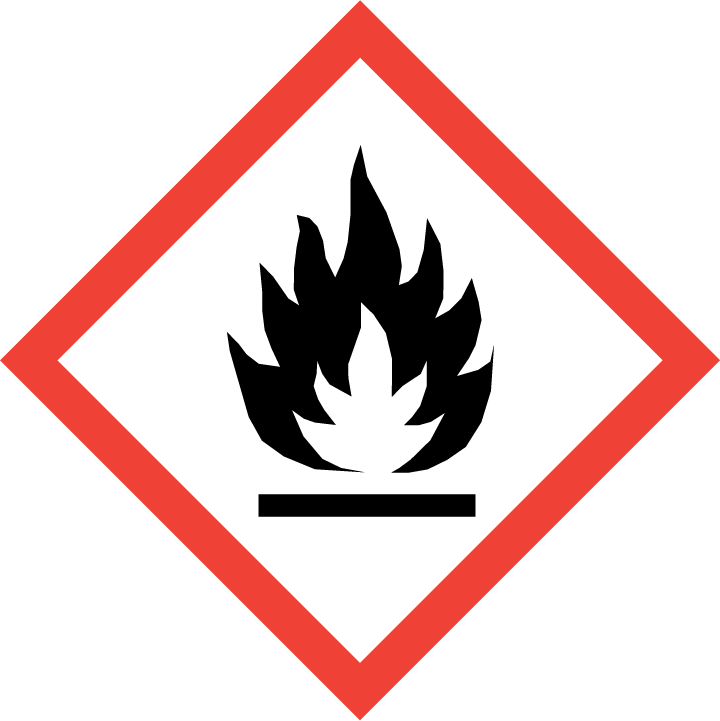
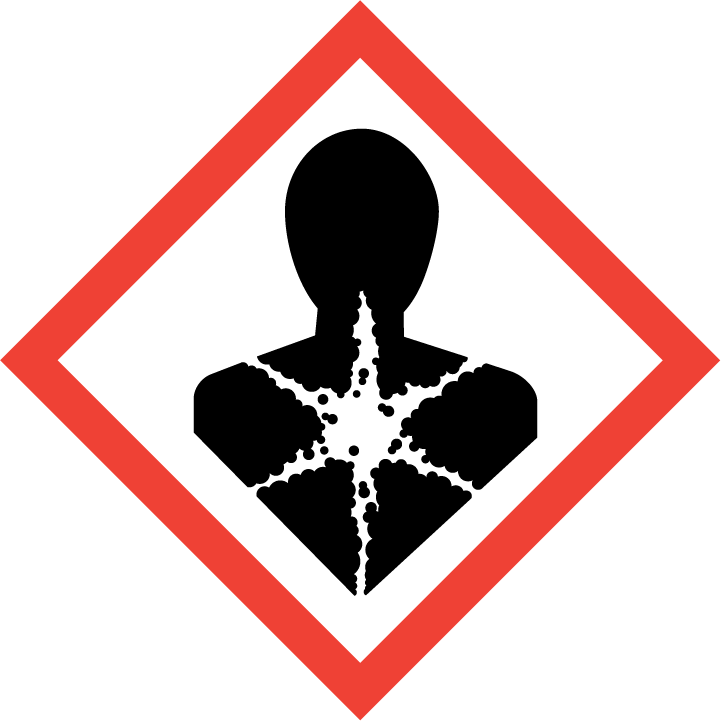
- Signal Words
- None
- Hazard Statement(s)
- Hazard-determining components of labelling:
- Ethyl alcohol
- Highly flammable liquid and vapour.
- May cause cancer.
- Precautionary Statement(s)
- Obtain special instructions before use.
- Do not handle until all safety precautions have been read and understood.
- Keep away from heat/sparks/open flames/hot surfaces. No smoking.
- Keep container tightly closed.
- Ground/bond container and receiving equipment.
- Use explosion-proof electrical/ventilating/lighting equipment.
- Use only non-sparking tools.
- Take precautionary measures against static discharge.
- Wear protective gloves/protective clothing/eye protection/face protection.
Primary route(s) of entry
Not available
Human Health
- Inhalation
- If exposed or concerned: Get medical advice/attention.
- Ingestion
- If exposed or concerned: Get medical advice/attention.
- Eyes
- If exposed or concerned: Get medical advice/attention.
- Skin
- (or hair) Remove/take off immediately all contaminated clothing. Rinse skin with water/shower.
- If exposed or concerned: Get medical advice/attention.
Environment
- In case of fire: Use for extinction: CO₂, powder or water spray.
- Store in a well-ventilated place. Keep cool.
- Store locked up.
- Dispose of contents/container in accordance with local/regional/national/international regulations.
3. Composition / Information on Ingredients
| Name | CAS No. | Content (w/w) | Classification |
|---|---|---|---|
| glycerol | 56-81-5 | >25-≤50% | Not Available |
| Ethyl alcohol | 64-17-5 | >25-≤50% | Not Available |
| Acetic Acid Glacial | 64-19-7 | >2.5-≤10% | Not Available |
| Methyl Alcohol | 67-56-1 | ≤2.5% | Not Available |
| haematoxylin | 517-28-2 | ≤2.5% | Not Available |
4. First Aid Measures
- Ingestion
- If symptoms persist consult doctor.
- Inhalation
- Supply fresh air. If required, provide artificial respiration. Keep patient warm. Consult doctor if symptoms persist.
- In case of unconsciousness place patient stably in side position for transportation.
- Skin Contact
- Immediately wash with water and soap and rinse thoroughly.
- Eye Contact
- Rinse opened eye for several minutes under running water.
- Other Information
- Symptoms of poisoning may even occur after several hours; therefore medical observation for at least 48 hours after the accident.
5. Firefighting Measures
Suitable extinguishing equipment
- Fire
- CO₂, powder or water spray. Fight larger fires with water spray or alcohol resistant foam.
- HAZCHEM
- No further relevant information available.
Special protective equipment and precautions for fire fighters
Mouth respiratory protective device.
6. Accidental Release Measures
- Personal precautions, protective equipment and emergency procedures
- Wear protective equipment. Keep unprotected persons away.
- Environmental precautions
- Dilute with plenty of water.
- Do not allow to enter sewers/surface or ground water.
- Methods and materials for containment and clean up
- Absorb with liquid-binding material (sand, diatomite, acid binders, universal binders, sawdust).
- Dispose contaminated material as waste according to item 13.
- Ensure adequate ventilation.
7. Handling and Storage
- Precautions for safe handling
- Ensure good ventilation/exhaustion at the workplace.
- Prevent formation of aerosols.
- Keep ignition sources away - Do not smoke.
- Protect from heat.
- Protect against electrostatic charges.
- Conditions for safe storage
- Store in a cool location.
- Keep container tightly sealed.
- Store in cool, dry conditions in well sealed receptacles.
- Protect from heat and direct sunlight.
8. Exposure Controls / Personal Protection
Exposure Standards
| Material | TWA ppm | TWA mg/m³ | STEL ppm | STEL mg/m³ |
|---|---|---|---|---|
| 56-81-5 glycerol | 10mg/m³ | |||
| 64-17-5 Ethyl alcohol | 1000ppm | 1880mg/m³ | ||
| 64-19-7 Acetic Acid glacial | 10ppm | 25mg/m³ | 15ppm | 37mg/m³ |
| 67-56-1 Methyl Alcohol | 200ppm | 262mg/m³ | 250ppm | 328mg/m³ |
- Engineering controls
- Keep away from foodstuffs, beverages and feed.
- Immediately remove all soiled and contaminated clothing.
- Wash hands before breaks and at the end of work.
- Avoid contact with the skin.
- Avoid contact with the eyes and skin.
Personal protective equipment
- Eye and face protection
- Tightly sealed goggles.
- Skin protection
- Wear protective gloves. The glove material has to be impermeable and resistant to the product/the substance/the preparation. Selection of the glove material on consideration of the penetration times, rates of diffusion and the degradation. The exact break through time has to be found out by the manufacturer of the protective gloves and has to be observed.
- Body protection
- Wear protective clothing.
- Respiratory protection
- In case of brief exposure or low pollution use respiratory filter device. In case of intensive or longer exposure use self-contained respiratory protective device.
9. Physical and Chemical Properties
General information
- Appearance
- Dark brown solution
- Odour
- Alcohol-like
- pH
- Not determined
- Vapour Pressure
- 59hPa
- Density
- Not determined
- Boiling Point
- 78 °C
- Melting Point
- Undetermined
- Solubility
- Fully miscible
- Specific Gravity of Density
- Not determined
- Flash Point
- 17 °C
- Flammable (Explosive) Limits
- Lower: 0.9 Vol%
- Upper: 15 Vol%
- Ignition Temperature
- 400 °C
- Formula
- Not available
10. Stability and Reactivity
- Reactivity
- No further relevant information available.
- Chemical stability
- No decomposition if used according to specifications.
- Possibility of hazardous reactions
- No dangerous reactions known.
- Conditions to avoid
- No further relevant information available.
- Incompatible materials
- No further relevant information available.
11. Toxicological Information
- Acute effects
- 67-56-1 Methyl Alcohol
- Oral LD50 5628 mg/kg (rat)
- Dermal LD50 15800 mg/kg (rabbit)
- Eye contact
- No irritating effect.
- Skin contact
- Irritant to skin and mucous membranes.
- Ingestion
- Not available.
- Inhalation
- No sensitising effects known.
- Toxicity and irritation
- Harmful
- Irritant
12. Ecological Information
- Ecotoxicity
- No further relevant information available.
- Persistence and degradability
- No further relevant information available.
- Bioaccumulative potential
- No further relevant information available.
- Other adverse effects
- Water hazard class 1: slightly hazardous for water.
- Do not allow undiluted product or large quantities
13. Disposal Considerations
General information
- Must not be disposed of together with household garbage. Do not allow to reach sewage system.
- Disposal must be made according to official regulations.
- Recommended cleansing agents: Water. if necessary together with cleansing agents.
14. Transport Information
ADG label required
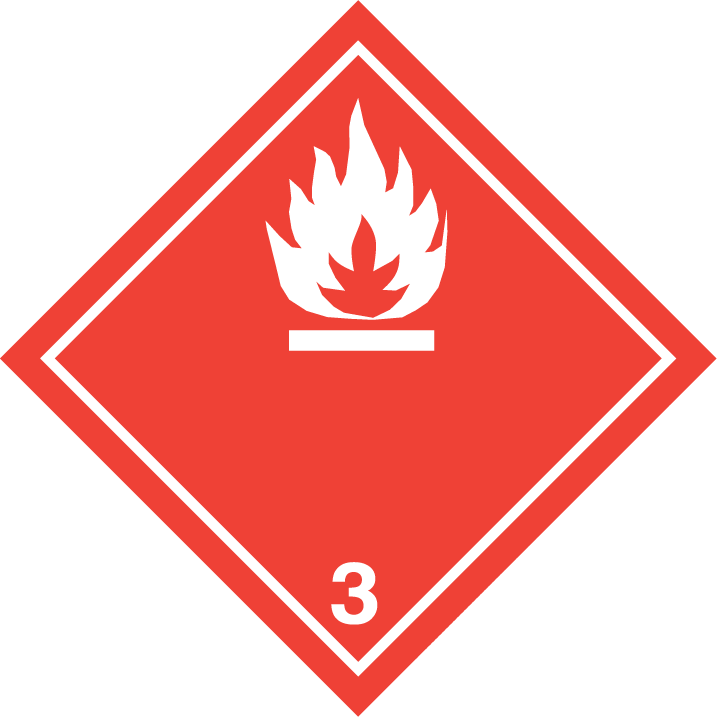
- HAZCHEM
- No further relevant information available.
- UN Number
- UN1987
- Proper shipping name
- 1987 ALCOHOLS, N.O.S. (ETHANOL (ETHYL ALCOHOL), METHANOL).
- Transport hazard class
- Class 3 Flammable liquids.
- Packing group
- II
- Environmental hazard
- Not applicable.
- Special precautions for users
- Warning: Flammable liquids.
- Hazard identification number (Kemler code): 33
- EMS Number: F-E,S-D
- Stowage category: B
- Additional information
- Limited quantities (LQ) 1L
- Excepted quantities (EQ) Code: E2
- Maximum net quantity per inner packaging: 30mL
- Maximum net quantity per outer packaging: 500mL
- Transport category: 2
- Tunnel restriction code: D/E
15. Regulatory Information
- Poisons Schedule Number
- 64-19-7 Acetic Acid Glacial S2, S5, S6
- 67-56-1 Methyl Alcohol S5, S6
- Other Information
- A Chemical Safety Assessment has not been carried out.
16. Other Information
- SDS preparation date
- 31 October 2024
- Comments
- This information is based on our present knowledge. However, this shall not constitute a guarantee for any specific product features and shall not establish a legally valid contractual relationship.