
Safety Data Sheets / Entellan New Mounting Medium
Safety Data Sheet
Entellan New Mounting Medium
1. Identification
Product Identifiers
- Product Name
- Entellan New Mounting Medium
- Other Names
- Entellan mounting medium
- Product Number(s)
- EMS14800, EMS14802, IM022, IM0225
- CAS Number
- 1330-20-7
Recommended use of the chemical and restriction on use
In vitro diagnostic reagent, Reagent for analysis.
Company Details
ProSciTech Pty Ltd
11 Carlton Street
KIRWAN QLD 4817
Australia
(07) 4773 9444
pst@proscitech.com
proscitech.com.au
11 Carlton Street
KIRWAN QLD 4817
Australia
(07) 4773 9444
pst@proscitech.com
proscitech.com.au
Emergency Contact Details
ProSciTech Pty Ltd
11 Carlton Street
KIRWAN QLD 4817
Australia
(07) 4773 9444
pst@proscitech.com
proscitech.com.au
11 Carlton Street
KIRWAN QLD 4817
Australia
(07) 4773 9444
pst@proscitech.com
proscitech.com.au
2. Hazards Identification
Classification of the substance or mixture
- Classification (REGULATION (EC) No 1272/2008)
- Aquatic Chronic 3 - Asp. Tox. 1 - Flam. Liq. 2 - Repr. 2 - Skin Irrit. 2 - STOT RE 2 - STOT SE 3
Label Elements
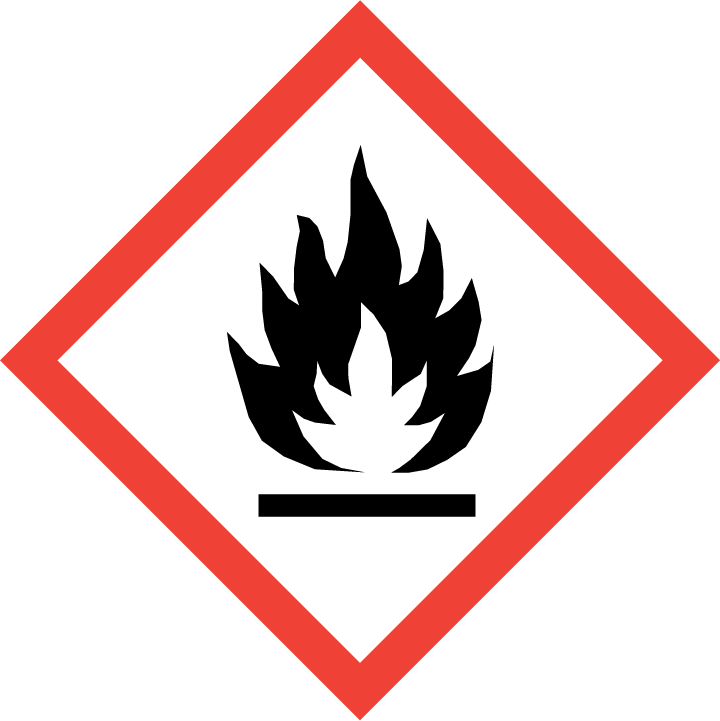

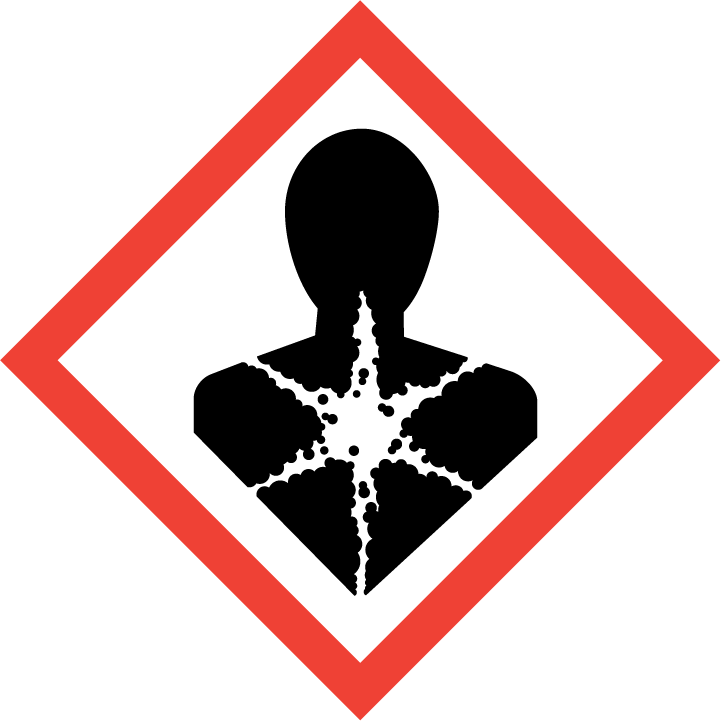
- Signal Words
- None
- Hazard Statement(s)
- H225: Highly flammable liquid and vapour
- H304: May be fatal if swallowed and enters airways
- H315: Causes serious skin irritation
- H336: May cause drowsiness or dizzeness
- H361: Suspected of damaging fertility or the unborn child
- H373: May cause damage to organs through prolonged or repeated exposure
- H412: Harmful to aquatic life with long term effects
- Precautionary Statement(s)
- P210: Keep away from flames and hot surfaces. No smoking
- P260 Do not breathe dust/ fume/ gas/ mist/ vapours/ spray.
- P264 Wash skin thoroughly after handling.
- P273: Avoid release to the environment
- P280 Wear protective gloves/ protective clothing/ eye protection/ face protection.
- P301±P310: If swallowed: Immediately call a poison center/doctor
- P303±P361±P353: If on skin (or hair) Take off immediately all contaminated clothing. Rinse skin with water/shower
- P303±P351±P338: IF IN EYES Rinse cautiously with water for several minutes, Remove contact lenses, Continue rinsing
- P312: Call a POISON center/doctor if you feel unwell
- P405 Store locked up.
- P501: Dispose of contents/container in accordance with local regional/national/international regulations.
Primary route(s) of entry
Inhalation, absorption through skin contact, ingestion
Human Health
- Inhalation
- Harmful if inhaled
- Ingestion
- May be fatal if swallowed
- Eyes
- Not available.
- Skin
- Causes serious skin irritation
Environment
Do not allow to enter sewers/ surface or ground water.
3. Composition / Information on Ingredients
| Name | CAS No. | Content (w/w) | Classification |
|---|---|---|---|
| Tolulene | 108-88-3 | >= 70 - < 90% | Flam. Liq. 2; 2; Repr. 2; STOT SE 3; STOT RE 2; Asp. Tox. 1; H225, H315, H361, H336, H373, H304Concentration limits: 20 %: STOT SE 3, H336; |
4. First Aid Measures
- Ingestion
- After swallowing: caution if victim vomits. Risk of aspiration! Keep airways free. Pulmonary failure possible after aspiration of vomit. Call a physician immediately. Subsequently administer: activated charcoal (20 - 40 g in 10% slurry). More severe effects if alcohol is consumed
- Inhalation
- After inhalation: fresh air. If breathing stops: mouth-to-mouth breathing or artificial respiration. Oxygen if necessary. Immediately call in physician.
- Skin Contact
- After skin contact: wash off with plenty of water. Remove contaminated clothing. Consult a physician.
- Eye Contact
- After eye contact: rinse out with plenty of water. Call in ophthalmologist. Remove contact lenses.
- Other Information
- Most important symptoms and effects, both acute and delayed irritant effects,
- Dermatitis, Dizziness, narcosis, euphoria, agitation, Gastrointestinal disturbance,
- Headache, Convulsions, drowziness
- Drying-out effect resulting in rough and chapped skin.
5. Firefighting Measures
Suitable extinguishing equipment
- Fire
- Foam, Carbon dioxide (CO₂)
- ** For this substance/mixture no limitations of extinguishing agents are given.
- HAZARDS ARISING FROM MIXTURE:
- Carbon oxides
- Combustible.
- Pay attention to flashback.
- Vapors are heavier than air and may spread along floors.
- Development of hazardous combustion gases or vapours possible in the event of fire.
- Forms explosive mixtures with air at ambient temperatures.
- Remove container from danger zone and cool with water
- Prevent fire extinguishing water from contaminating surface water or the ground water system
- Do not let product enter drains.
- Risk of explosion.
- Large Fire
- Foam, Carbon dioxide (CO₂), Dry powder
- HAZCHEM
- *3Y
Special protective equipment and precautions for fire fighters
Stay in danger area only with self-contained breathing apparatus. Prevent skin contact by keeping a safe distance or by wearing suitable protective clothing.
6. Accidental Release Measures
- Personal precautions, protective equipment and emergency procedures
- Advice for non-emergency personnel:
- Do not breathe vapours, aerosols.
- Avoid substance contact.
- Ensure adequate ventilation.
- Keep away from heat and sources of ignition.
- Evacuate the danger area, observe emergency procedures, consult an expert.
- Advice for emergency responders: Protective equipment see section 8.
- Environmental precautions
- Do not let product enter drains. Risk of explosion.
- Methods and materials for containment and clean up
- Cover drains
- Collect, bind, and pump off spills.
- Observe possible material restrictions (see sections 7 and 10)
- Take up with liquid-absorbent material (e.g. Chemizorb® ).
- Dispose of properly
- Clean up affected area.
7. Handling and Storage
- Precautions for safe handling
- Work under hood. Do not inhale substance/mixture. Avoid generation of vapours/aerosols.
- Keep away from open flames, hot surfaces and sources of ignition.Take precautionary measures against static discharge
- Immediately change contaminated clothing. Apply preventive skin protection. Wash hands and face after working with substance.
- Conditions for safe storage
- Keep container tightly closed in a dry and well-ventilated place
- Keep away from heat and sources of ignition.
- Store at ±15°C to ±25°C.
8. Exposure Controls / Personal Protection
Exposure Standards
| Material | TWA ppm | TWA mg/m³ | STEL ppm | STEL mg/m³ |
|---|---|---|---|---|
| Tolulene (108-88-3) | 50 ppm | 188 mg/m³ | - | - |
- Engineering controls
- Immediately change contaminated clothing. Apply preventive skin protection. Wash hands and face after working with substance.
Personal protective equipment
- Eye and face protection
- Use equipment for eye protection tested and approved under appropriate government standards such as NIOSH (US) or EN 166(EU). Safety glasses
- Skin protection
- This recommendation applies only to the product stated in the safety data sheet, supplied by us and for the designated use. When dissolving in or mixing with other substances and under conditions deviating from those stated in EN374 please contact the supplier of CE-approved gloves (e.g. KCL GmbH, D-36124 Eichenzell, Internet: www.kcl.de).
- Full contact
- Material: Viton®
- Minimum layer thickness: 0.7 mm
- Break through time: > 480 min
- Material tested:Vitoject® (KCL 890 / Aldrich Z677698, Size M)
- Body protection
- Flame retardant antistatic protective clothing. The chemical resistance of the protective equipment should be enquired at the respective supplier.
- Respiratory protection
- Required when vapours/aerosols are generated.
- Recommended Filter type: Filter A (acc. to DIN 3181) for vapours of organic compounds The entrepeneur has to ensure that maintenance, cleaning and testing of respiratory protective devices are carried out according to the instructions of the producer. These measures have to be properly documented
9. Physical and Chemical Properties
General information
- Appearance
- Liquid colourless
- Odour
- Characteristic
- pH
- Not available.
- Vapour Pressure
- No data available
- Density
- No data available
- Boiling Point
- No data available
- Melting Point
- No data available
- Solubility
- at 20 °C practically insoluble
- Specific Gravity of Density
- No data available
- Flash Point
- 8 °C
- Flammable (Explosive) Limits
- Not classified as explosive.
- Ignition Temperature
- No data available
- Formula
- Viscosity, kinematic: No data available
- Viscosity, dynamic: 60 - 100 mPa.s at 20 °C
10. Stability and Reactivity
- Reactivity
- Vapors may form explosive mixture with air.
- Chemical stability
- The product is chemically stable under standard ambient conditions (room temperature) .
- Possibility of hazardous reactions
- Risk of explosion with:
- fuming sulphuric acid
- Nitric acid
- silver
- perchlorates
- nitrogen dioxide
- halogen-halogen compounds
- uranium hexafluoride
- organic nitro compounds
- nonmetallic halides
- acetic acid
- Violent reactions possible with:
- Strong oxidising agents
- Strong acids
- sulphur
- Conditions to avoid
- Heating
- Incompatible materials
- Rubber, various plastics
11. Toxicological Information
- Acute effects
- Systemic effects: Headache, Drowziness, Dizziness, Euphoria, Agitation, Convulsions, Narcosis
- Suspected of damaging the unborn child.
- Suspected of damaging fertility.
- Mixture may cause damage to organs through prolonged or repeated exposure. - Central
- nervous system
- Eye contact
- Slight irritation
- Skin contact
- Mixture causes skin irritation.
- Drying-out effect resulting in rough and chapped skin. After long-term exposure to the chemical:
- Dermatitis
- Ingestion
- Gastrointestinal disturbance, Risk of aspiration upon vomiting.
- Inhalation
- Aspiration hazard, Aspiration may cause pulmonary edema and pneumonitis.
- Mixture may cause drowsiness or dizziness.
- Toxicity and irritation
- Acute toxicity
- LD50 Oral - Rat - male - 5,580 mg/kg
- (Tested according to Directive 92/69/EEC.)
- LC50 Inhalation - Rat - male and female - 4 h - 25.7 mg/l - vapour
- (OECD Test Guideline 403)
- LD50 Dermal - Rabbit - > 5,000 mg/kg
- Remarks: (ECHA)
- Skin corrosion/irritation
- Skin - Rabbit
- Result: irritating - 4 h
- Remarks: (ECHA)
- Serious eye damage/eye irritation
- Eyes - Rabbit
- Result: slight irritation
- (OECD Test Guideline 405)
- Respiratory or skin sensitization
- Maximization Test - Guinea pig
- Result: negative
- (Regulation (EC) No. 440/2008, Annex, B.6)
- Germ cell mutagenicity
- Test Type: In vitro mammalian cell gene mutation test
- Test system: Mouse lymphoma test
- Result: negative
- Test Type: Ames test
- Test system: S. typhimurium
- Result: negative
- Species: Rat - Bone marrow
- Result: negative
- Remarks: (ECHA)
- Carcinogenicity
- No data available
- Reproductive toxicity
- Suspected of damaging the unborn child.
- Specific target organ toxicity - single exposure
- May cause drowsiness or dizziness. - Central nervous system
- Specific target organ toxicity - repeated exposure
- May cause damage to organs through prolonged or repeated exposure. - Central nervous system
12. Ecological Information
- Ecotoxicity
- Toxicity to fish flow-through test LC50 - Oncorhynchus kisutch (coho salmon) -
- 5.5 mg/l - 96 h
- Remarks: (ECHA)
- Toxicity to daphnia
- and other aquatic
- invertebrates
- EC50 - Ceriodaphnia dubia (water flea) - 3.78 mg/l - 48 h
- (US-EPA)
- Toxicity to bacteria static test EC50 - Bacteria - 84 mg/l - 24 h
- Remarks: (ECHA)
- Persistence and degradability
- No further relevant information available.
- Bioaccumulative potential
- No further relevant information available.
- Other adverse effects
- Discharge into the environment must be avoided.
13. Disposal Considerations
General information
Waste material must be disposed of in accordance with the Directive on waste 2008/98/EC as well as other national and local regulations. Leave chemicals in original containers. No mixing with other waste. Handle uncleaned containers like the product itself.
14. Transport Information
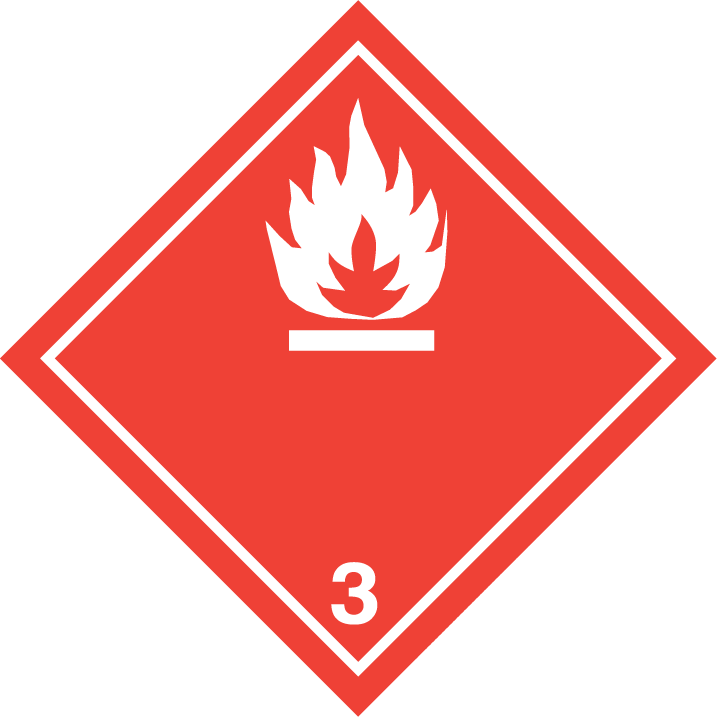
ADG label required
- HAZCHEM
- *3Y
- UN Number
- UN1866
- Proper shipping name
- Resin solution
- Transport hazard class
- 3
- Packing group
- PG II
- Environmental hazard
- No information available
- Special precautions for users
- Warning: Flammable liquids
- Hazard identification number (Kemler code): 30
- EMS Number: F-E,S-E
- Stowage Category A
- Additional information
- Quantity limitations On passenger aircraft/rail: 60 L
- On cargo aircraft only: 220 L
- Excepted quantities (EQ) Code: E1
- Maximum net quantity per inner packaging: 30 mL
- Maximum net quantity per outer packaging: 1000 mL
- Limited quantities (LQ) 5L
- Excepted quantities (EQ) Code: E1
- Maximum net quantity per inner packaging: 30 mL
- Maximum net quantity per outer packaging: 1000 mL
15. Regulatory Information
- Poisons Schedule Number
- -
- Other Information
- -
16. Other Information
- SDS preparation date
- 29 November 2024
- Comments
- This information is based on our present knowledge. However, this shall not constitute a guarantee for any specific product features and shall not establish a legally valid contractual relationship. This Safety Data Sheet (SDS) has been prepared in compliance with the Preparation of Safety Data Sheets for Hazardous Chemicals Code of Practice February 2016. It is the user's responsibility to determine the suitability of this information for adoption of necessary safety precautions. The information published in this SDS has been compiled from the publications listed in Section 16: to the best of our ability and knowledge these publications are considered accurate. We reserve the right to revise Safety Data Sheets as new information becomes available. Copies may be made for non-profit use.