
Safety Data Sheets / Gram's crystal violet solution
Safety Data Sheet
Gram's crystal violet solution
1. Identification
Product Identifiers
- Product Name
- Gram's crystal violet solution
- Product Number(s)
- 94448, 94448-2.5L-F, 94448-250ML-F, CMZ94448A, CMZ94448B
- CAS Number
- Not Assigned
Recommended use of the chemical and restriction on use
For R&D use only. Not for pharmaceutical, household or other uses. Main use is in Gram Stain for bacteria
Company Details
ProSciTech Pty Ltd
11 Carlton Street
KIRWAN QLD 4817
Australia
(07) 4773 9444
pst@proscitech.com
proscitech.com.au
11 Carlton Street
KIRWAN QLD 4817
Australia
(07) 4773 9444
pst@proscitech.com
proscitech.com.au
Emergency Contact Details
ProSciTech Pty Ltd
11 Carlton Street
KIRWAN QLD 4817
Australia
(07) 4773 9444
pst@proscitech.com
proscitech.com.au
11 Carlton Street
KIRWAN QLD 4817
Australia
(07) 4773 9444
pst@proscitech.com
proscitech.com.au
2. Hazards Identification
Classification of the substance or mixture
- Flammable liquids: Category 3
- Serious eye damage/eye irritation: Category 2A
- Carcinogenicity: Category 2
- Short-term (acute) aquatic hazard: Category 3
- Long-term (chronic) aquatic hazard: Category 3
Label Elements
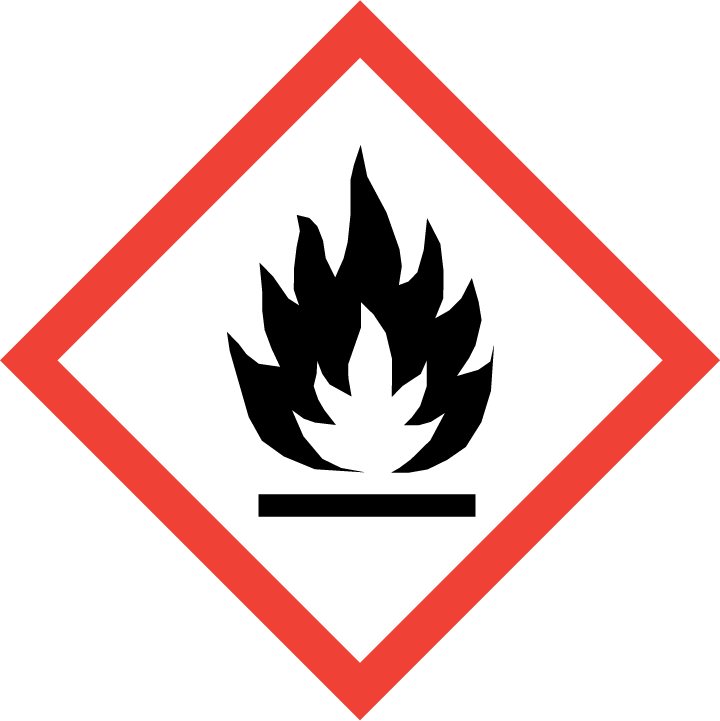
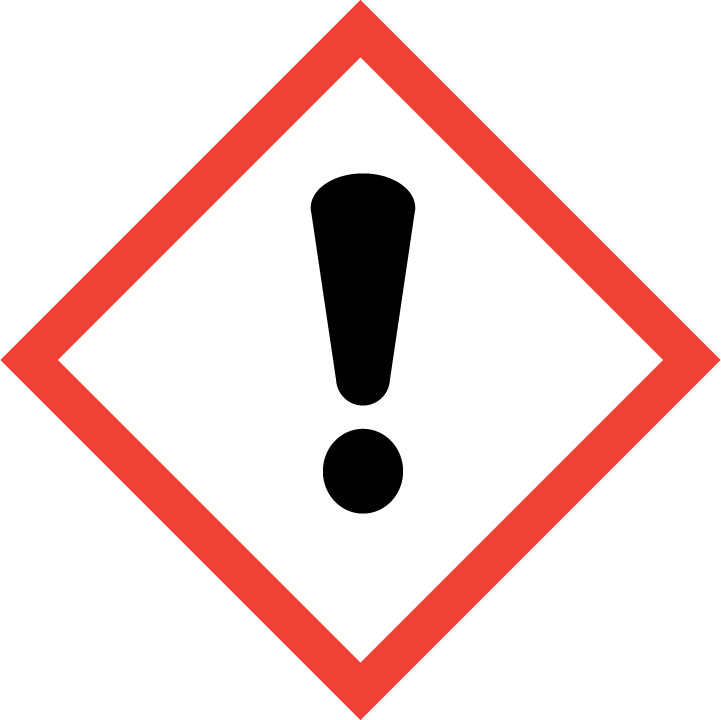
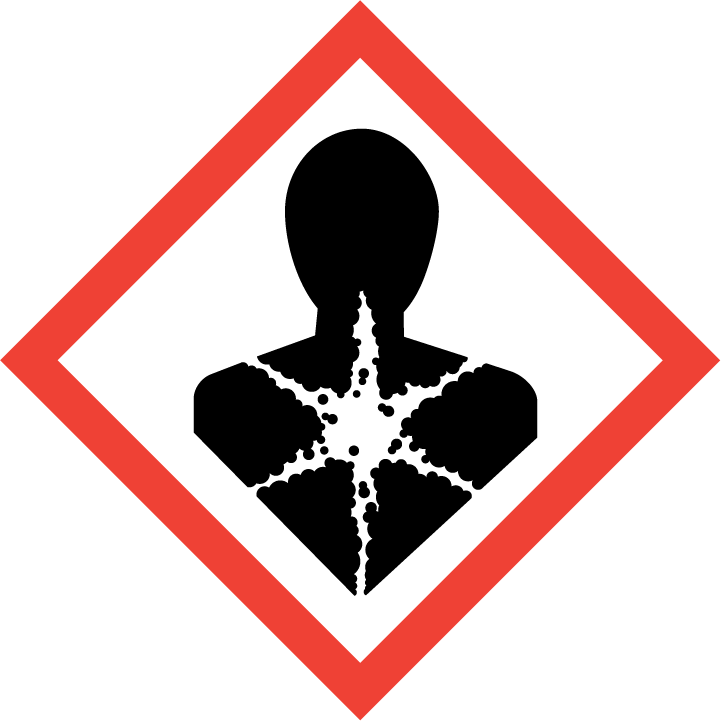
- Signal Words
- Warning
- Hazard Statement(s)
- H226 Flammable liquid and vapour.
- H319 Causes serious eye irritation.
- H351 Suspected of causing cancer.
- H412 Harmful to aquatic life with long lasting effects.
- Precautionary Statement(s)
- Prevention:
- P201 Obtain special instructions before use.
- P202 Do not handle until all safety precautions have been read and understood.
- P210 Keep away from heat, hot surfaces, sparks, open flames and other ignition sources. No smoking.
- P233 Keep container tightly closed.
- P240 Ground and bond container and receiving equipment.
- P241 Use explosion-proof electrical/ ventilating/ lighting equipment.
- P242 Use non-sparking tools.
- P243 Take action to prevent static discharges.
- P264 Wash skin thoroughly after handling.
- P273 Avoid release to the environment.
- P280 Wear protective gloves/ protective clothing/ eye protection/ face protection.
- Response:
- P303 + P361 + P353 IF ON SKIN (or hair): Take off immediately all contaminated clothing. Rinse skin with water.
- P305 + P351 + P338 IF IN EYES: Rinse cautiously with water for several minutes. Remove contact lenses, if present and easy to do. Continue rinsing.
- P308 + P313 IF exposed or concerned: Get medical advice/ attention.
- P337 + P313 If eye irritation persists: Get medical advice/ attention.
- P370 + P378 In case of fire: Use dry sand, dry chemical or alcohol-resistant foam to extinguish.
- Storage:
- P403 + P235 Store in a well-ventilated place. Keep cool.
- P405 Store locked up.
- Disposal:
- P501 Dispose of contents/ container to an approved waste disposal plant.
Primary route(s) of entry
Skin/eye contact and inhalation of mist/aerosol; ingestion is also possible through poor hygiene.
Human Health
- Inhalation
- Vapour or aerosol/mist may irritate the respiratory tract. Avoid breathing vapour or aerosols and ensure adequate ventilation.
- Ingestion
- Harmful if swallowed; may cause irritation of the mouth, throat and gastrointestinal tract. Do not eat or drink while handling.
- Eyes
- May cause eye irritation and discomfort following contact. Avoid splashes; wear safety glasses.
- Skin
- May cause skin irritation following contact. Avoid direct contact and wear suitable protective gloves.
Environment
Harmful to aquatic life with long-lasting effects. Prevent release to drains, waterways or the environment.
- Other Hazards
- Flammable liquid and vapour. Keep away from heat, sparks and open flames. The product is also classified as suspected of causing cancer and suspected of damaging fertility or the unborn child under applicable classifications.
3. Composition / Information on Ingredients
| Name | CAS No. | Content (w/w) | Classification |
|---|---|---|---|
| ethanol | 64-17-5 | ≥ 10 - ≤30% w/w | |
| Crystal violet | 548-62-9 | ≥ 1 -< 3% w/w | |
| Oxalic acid, ammonium salt monohydrate | 6009-70-7 | < 10% w/w |
4. First Aid Measures
- Ingestion
- After swallowing: immediately make victim drink water (two glasses at most).
- Consult a physician.
- Inhalation
- After inhalation: fresh air. Call in physician.
- Skin Contact
- In case of skin contact: Take off immediately all contaminated clothing. Rinse skin with water/ shower.
- Consult a physician.
- Eye Contact
- After eye contact: rinse out with plenty of water.
- Call in ophthalmologist.
- Remove contact lenses.
- Other Information
- General advice: Show this safety data sheet to the doctor in attendance.
- Most important symptoms and effects, both acute and delayed: The most important known symptoms and effects are described in the labelling (see section 2 GHS label elements) and/or in section 11
- Protection of first-aiders: For personal protection see section 8.
- Notes to physician: No data available
5. Firefighting Measures
Suitable extinguishing equipment
- Fire
- Suitable extinguishing media:
- Water
- Foam
- Carbon dioxide (CO2)
- Dry powder
- Unsuitable extinguishing media: For this substance/mixture no limitations of extinguishing agents are given.
- HAZCHEM
- •2Y
Special protective equipment and precautions for fire fighters
- Specific hazards during fire fighting:
- Mixture with combustible ingredients.
- Vapours are heavier than air and may spread along floors.
- Forms explosive mixtures with air at elevated temperatures.
- Development of hazardous combustion gases or vapours possible in the event of fire.
- Hazardous combustion products:
- Carbon oxides
- Nitrogen oxides (NOx)
- Hydrogen chloride gas
- Specific extinguishing methods:
- Remove container from danger zone and cool with water.
- Suppress (knock down) gases/vapours/mists with a water spray jet.
- Prevent fire extinguishing water from contaminating surface water or the ground water system.
- Special protective equipment for fire-fighters: Stay in danger area only with self-contained breathing apparatus. Prevent skin contact by keeping a safe distance or by wearing suitable protective clothing.
6. Accidental Release Measures
- Personal precautions, protective equipment and emergency procedures
- Advice for non-emergency personnel:
- Do not breathe vapours, aerosols.
- Avoid substance contact.
- Ensure adequate ventilation.
- Keep away from heat and sources of ignition.
- Evacuate the danger area, observe emergency procedures, consult an expert.
- Advice for emergency responders:
- Wear appropriate personal protective equipment, as indicated in Section 8.
- Environmental precautions
- Do not let product enter drains.
- Risk of explosion.
- Methods and materials for containment and clean up
- Cover drains. Collect, bind, and pump off spills.
- Observe possible material restrictions (see sections 7 and 10).
- Take up with liquid-absorbent material (e.g. Chemizorb® ). Dispose of properly. Clean up affected area.
7. Handling and Storage
- Precautions for safe handling
- For precautions see section 2 GHS label elements
- Advice on protection against fire and explosion: Keep away from open flames, hot surfaces and sources of ignition.
- Take precautionary measures against static discharge.
- Advice on safe handling: Work under hood. Do not inhale substance/mixture.
- Avoid generation of vapours/aerosols.
- Hygiene measures: Immediately change contaminated clothing. Apply preventive skin protection. Wash hands and face after working with substance.
- Conditions for safe storage
- Further information on storage conditions: Keep container tightly closed in a dry and well-ventilated place.
- Keep away from heat and sources of ignition.
- Storage class: 3, Flammable liquids
- Recommended storage temperature: Recommended storage temperature if relevant, see product label.
8. Exposure Controls / Personal Protection
Exposure Standards
| Material | TWA ppm | TWA mg/m³ | STEL ppm | STEL mg/m³ |
|---|---|---|---|---|
| ethanol | 1,000 ppm | 1,880 mg/m3 | 1,000 ppm |
- Engineering controls
- No data available
Personal protective equipment
- Eye and face protection
- Use equipment for eye protection tested and approved under appropriate government standards such as NIOSH (US) or EN 166(EU).
- Safety glasses
- Skin protection
- Hand protection
- Material: Nitrile rubber
- Break through time: 10 min
- Glove thickness: 0.11 mm
- Protective index: Splash contact
- Manufacturer: KCL 741 Dermatril® L
- Material: Butyl gloves
- Break through time: 480 min
- Glove thickness: 0.7 mm
- Protective index: Full contact
- Manufacturer: KCL 898 Butoject®
- Remarks: This recommendation applies only to the product stated in the safety data sheet, supplied by us and for the designated use. When dissolving in or mixing with other substances and under conditions deviating from those stated in EN 16523-1 please contact the supplier of CE-approved gloves (e.g. KCL GmbH, D-36124 Eichenzell, Internet: www.kcl.de).
- Body protection
- Flame retardant antistatic protective clothing.
- Respiratory protection
- required when vapours/aerosols are generated.
- Our recommendations on filtering respiratory protection are based on the following standards: DIN EN 143, DIN 14387 and other accompanying standards relating to the used respiratory protection system.
- Recommended Filter type: Filter type ABEK
- The entrepeneur has to ensure that maintenance, cleaning and testing of respiratory protective devices are carried out according to the instructions of the producer. These measures have to be properly documented.
9. Physical and Chemical Properties
General information
- Appearance
- Purple to dark violet, Liquid
- Odour
- No data available
- pH
- No data available
- Vapour Pressure
- No data available
- Density
- 0.981 g/cm3
- Boiling Point
- No data available
- Melting Point
- No data available
- Solubility
- Water solubility: soluble (20 °C)
- Specific Gravity of Density
- No data available
- Flash Point
- 34 °C
- Flammable (Explosive) Limits
- No data available
- Ignition Temperature
- No data available
- Formula
- No data available
10. Stability and Reactivity
- Reactivity
- Vapour/air-mixtures are explosive at intense warming.
- Chemical stability
- The product is chemically stable under standard ambient conditions (room temperature) .
- Possibility of hazardous reactions
- Violent reactions possible with:
- The generally known reaction partners of water.
- Conditions to avoid
- Heating.
- Incompatible materials
- Strong oxidizing agents
11. Toxicological Information
- Acute effects
- Mixture
- Acute toxicity
- Oral: No data available
- Acute toxicity estimate Oral - > 2,000 mg/kg
- (Calculation method)
- Symptoms: Possible symptoms:, mucosal irritations
- Dermal: No data available
- Eye contact
- Serious eye damage/eye irritation
- Remarks: Mixture causes serious eye irritation.
- Chronic effects
- Carcinogenicity
- Evidence of a carcinogenic effect.
- Germ cell mutagenicity: No data available
- Reproductive toxicity: No data available
- Specific target organ toxicity - single exposure: No data available
- Specific target organ toxicity - repeated exposure: No data available
- Aspiration hazard: No data available
- Toxicity and irritation
- Additional Information (mixture)
- To the best of our knowledge, the chemical, physical, and toxicological properties have not been thoroughly investigated.
- Other dangerous properties can not be excluded.
- This substance should be handled with particular care.
- Handle in accordance with good industrial hygiene and safety practice.
- Components
- ethanol
- Acute toxicity: LD50 Oral - Rat - male and female - 10,470 mg/kg (OECD Test Guideline 401)
- LC50 Inhalation - Rat - male and female - 4 h - 124.7 mg/l - vapour (OECD Test Guideline 403)
- Dermal: No data available
- Skin corrosion/irritation: Skin - Rabbit; Result: No skin irritation - 24 h (OECD Test Guideline 404)
- Serious eye damage/eye irritation: Eyes - Rabbit; Result: Causes serious eye irritation. (OECD Test Guideline 405)
- Respiratory or skin sensitization: Maximisation Test - Guinea pig; Result: negative (OECD Test Guideline 406); Remarks: (in analogy to similar products); The value is given in analogy to the following substances: Methanol
- Germ cell mutagenicity: Test Type: Ames test; Test system: Salmonella typhimurium; Result: negative. Test Type: In vitro mammalian cell gene mutation test; Test system: mouse lymphoma cells; Result: negative. Method: OECD Test Guideline 478; Species: Mouse - male; Result: Positive results were obtained in some in vivo tests.
- Carcinogenicity: No data available
- Reproductive toxicity: No data available
- Specific target organ toxicity - single exposure: No data available
- Aspiration hazard: No data available
- Crystal violet
- Acute toxicity: LD50 Oral - Rat - 420 mg/kg; Remarks: (RTECS)
- Inhalation: No data available
- Dermal: No data available
- Skin corrosion/irritation: Skin - Rabbit; Result: No skin irritation - 24 h; Remarks: (ECHA)
- Serious eye damage/eye irritation: Eyes - Rabbit; Result: Causes serious eye damage.; Remarks: (HSDB); Remarks: Classified according to Regulation (EU) 1272/2008, Annex VI (Table 3.1/3.2)
- Respiratory or skin sensitization: No data available
- Germ cell mutagenicity: Test Type: In vitro mammalian cell gene mutation test; Test system: Chinese hamster ovary cells; Result: negative; Remarks: (ECHA). Test Type: Ames test; Test system: Salmonella typhimurium; Result: negative; Remarks: (National Toxicology Program)
- Carcinogenicity: Suspected of causing cancer.
- Reproductive toxicity: No data available
- Specific target organ toxicity - single exposure: No data available
- Aspiration hazard: No data available
- Oxalic acid, ammonium salt monohydrate
- Acute toxicity: LD50 Oral - Rat - female - 375 mg/kg; Remarks: (in analogy to similar compounds) (ECHA); The value is given in analogy to the following substances: Oxalic acid
- Inhalation: No data available
- LD50 Dermal - Rat - female - > 2,000 mg/kg (OECD Test Guideline 402)
- Skin corrosion/irritation: Skin - in vitro assay; Result: No skin irritation (OECD Test Guideline 439)
- Serious eye damage/eye irritation: Eyes - Human; Result: Eye irritation - 6 h (OECD Test Guideline 492)
- Respiratory or skin sensitization: Local lymph node assay (LLNA) - Mouse; Result: negative (OECD Test Guideline 429)
- Germ cell mutagenicity: Test Type: Ames test; Test system: S. typhimurium; Result: negative; Remarks: (anhydrous substance); The value is given in analogy to the following substances: Oxalic acid. Test Type: In vitro mammalian cell gene mutation test; Test system: Chinese hamster lung cells; Result: negative; Remarks: (anhydrous substance); The value is given in analogy to the following substances: Oxalic acid. Test Type: Mutagenicity (mammal cell test): chromosome aberration.; Test system: Chinese hamster lung cells; Result: negative; Remarks: (anhydrous substance); The value is given in analogy to the following substances: Oxalic acid
- Carcinogenicity: No data available
- Reproductive toxicity: No data available
- Specific target organ toxicity - single exposure: No data available
- Specific target organ toxicity - repeated exposure: No data available
- Aspiration hazard: No data available
12. Ecological Information
- Ecotoxicity
- Components:
- ethanol:
- Toxicity to fish: LC50 (Pimephales promelas (fathead minnow)): 15,300 mg/l
- End point: mortality
- Exposure time: 96 h
- Test Type: flow-through test
- Analytical monitoring: yes
- Method: US-EPA
- Toxicity to daphnia and other aquatic invertebrates: LC50 (Ceriodaphnia dubia (water flea)): 5,012 mg/l
- End point: mortality
- Exposure time: 48 h
- Test Type: static test
- Remarks: (ECHA)
- Toxicity to algae/aquatic plants: ErC50 (Chlorella vulgaris (Fresh water algae)): 275 mg/l
- Exposure time: 72 h
- Test Type: static test
- Method: OECD Test Guideline 201
- Toxicity to fish (Chronic toxicity): NOEC (Danio rerio (zebra fish)): 250 mg/l
- Exposure time: 120 h
- Test Type: semi-static test
- Remarks: (ECHA)
- Toxicity to daphnia and other aquatic invertebrates (Chronic toxicity): NOEC (Daphnia magna (Water flea)): 9.6 mg/l
- End point: reproduction rate
- Exposure time: 9 d
- Test Type: semi-static test
- Remarks: (ECHA)
- Toxicity to microorganisms: IC50 (activated sludge): > 1,000 mg/l
- Exposure time: 3 h
- Test Type: static test
- Analytical monitoring: yes
- Method: OECD Test Guideline 209
- The value is given in analogy to the following substances: Methanol
- Crystal violet:
- Toxicity to fish: LC50 (Pimephales promelas (fathead minnow)): 0.13 mg/l
- Exposure time: 96 h
- Remarks: The value / statement given is based on a (Q)SAR approach
- Toxicity to daphnia and other aquatic invertebrates: EC50 (Daphnia magna (Water flea)): > 0.24 - < 0.5 mg/l
- Exposure time: 48 h
- Test Type: static test
- Method: OECD Test Guideline 202
- GLP: yes
- Toxicity to algae/aquatic plants: ErC50 (Pseudokirchneriella subcapitata (green algae)): > 0.2 - < 0.8 mg/l
- Exposure time: 72 h
- Test Type: static test
- Method: OECD Test Guideline 201
- GLP: yes
- M-Factor (Acute aquatic toxicity): 1
- M-Factor (Chronic aquatic toxicity): 1
- Toxicity to microorganisms: EC50 (Bacteria): 10 - 100 mg/l
- Remarks: (External MSDS)
- Ecotoxicology Assessment
- Acute aquatic toxicity: Very toxic to aquatic life.
- Chronic aquatic toxicity: Very toxic to aquatic life with long lasting effects.
- Oxalic acid, ammonium salt monohydrate:
- Toxicity to daphnia and other aquatic invertebrates: EC50 (Daphnia magna (Water flea)): > 33 mg/l
- End point: Immobilization
- Exposure time: 48 h
- Test Type: semi-static test
- Analytical monitoring: yes
- Method: OECD Test Guideline 202
- GLP: yes
- Remarks: (anhydrous substance)
- The value is given in analogy to the following substances: Oxalic acid
- Toxicity to algae/aquatic plants: ErC50 (Pseudokirchneriella subcapitata (green algae)): > 78 mg/l
- Exposure time: 72 h
- Test Type: static test
- Analytical monitoring: yes
- Method: OECD Test Guideline 201
- GLP: yes
- Remarks: (anhydrous substance)
- The value is given in analogy to the following substances: Oxalic acid
- Persistence and degradability
- Components:
- ethanol:
- Biodegradability: aerobic
- Inoculum: activated sludge, non-adapted
- Result: Readily biodegradable.
- Biodegradation: ca. 95 %
- Exposure time: 15 d
- Method: OECD Test Guideline 301E
- Biochemical Oxygen Demand (BOD): 930 - 1,670 mg/g
- Incubation time: 5 d
- Remarks: (Lit.)
- ThOD: 2,100 mg/g
- Remarks: (Lit.)
- Crystal violet:
- Biodegradability: aerobic
- Inoculum: activated sludge
- Result: Not readily biodegradable.
- Biodegradation: 3.6 %
- Exposure time: 28 d
- Method: OECD Test Guideline 301F
- BOD/ThOD: 0.12 %
- Oxalic acid, ammonium salt monohydrate:
- Biodegradability: aerobic
- Inoculum: activated sludge
- Concentration: 10 mg/l
- Result: Readily biodegradable.
- Biodegradation: 89 %
- Exposure time: 20 d
- Remarks: (in analogy to similar compounds)
- (ECHA)
- The value is given in analogy to the following substances: Oxalic acid
- Bioaccumulative potential
- Components:
- ethanol:
- Bioaccumulation: Remarks: Due to the distribution coefficient n-octanol/water, accumulation in organisms is not expected.
- Partition coefficient: n-octanol/water: log Pow: -0.35 (24 °C)
- pH: 7.4
- Method: OECD Test Guideline 107
- Remarks: Bioaccumulation is not expected.
- Crystal violet:
- Partition coefficient: n-octanol/water: log Pow: 1.172 (25 °C)
- Method: OECD Test Guideline 107
- Remarks: Bioaccumulation is not expected.
- Oxalic acid, ammonium salt monohydrate:
- Partition coefficient: n-octanol/water: log Pow: < -4.8 (20 °C)
- Method: OECD Test Guideline 107
- Remarks: Bioaccumulation is not expected.
- Other adverse effects
- Mobility in soil
- No data available
- Other adverse effects
- Components:
- ethanol:
- Results of PBT and vPvB assessment: Substance does not meet the criteria for PBT or vPvB according to Regulation (EC) No 1907/2006, Annex XIII.
- Oxalic acid, ammonium salt monohydrate:
- Additional ecological information: Discharge into the environment must be avoided.
- Endocrine disrupting properties
- No data available
13. Disposal Considerations
General information
Waste from residues: Waste material must be disposed of in accordance with the national and local regulations. Leave chemicals in original containers. No mixing with other waste. Handle uncleaned containers like the product itself.
14. Transport Information
ADG label required
- HAZCHEM
- •2Y
- UN Number
- UN 1170
- Proper shipping name
- ETHANOL SOLUTION
- Transport hazard class
- 3 - Flamable Liquid
- Packing group
- III
- Environmental hazard
- Environmentally hazardous: no
- Special precautions for users
- The transport classification(s) provided herein are for informational purposes only, and solely based upon the properties of the unpackaged material as it is described within this Safety Data Sheet. Transportation classifications may vary by mode of transportation, package sizes, and variations in regional or country regulations.
- Additional information
- ADG (National Regulations)
- Labels: 3
- Hazchem Code: •2Y
- International Regulations
- IATA-DGR
- UN/ID No.: UN 1170
- Proper shipping name: Ethanol solution
- Class: 3
- Packing group: III
- Labels: Class 3 - Flammable liquids
- Packing instruction (cargo aircraft): 366
- Packing instruction (passenger aircraft): 355
- IMDG-Code
- UN number: UN 1170
- Proper shipping name: ETHANOL SOLUTION
- Class: 3
- Packing group: III
- Labels: 3
- EmS Code: F-E, S-D
- Marine pollutant: no
- Transport in bulk according to Annex II of MARPOL 73/78 and the IBC Code
- Not applicable for product as supplied.
15. Regulatory Information
- Poisons Schedule Number
- Therapeutic Goods (Poisons Standard) Instrument: No poison schedule number allocated
- (Please use the original publication to check for specific uses, specific conditions or threshold limits that might apply for this chemical)
- Other Information
- Safety, health and environmental regulations/legislation specific for the substance or mixture
- Prohibition/Licensing Requirements: There is no applicable prohibition, authorisation and restricted use requirements, including for carcinogens referred to in Schedule 10 of the model WHS Act and Regulations.
- Australia. Customs (Prohibited Imports) Regulations (CWC Schedule 1): Neither banned nor restricted
- Australia. Customs (Prohibited Imports) Regulations (CWC Schedule 2): Neither banned nor restricted
- Australia. Customs (Prohibited Imports) Regulations (CWC Schedule 3): Neither banned nor restricted
- Australia. Code of Practice for Supply Diversion into Illicit Drug Manufacture: ethanol
- Listed
- National Code of Practice for Chemicals of Security Concern: Not listed
16. Other Information
- SDS preparation date
- 17 September 2026
- Comments
- Relevant changes since previous version
- 8. Exposure controls/personal protection
- Further information
- Revision Date: 09.09.2026
- Other information: The information is believed to be correct but is not exhaustive and will be used solely as a guideline, which is based on current knowledge of the chemical substance or mixture and is applicable to appropriate safety precautions for the product. It does not represent any guarantee of the properties of the product.
- Date format: dd.mm.yyyy
- References
- Full text of other abbreviations
- ACGIH: USA. ACGIH Threshold Limit Values (TLV)
- AU OEL: Australia. Workplace Exposure Standards for Airborne Contaminants.
- ACGIH / STEL: Short-term exposure limit
- AU OEL / TWA: Exposure standard - time weighted average
- AIIC - Australian Inventory of Industrial Chemicals; ANTT - National Agency for Transport by Land of Brazil; ASTM - American Society for the Testing of Materials; bw - Body weight; CMR - Carcinogen, Mutagen or Reproductive Toxicant; DIN - Standard of the German Institute for Standardisation; DSL - Domestic Substances List (Canada); ECx - Concentration associated with x% response; ELx - Loading rate associated with x% response; EmS - Emergency Schedule; ENCS - Existing and New Chemical Substances (Japan); ErCx - Concentration associated with x% growth rate response; ERG - Emergency Response Guide; GHS - Globally Harmonised System; GLP - Good Laboratory Practice; IARC - International Agency for Research on Cancer; IATA - International Air Transport Association; IBC - International Code for the Construction and Equipment of Ships carrying Dangerous Chemicals in Bulk; IC50 - Half maximal inhibitory concentration; ICAO - International Civil Aviation Organization; IECSC - Inventory of Existing Chemical Substances in China; IMDG - International Maritime Dangerous Goods; IMO - International Maritime Organisation; ISHL - Industrial Safety and Health Law (Japan); ISO - International Organisation for Standardisation; KECI - Korea Existing Chemicals Inventory; LC50 - Lethal Concentration to 50 % of a test population; LD50 - Lethal Dose to 50% of a test population (Median Lethal Dose); LSPN - List of Hazardous Notified Substances (Chile); MARPOL - International Convention for the Prevention of Pollution from Ships; MERCOSUR - The Agreement for the Facilitation of the Transport of Dangerous Goods; n.o.s. - Not Otherwise Specified; Nch - Chilean Norm; NO(A)EC - No Observed (Adverse) Effect Concentration; NO(A)EL - No Observed (Adverse) Effect Level; NOELR - No Observable Effect Loading Rate; NOM - Official Mexican Norm; NTP - National Toxicology Program; NZIoC - New Zealand Inventory of Chemicals; OECD - Organisation for Economic Co-operation and Development; OPPTS - Office of Chemical Safety and Pollution Prevention; PBT - Persistent, Bioaccumulative and Toxic substance; PICCS - Philippines Inventory of Chemicals and Chemical Substances; (Q)SAR - (Quantitative) Structure Activity Relationship; REACH - Regulation (EC) No 1907/2006 of the European Parliament and of the Council concerning the Registration, Evaluation, Authorisation and Restriction of Chemicals; SADT - Self-Accelerating Decomposition Temperature; SDS - Safety Data Sheet; TCSI - Taiwan Chemical Substance Inventory; TDG - Transportation of Dangerous Goods; TECI - Thailand Existing Chemicals Inventory; TSCA - Toxic Substances Control Act (United States); UN - United Nations; UNRTDG - United Nations Recommendations on the Transport of Dangerous Goods; vPvB - Very Persistent and Very Bioaccumulative; WHMIS - Workplace Hazardous Materials Information System
- AU / EN
- Sigma-Aldrich SDS "Gram’s crystal violet solution". 09/09/2026