
Safety Data Sheets / ImmEdge™ Barrier Pen
Safety Data Sheet
ImmEdge™ Barrier Pen
1. Identification
Product Identifiers
- Product Name
- ImmEdge Barrier Pen
- Other Names
- ImmEdge™ Pen; ImmEdge barrier pen
- Product Number(s)
- ID320; 22312; H-4000
- CAS Number
- Not available
Recommended use of the chemical and restriction on use
Laboratory use
Company Details
ProSciTech Pty Ltd
11 Carlton Street
KIRWAN QLD 4817
Australia
(07) 4773 9444
pst@proscitech.com
proscitech.com.au
11 Carlton Street
KIRWAN QLD 4817
Australia
(07) 4773 9444
pst@proscitech.com
proscitech.com.au
Emergency Contact Details
ProSciTech Pty Ltd
11 Carlton Street
KIRWAN QLD 4817
Australia
(07) 4773 9444
pst@proscitech.com
proscitech.com.au
11 Carlton Street
KIRWAN QLD 4817
Australia
(07) 4773 9444
pst@proscitech.com
proscitech.com.au
2. Hazards Identification
Classification of the substance or mixture
- Flammable liquids Category 4: Combustible liquid.
- Skin corrosion/irritation Category 2: Causes skin irritation.
- Serious eye damage/eye irritation Category 2: Causes serious eye irritation.
- Carcinogenicity Category 2: Suspected of causing cancer (Inhalation).
- Specific target organ toxicity - Single exposure, Category 3: Narcosis May cause drowsiness or dizziness.
- Specific target organ toxicity - Single exposure, Category 3: Respiratory tract irritation May cause respiratory irritation.
- Specific target organ toxicity (repeated exposure) Category 2: May cause damage to organs (liver) through prolonged or repeated exposure (Inhalation).
Label Elements
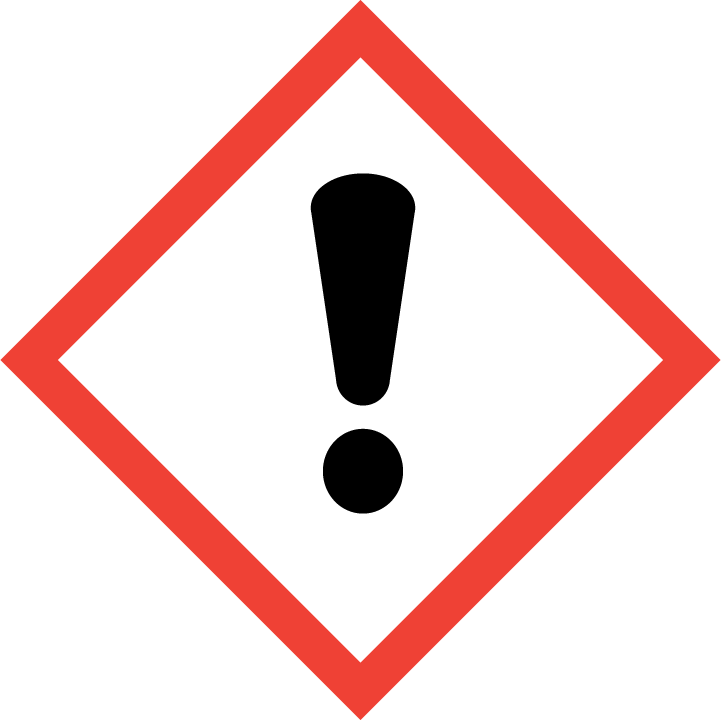
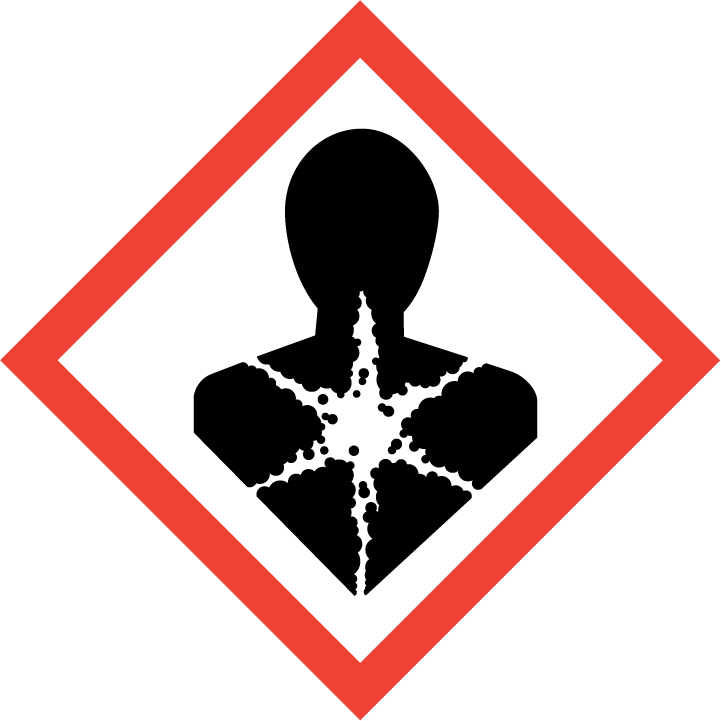
- Signal Words
- Warning
- Hazard Statement(s)
- Combustible liquid.
- Causes skin irritation.
- Causes serious eye irritation.
- May cause respiratory irritation.
- May cause drowsiness or dizziness.
- Suspected of causing cancer (Inhalation).
- May cause damage to organs (liver) through prolonged or repeated exposure (Inhalation).
- Precautionary Statement(s)
- Obtain special instructions before use.
- Do not handle until all safety precautions have been read and understood.
- Keep away from heat, hot surfaces, sparks, open flames and other ignition sources. No smoking.
- Avoid breathing dust/fume/gas/mist/vapours/spray.
- Wash hands, forearms and face thoroughly after handling.
- Use only outdoors or in a well-ventilated area.
- Wear eye protection, protective gloves.
- In case of fire: Use ABC-powder, carbon dioxide (CO₂), alcohol resistant foam, foam, sand to
- extinguish.
- Store in a well-ventilated place. Keep container tightly closed.
- Store in a well-ventilated place. Keep cool.
- Store locked up.
- Dispose of contents/container to hazardous or special waste collection point, in accordance with
- local, regional, national and/or international regulation.
Primary route(s) of entry
Primary route of entry may be skin, eyes, inhalation or ingestion
Human Health
- Inhalation
- If inhaled: Remove person to fresh air and keep comfortable for breathing.
- Ingestion
- Call a POISON CENTER or doctor/physician if you feel unwell.
- Eyes
- Rinse cautiously with water for several minutes. Remove contact lenses, if present and easy to do. Continue rinsing.
- If exposed or concerned: Get medical advice/attention. If eye irritation persists: Get medical advice/attention.
- Skin
- If on skin: Wash with plenty of soap and water.
- If skin irritation occurs: Get medical advice/attention.
- Take off contaminated clothing and wash it before reuse.
Environment
- Harmful to aquatic life with long lasting effects
- Collect on absorbent material and dispose of according to federal, state and local environmental regulations.
3. Composition / Information on Ingredients
| Name | CAS No. | Content (w/w) | Classification |
|---|---|---|---|
| Organic solvent | Not Available | >70% | Trade secret, not disclosed by the manufacturer. See information is section 16 |
4. First Aid Measures
- Ingestion
- Call a poison center/doctor/physician if you feel unwell.
- Inhalation
- Remove person to fresh air and keep comfortable for breathing. Call a poison center/doctor/physician if you feel unwell.
- Skin Contact
- Wash thoroughly with water for at least 15 minutes. Obtain medical attention.
- Eye Contact
- Wash thoroughly with water for at least 15 minutes. Rinse cautiously with water for several minutes. Remove contact lenses, if present and easy to do. Continue rinsing. If eye irritation persists: Get medical advice/attention.
- Other Information
- Symptoms/effects : May cause drowsiness or dizziness.
- Symptoms/effects after inhalation : May cause respiratory irritation.
- Symptoms/effects after skin contact : Irritation.
- Symptoms/effects after eye contact : Eye irritation
5. Firefighting Measures
Suitable extinguishing equipment
- Fire
- Use water spray, alcohol-resistant foam, dry chemical or carbon dioxide.
- HAZCHEM
- Combustible liquid.
- Hazardous decomposition products in case of fire : Toxic fumes may be released.
Special protective equipment and precautions for fire fighters
Do not attempt to take action without suitable protective equipment. Self-contained breathing apparatus. Complete protective clothing.
6. Accidental Release Measures
- Personal precautions, protective equipment and emergency procedures
- For non-emergency personnel
- Emergency procedures: Ventilate spillage area. No open flames, no sparks, and no smoking. Do not breathe dust/fume/gas/mist/vapours/spray. Avoid contact with skin and eyes.
- For emergency responders
- Protective equipment : Do not attempt to take action without suitable protective equipment. For further information refer
- to section 8: "Exposure controls/personal protection".
- Environmental precautions
- Avoid release to the environment.
- Methods and materials for containment and clean up
- Collect on absorbent material and dispose of according to federal, state and local environmental regulations.
- Dispose of materials or solid residues at an authorised site.
7. Handling and Storage
- Precautions for safe handling
- Precautions for safe handling : Keep away from heat, hot surfaces, sparks, open flames and other ignition sources. No smoking.
- Wear personal protective equipment. Obtain special instructions before use. Do not handle until all safety precautions have been read and understood. Do not breathe dust/fume/gas/mist/vapours/spray. Use only outdoors or in a well-ventilated area. Avoid contact with skin and eyes.
- Hygiene measures : Wash contaminated clothing before reuse. Do not eat, drink or smoke when using this product.
- Always wash hands after handling the product.
- Conditions for safe storage
- Store in a well-ventilated place. Keep cool. Store locked up. Keep container tightly closed.
8. Exposure Controls / Personal Protection
Exposure Standards
| Material | TWA ppm | TWA mg/m³ | STEL ppm | STEL mg/m³ |
|---|---|---|---|---|
| Organic solvent (Trade secret) | 0.1ppm | - | - | - |
- Engineering controls
- Appropriate engineering controls : Ensure good ventilation of the work station.
- Environmental exposure controls : Avoid release to the environment.
Personal protective equipment
- Eye and face protection
- Chemical safety goggles.
- Skin protection
- Compatible chemical-resistant gloves. Wear suitable protective clothing.
- Body protection
- Compatible chemical-resistant gloves.
- Respiratory protection
- In case of insufficient ventilation, wear suitable respiratory equipment.
9. Physical and Chemical Properties
General information
- Appearance
- Clear liquid, light blue
- Odour
- Not applicable
- pH
- Not applicable
- Vapour Pressure
- Not applicable
- Density
- Not applicable
- Boiling Point
- 69 °C
- Melting Point
- Not applicable
- Solubility
- Not applicable
- Specific Gravity of Density
- Not applicable
- Flash Point
- Non-flammable
- Flammable (Explosive) Limits
- Not applicable
- Ignition Temperature
- Not applicable
- Formula
- Not applicable
10. Stability and Reactivity
- Reactivity
- The product is non-reactive under normal conditions of use, storage and transport
- Chemical stability
- Stable under recommended storage conditions.
- Possibility of hazardous reactions
- No dangerous reactions known under normal conditions of use
- Conditions to avoid
- Avoid contact with hot surfaces. Heat. No flames, no sparks. Eliminate all sources of ignition.
- Incompatible materials
- No additional information available. Under normal conditions of storage and use, hazardous decomposition products should not be produced.
11. Toxicological Information
- Acute effects
- No data available.
- Eye contact
- Causes serious eye irritation.
- Skin contact
- Causes skin irritation.
- Ingestion
- No data available.
- Inhalation
- No data available.
- Toxicity and irritation
- Skin corrosion/irritation : Causes skin irritation.
- Serious eye damage/irritation : Causes serious eye irritation.
- Respiratory or skin sensitization : Not classified
- Germ cell mutagenicity : Not classified
- Carcinogenicity : Suspected of causing cancer (Inhalation).
- Aspiration hazard : Not classified
- Viscosity, kinematic : No data available
- Symptoms/effects : May cause drowsiness or dizziness.
- Symptoms/effects after inhalation : May cause respiratory irritation.
- Symptoms/effects after skin contact : Irritation.
- Symptoms/effects after eye contact : Eye irritation.
- Trade secret compound
- LD50 oral rat: > 2000 mg/kg body weight Animal: rat, Guideline: OECD Guideline 401 (Acute Oral Toxicity).
- LD50 dermal rat: > 2000 mg/kg body weight Animal: rat, Guideline: OECD Guideline 402 (Acute Dermal Toxicity).
- LC50 Inhalation - Rat: ? 0.035 mg/l air Animal: rat, Guideline: OECD Guideline 403 (Acute Inhalation Toxicity).
- IARC group Status: 2B - Possibly carcinogenic to humans
- National Toxicity Program (NTP) Status: Reasonably anticipated to be Human Carcinogen
- STOT-single exposure: May cause drowsiness or dizziness. May cause respiratory irritation
- STOT-repeated exposure: May cause damage to organs (liver) through prolonged or repeated exposure (Inhalation).
12. Ecological Information
- Ecotoxicity
- The product is not considered harmful to aquatic organisms or to cause long-term adverse effects in the environment.
- Persistence and degradability
- No data available.
- Bioaccumulative potential
- Trade secret compound
- Partition coefficient n-octanol/water (Log Pow): 2.1 Source: ECHA
- Other adverse effects
- No data available.
13. Disposal Considerations
General information
Waste treatment methods : Dispose of contents/container in accordance with licensed collector's sorting instructions
14. Transport Information
ADG label required
- HAZCHEM
- Combustible liquid.
- Hazardous decomposition products in case of fire : Toxic fumes may be released.
- UN Number
- Not applicable
- Proper shipping name
- Not applicable
- Transport hazard class
- Not applicable
- Packing group
- III (DOT)
- Environmental hazard
- No data available.
- Special precautions for users
- DOT Special Provisions (49 CFR 172.102) : 148 - For domestic transportation, this entry directs to § 173.66 for: a. The standards for transporting a single bulk hazardous material for blasting by cargo tank motor vehicles (CTMV);
- and b. The standards for CTMVs capable of transporting multiple hazardous materials for blasting in bulk and non-bulk packagings (i.e, a multipurpose bulk truck (MBT)). IB3 - Authorized IBCs: Metal (31A, 31B and 31N); Rigid plastics (31H1 and 31H2); Composite (31HZ1 and 31HA2, 31HB2, 31HN2, 31HD2 and 31HH2). Additional Requirement: Only liquids
- with a vapour pressure less than or equal to 110 kPa at 50 C (1.1 bar at 122 F), or 130 kPa at 55 C (1.3 bar at 131 F) are authorised, except for UN2672 (also see Special Provision IP8 in Table 2 for UN2672).
- T1 - 1.5 178.274(d)(2) Normal............. 178.275(d)(2)
- TP1 - The maximum degree of filling must not exceed the degree of filling determined by the
- following: Degree of filling = 97 / 1 ± a (tr - tf) Where: tr is the maximum mean bulk temperature
- during transport, and tf is the temperature in degrees celsius of the liquid during filling.
- DOT Packaging Exceptions (49 CFR 173.xxx) : 150
- DOT Packaging Non Bulk (49 CFR 173.xxx) : 203
- DOT Packaging Bulk (49 CFR 173.xxx) : 241
- DOT Quantity Limitations Passenger aircraft/rail (49
- CFR 173.27): 60 L
- DOT Quantity Limitations Cargo aircraft only (49CFR 175.75): 220 L
- DOT Vessel Stowage Location : A - The material may be stowed ''on deck'' or ''under deck'' on a cargo vessel and on a
- passenger vessel.
- Additional information
- No data available.
15. Regulatory Information
- Poisons Schedule Number
- SARA 302 - No chemicals in this material are subject to the reporting requirements.
- SARA 313 - This material does not contain any chemical components with known CAS numbers that exceed the threshold reporting levels established.
- SARA 311/312 Hazards - Fire Hazard, Acute Health Hazard, Chronic Health Hazard.
- Trade secret compound
- Subject to reporting requirements of United States SARA Section 313
- 15.2. International regulations
- Trade secret compound
- Listed on IARC (International Agency for Research on Cancer)
- Listed as carcinogen on NTP (National Toxicology Program)
- 15.3. US State regulations
- WARNING: This product can expose you to Trade secret compound, which is known to the State of California to cause cancer and birth defects or other reproductive harm. For more information go to www.P65Warnings.ca.gov.
- Other Information
- Risk phrases:
- R60 - May impair fertility
- R63 - Possible risk of harm to the unborn child
- R67 - Vapors may cause drowsiness and dizziness
- R36/37/38 - Irritating to eyes, respiratory system and skin
- R48/20 - Harmful: danger of serious damage to health by prolonged exposure through inhalation
- Safety phrases:
- S26 - In case of contact with eyes, rinse immediately with plenty of water and seek medical advice.
- S36/37 - Wear suitable protective clothing and gloves.
- S45 - In case of accident or if you feel unwell, seek medical advice immediately (show the label where possible).
- S53 - Avoid exposure - obtain special instructions before use.
16. Other Information
- SDS preparation date
- 24 February 2026
- Comments
- *Chemical name, CAS number and/or exact concentration have been withheld as a trade secret.
- The specific chemical\ component identities and/or the exact component percentages of this material may be withheld as trade secrets.
- This information is made available to health professionals, employees, and designated representatives in accordance with the applicable provisions of 29 CFR 1910.1200 (I)(1). Trace ingredients (if any) are present in < 1% concentration, (< 0.1% for potential carcinogens, mutagen, and reproductive toxicant, respiratory tract and skin sensitisers in addition to oral/ inhalation acute toxicant in category 1 and 2). None of the trace ingredients contribute significant additional hazards at the concentrations that may be present in this product. All pertinent hazard information has been provided in this document, per the requirements of the Federal Occupational Safety and Health Administration Standard (29 CFR 1910.1200), U.S. State equivalents.
- References
- Vector Laboratories Safety Data Sheet ImmEdge™ Pen 27/09/2022 https://prod-vector-labs-wordpress-media.s3.amazonaws.com/productattachments/sds/VL_H-4000_GHSsds.pdf