
Safety Data Sheets / Methyl-5-Norbornene-2,3-Dicarboxylic Anhydride (NMA)
Safety Data Sheet
Methyl-5-Norbornene-2,3-Dicarboxylic Anhydride (NMA)
1. Identification
Product Identifiers
- Product Name
- Nadic Methyl Anhydride (NMA)
- Other Names
- Methyl-5-Norbornene-2,3-Dicarboxylic Anhydride
- Product Number(s)
- C046
- CAS Number
- 25134-21-8
Recommended use of the chemical and restriction on use
Laboratory use.
Company Details
ProSciTech Pty Ltd
11 Carlton Street
KIRWAN QLD 4817
Australia
(07) 4773 9444
pst@proscitech.com
proscitech.com.au
11 Carlton Street
KIRWAN QLD 4817
Australia
(07) 4773 9444
pst@proscitech.com
proscitech.com.au
Emergency Contact Details
ProSciTech Pty Ltd
11 Carlton Street
KIRWAN QLD 4817
Australia
(07) 4773 9444
pst@proscitech.com
proscitech.com.au
11 Carlton Street
KIRWAN QLD 4817
Australia
(07) 4773 9444
pst@proscitech.com
proscitech.com.au
2. Hazards Identification
Classification of the substance or mixture
- GHS08 health hazard
- Resp. Sens. 1 H334 May cause allergy or asthma symptoms or breathing difficulties if inhaled.
- GHS07
- Acute Tox. 4 H302 Harmful if swallowed.
- Skin Irrit. 2 H315 Causes skin irritation.'
- Eye Irrit. 2A H319 Causes serious eye irritation.
- GHS05 Corrosion
- Skin corrosion 1C H314 Causes severe skin burns and eye damage.
Label Elements
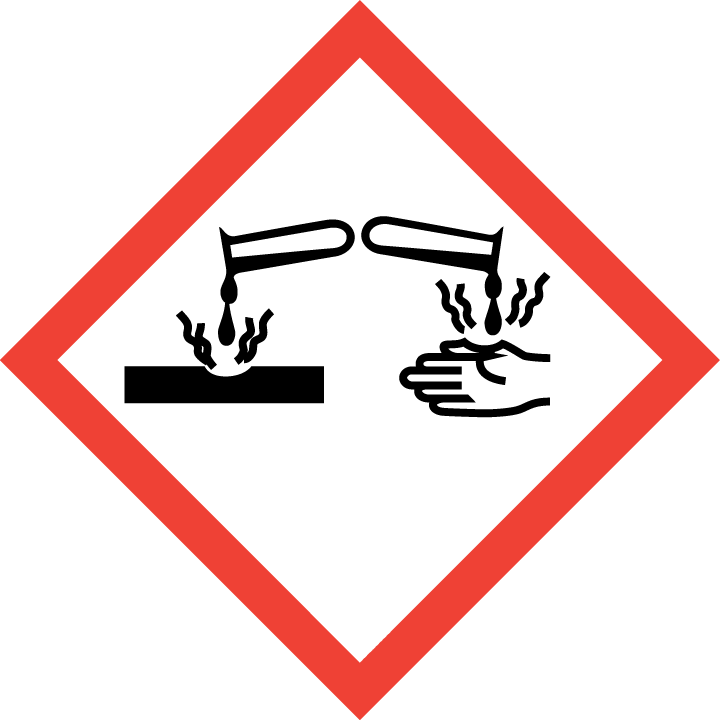
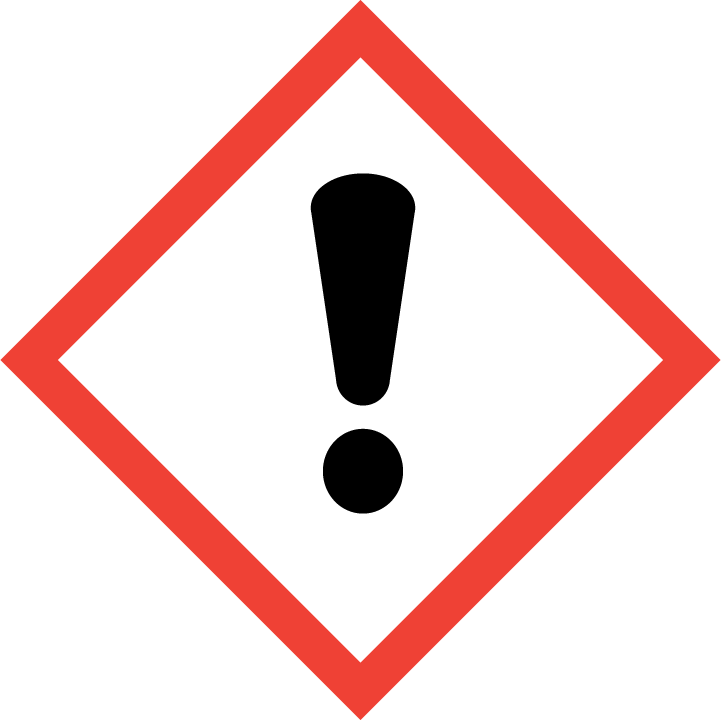
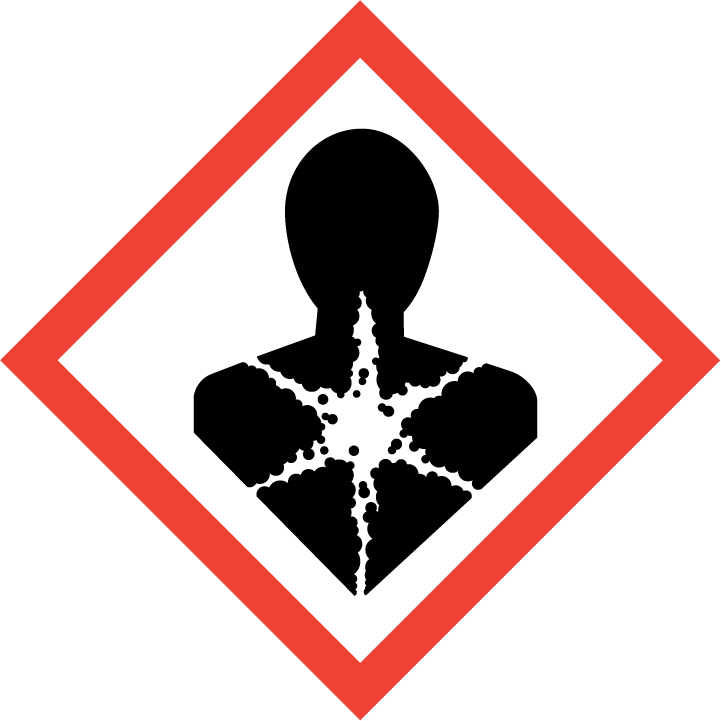
- Signal Words
- None
- Hazard Statement(s)
- H302 Harmful if swallowed.
- H314 Causes severe skin burns and eye damage.
- H317 May cause an allergic skin reaction.
- H334 May cause allergy or asthma symptoms or breathing difficulties if inhaled.
- Precautionary Statement(s)
- Prevention
- P261 Avoid breathing mist or vapours.
- P264 Wash skin thoroughly after handling.
- P280 Wear protective gloves/ protective clothing/ eye protection/ face protection.
- P284 Wear respiratory protection.
Primary route(s) of entry
Not available.
Human Health
- Inhalation
- P304 ± P340 ± P310 IF INHALED: Remove person to fresh air and keep comfortable for breathing. Immediately call a POISON CENTER/ doctor.
- Ingestion
- P301 ± P330 ± P331 IF SWALLOWED: Rinse mouth. Do NOT induce vomiting.
- Eyes
- P305 ± P351 ± P338 ± P310
- IF IN EYES: Rinse cautiously with water for several minutes.
- Remove contact lenses, if present and easy to do. Continue rinsing. Immediately call a POISON CENTER/ doctor.
- Skin
- P303 ± P361 ± P353 IF ON SKIN (or hair): Take off immediately all contaminated clothing. Rinse skin with water/ shower.
Environment
No further relevant information available.
3. Composition / Information on Ingredients
| Name | CAS No. | Content (w/w) | Classification |
|---|---|---|---|
| (Methyl-5-Norbornene-2,3-Dicarboxylic Anhydride | 25134-21-8 | <= 100 % | Acute Tox. 4; Skin Corr. 1; Eye Dam. 1; Resp. Sens.1; Skin Sens. 1; H302, H314, H318, H334, H317 |
4. First Aid Measures
- Ingestion
- Call for a doctor immediately.
- Inhalation
- In case of unconsciousness place patient stably in side position for transportation.
- Skin Contact
- In case of skin contact: Take off immediately all contaminated clothing. Rinse skin with water/ shower. Call a physician immediately.
- Eye Contact
- Rinse opened eye for several minutes under running water. If symptoms persist, consult a doctor.
- Other Information
- Symptoms of poisoning may even occur after several hours; therefore medical observation for at least 48 hours after the accident.
5. Firefighting Measures
Suitable extinguishing equipment
- Fire
- CO₂, powder or water spray. Fight larger fires with water spray or alcohol resistant foam.
- HAZCHEM
- Not available.
Special protective equipment and precautions for fire fighters
- Stay in danger area only with self-contained breathing apparatus. Prevent skin contact by
- keeping a safe distance or by wearing suitable protective clothing.
- Further information
- Prevent fire extinguishing water from contaminating surface water or the ground water system
6. Accidental Release Measures
- Personal precautions, protective equipment and emergency procedures
- Advice for non-emergency personnel: Do not breathe vapours, aerosols. Avoid substance contact. Ensure adequate ventilation. Evacuate the danger area, observe emergency procedures, consult an expert.
- For personal protection see section 8.
- Environmental precautions
- Do not allow to enter sewers/ surface or ground water.
- Methods and materials for containment and clean up
- Dispose contaminated material as waste according to item 13.
- Ensure adequate ventilation.
7. Handling and Storage
- Precautions for safe handling
- Ensure good ventilation/exhaustion at the workplace.
- Keep away from foodstuffs, beverages and feed.
- Immediately remove all soiled and contaminated clothing.
- Conditions for safe storage
- Storage conditions
- Tightly closed. Keep locked up or in an area accessible only to qualified or authorised persons.
- Moisture sensitive.
- Storage class
- Storage class (TRGS 510): 8A: Combustible, corrosive hazardous materials
8. Exposure Controls / Personal Protection
Exposure Standards
- Engineering controls
- No information available.
Personal protective equipment
- Eye and face protection
- Use equipment for eye protection tested and approved under appropriate government standards such as NIOSH (US) or EN 166(EU). Tightly fitting safety goggles
- Skin protection
- Wash hands before breaks and at the end of work.
- Avoid contact with the eyes and skin.
- Body protection
- Keep away from foodstuffs, beverages and feed.
- Immediately remove all soiled and contaminated clothing.
- Respiratory protection
- In case of brief exposure or low pollution use respiratory filter device. In case of intensive or longer exposure use self-contained respiratory protective device.
9. Physical and Chemical Properties
General information
- Appearance
- Liquid
- Odour
- Characteristic
- pH
- Not determined.
- Vapour Pressure
- Not determined.
- Density
- 1.232 g/cm³ (10.28104 lbs/gal)
- Boiling Point
- Undetermined.
- Melting Point
- Undetermined.
- Solubility
- Not determined.
- Specific Gravity of Density
- Not applicable.
- Flash Point
- 135 °C (275 °F)
- Flammable (Explosive) Limits
- Not applicable.
- Ignition Temperature
- Not determined.
- Formula
- Not available.
10. Stability and Reactivity
- Reactivity
- No further relevant information available.
- Chemical stability
- Not available.
- Possibility of hazardous reactions
- No dangerous reactions known.
- Conditions to avoid
- No further relevant information available.
- Incompatible materials
- No further relevant information available.
11. Toxicological Information
- Acute effects
- No further relevant information available.
- Eye contact
- Irritating effect.
- Skin contact
- Irritant to skin and mucous membranes.
- Ingestion
- No further relevant information available.
- Inhalation
- No further relevant information available.
- Toxicity and irritation
- No further relevant information available.
12. Ecological Information
- Ecotoxicity
- No further relevant information available.
- Persistence and degradability
- No further relevant information available.
- Bioaccumulative potential
- No further relevant information available.
- Other adverse effects
- Do not allow undiluted product or large quantities of it to reach ground water, water course or sewage system.
13. Disposal Considerations
General information
- Waste material must be disposed of in accordance with the national and local regulations.
- Leave chemicals in original containers. No mixing with other waste. Handle uncleaned containers like the product itself.
14. Transport Information
ADG label required
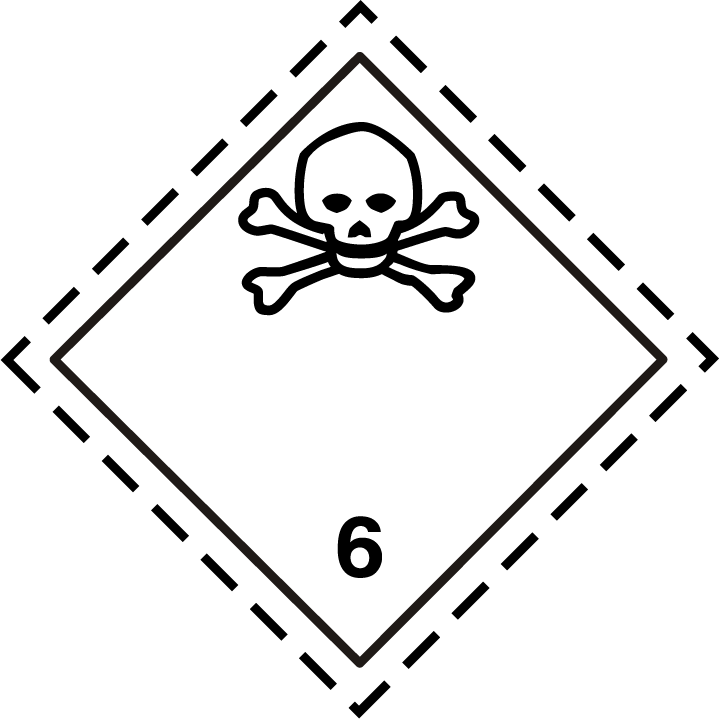
- HAZCHEM
- Not available.
- UN Number
- UN2810
- Proper shipping name
- DOT Toxic, liquids, organic, n.o.s. (NMA, (Methyl-5-Norbornene-2,3-Dicarboxylic Anhydride))
- ADR 2810 TOXIC LIQUID, ORGANIC, N.O.S. (NMA, (Methyl-5-Norbornene-2,3-Dicarboxylic Anhydride))
- IMDG, IATA TOXIC LIQUID, ORGANIC, N.O.S. (NMA, (Methyl-5-Norbornene-2,3-Dicarboxylic Anhydride))
- Transport hazard class
- 6.1 Toxic substances
- Packing group
- PG III
- Environmental hazard
- No information available.
- Special precautions for users
- Special precautions for user Warning: Toxic substances
- Hazard identification number (Kemler code): 60
- EMS Number: F-A,S-A
- Additional information
- Transport/Additional information:
- DOT · Quantity limitations On passenger aircraft/rail: 60 L
- On cargo aircraft only: 220 L
- ADR · Excepted quantities (EQ) Code: E1
- Maximum net quantity per inner packaging: 30 mL
- Maximum net quantity per outer packaging: 1000 mL
- IMDG · Limited quantities (LQ) 5L
- Excepted quantities (EQ) Code: E1
- Maximum net quantity per inner packaging: 30 mL
- Maximum net quantity per outer packaging: 1000 ml
15. Regulatory Information
- Poisons Schedule Number
- Substance is not listed.
- Other Information
- No further relevant information available.
16. Other Information
- SDS preparation date
- 9 December 2025
- Comments
- Abbreviations and acronyms:
- ADR: Accord relatif au transport international des marchandises dangereuses par route (European Agreement Concerning the International
- Carriage of Dangerous Goods by Road)
- IMDG: International Maritime Code for Dangerous Goods
- DOT: US Department of Transportation
- IATA: International Air Transport Association
- EINECS: European Inventory of Existing Commercial Chemical Substances
- CAS: Chemical Abstracts Service (division of the American Chemical Society)
- NFPA: National Fire Protection Association (USA)
- HMIS: Hazardous Materials Identification System (USA)
- PBT: Persistent, Bioaccumulative and Toxic
- vPvB: very Persistent and very Bioaccumulative
- NIOSH: National Institute for Occupational Safety
- OSHA: Occupational Safety Health
- TLV: Threshold Limit Value
- PEL: Permissible Exposure Limit
- REL: Recommended Exposure Limit
- Acute toxicity - oral 4: Acute toxicity - Category 4
- Skin corrosion 1C: Skin corrosion/irritation - Category 1C
- Eye irritation 2A: Serious eye damage/eye irritation - Category 2A
- Sensitization - respiratory 1: Respiratory sensitisation - Category 1
- Specific target organ toxicity (single exposure) 3: Specific target organ toxicity (single exposure) - Category 3
- References
- EMS SDS NMA, (Methyl-5-Norbornene-2,3-Dicarboxylic Anhydride) 01/02/2025 https://www.emsdiasum.com/docs/technical/msds/19000.pdf
- Sigma-Aldrich SDS Methyl-5-norbornene-2,3-dicarboxylic anhydride 26/10/2023 https://www.sigmaaldrich.com/AU/en/sds/aldrich/235431-userType=anonymous