
Safety Data Sheets / PELCO High Performance Pastes - Nickel
Safety Data Sheet
PELCO High Performance Pastes - Nickel
1. Identification
Product Identifiers
- Product Name
- PELCO High Performance Pastes - Nickel
- Other Names
- No available
- Product Number(s)
- 16059; 16059-10; I059
Recommended use of the chemical and restriction on use
Laboratory use only
Company Details
ProSciTech Pty Ltd
11 Carlton Street
KIRWAN QLD 4817
Australia
(07) 4773 9444
pst@proscitech.com
proscitech.com.au
11 Carlton Street
KIRWAN QLD 4817
Australia
(07) 4773 9444
pst@proscitech.com
proscitech.com.au
Emergency Contact Details
ProSciTech Pty Ltd
11 Carlton Street
KIRWAN QLD 4817
Australia
(07) 4773 9444
pst@proscitech.com
proscitech.com.au
11 Carlton Street
KIRWAN QLD 4817
Australia
(07) 4773 9444
pst@proscitech.com
proscitech.com.au
2. Hazards Identification
Classification of the substance or mixture
Solution
Label Elements
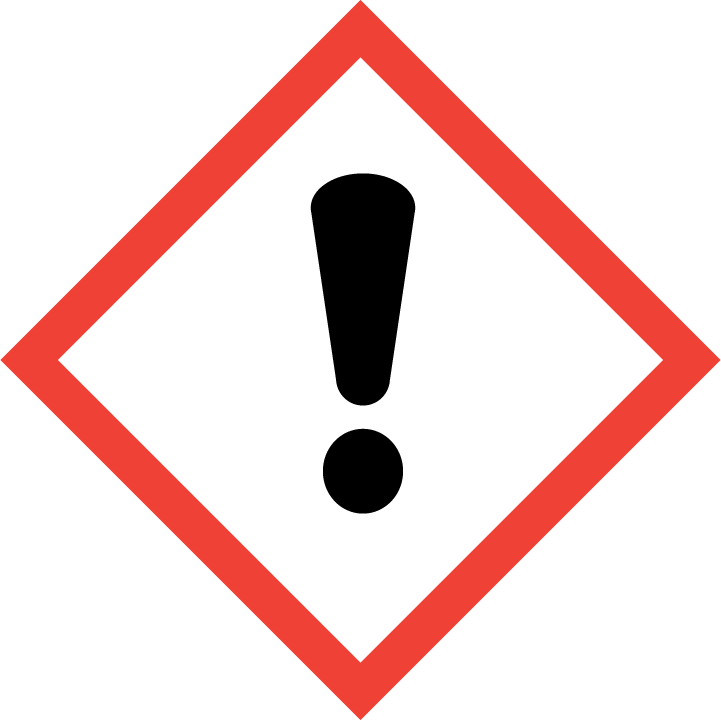
- Signal Words
- Warning
- Hazard Statement(s)
- H303 Harmful if swallowed.
- H315 Causes skin irritation.
- H319 Causes serious eye irritation
- Precautionary Statement(s)
- P264 Wash hands thoroughly after handling.
- P280 Wear protective gloves. Wear eye protection.
- P302 ± P352 IF ON SKIN: Wash with plenty of soap and water.
- P332 ± P313 If skin irritation occurs: Get medical advice/attention.
- P305 ± P351 ± P338 IF IN EYES: Remove contact lenses, if present and easy to do. Rinse cautiously with water for several minutes.
- P312 IF SWALLOWED: Call a poison centre or doctor if you feel unwell.
- P362 Take off contaminated clothing and wash before reuse.
- P501 Dispose in accordance with local, regional, national or international regulations
Primary route(s) of entry
Eye and skin contact, ingestion.
Human Health
- Inhalation
- No further relevant information available.
- Ingestion
- Harmful if swallowed
- Eyes
- Causes serious eye irritation.
- Skin
- Causes skin irritation.
Environment
This material is believed to be practically non-toxic to aquatic life. This material is inorganic and not subject to biodegradation.
3. Composition / Information on Ingredients
| Name | CAS No. | Content (w/w) | Classification |
|---|---|---|---|
| Nickel | 7440-02-0 | 50-70% | Not Available |
| Silicate Solution | 1334-09-8 | 10-20% | Not Available |
| Water | 7732-18-5 | 20-30% | Not Available |
4. First Aid Measures
- Ingestion
- If swallowed, do not induce vomiting. If victim is conscious and alert, give 1-2 glasses of water to drink. Do not give anything by mouth to an unconscious person. Seek medical attention immediately.
- Inhalation
- In case of inhalation due to spray mist, machining dust or dried particulate, remove source of exposure and assure that victim is breathing. If not breathing, administer cardio-pulmonary resuscitation (CPR).
- Skin Contact
- Immediately wipe excess material off skin with a dry cloth then wash with soap and water for at least 5 minutes.
- Eye Contact
- Hold eyelids open and flush with a steady, gentle stream of water for at least 15 minutes. Seek immediate medical attention, preferably with an ophthalmologist
- Other Information
- Medical Conditions generally Aggravated by Exposure: Inhalation of product may aggravate existing chromic respiratory problems such as asthma, emphysema or bronchitis. Skin contact may aggravate existing skin disease.
5. Firefighting Measures
Suitable extinguishing equipment
- Fire
- This material is compatible with all extinguishing media. This material is non-combustible.
- HAZCHEM
- No further relevant information available.
Special protective equipment and precautions for fire fighters
Firefighters should wear NIOSH/MSHA approved positive pressure breathing apparatus with full face-piece and full chemical resistant protective clothing. Dike area to prevent runoff and contamination of water sources. Dispose of fire control water later
6. Accidental Release Measures
- Personal precautions, protective equipment and emergency procedures
- Wear chemical goggles, body-covering protective clothing, chemical resistant gloves, and rubber boots. Use NIOSH approved respirator where mist occurs.
- Environmental precautions
- This material is believed to be practically non-toxic to aquatic life. This material is inorganic and not subject to biodegradation. Ensure proper disposal compliance with proper authorities before disposal.
- Methods and materials for containment and clean up
- Mop up and neutralize liquid, then discharge to sewer in accordance with federal, state and local regulations or permits. Flush area with water to complete cleanup. Exercise caution during neutralization as heat
- may be generated. Dispose of waste according to Federal, State and Local Regulations
7. Handling and Storage
- Precautions for safe handling
- Use respiratory protection, protective gloves and googles when handling this product.
- Avoid contact with eyes, skin and clothing. Avoid breathing spray mist. Keep container closed.
- Promptly clean residue from closures with cloth dampened with water. Promptly clean up spills.
- Store at room temperature
- Conditions for safe storage
- Store in an area that is cool, dry, well ventilated, away from combustible material, and away from ignition sources. Store in clean plastic or stainless steel containers.
8. Exposure Controls / Personal Protection
Exposure Standards
| Material | TWA ppm | TWA mg/m³ | STEL ppm | STEL mg/m³ |
|---|---|---|---|---|
| Nickel (7440-02-0) | - | 1.5 | - | |
| Silicate solution (1334-09-8) | - | - | - | |
| Water (7732-18-5) | - | - | - |
- Engineering controls
- Use with adequate ventilation. Keep containers closed. Safety shower and eyewash fountain should be within direct access.
Personal protective equipment
- Eye and face protection
- Wear chemical goggles
- Skin protection
- Wear protective gloves
- Body protection
- Wear body-covering protective clothing
- Respiratory protection
- This product is not considered respirable in either the liquid or cured forms. However, if the cured product is polished, ground or chipped during processing, handling or use, powders may be released
- as airborne respirable particles. In these instances, appropriate personal protection equipment and local ventilation controls must be employed. If exposure limits are exceeded and local ventilation is unavailable, a supplied-air respirator or a self-contained NIOSH-approved dust and mist respirator is required.
9. Physical and Chemical Properties
General information
- Appearance
- Grey paste
- Odour
- Odorless
- pH
- No further relevant information available.
- Vapour Pressure
- No further relevant information available.
- Density
- No further relevant information available.
- Boiling Point
- 100°C
- Melting Point
- No further relevant information available.
- Solubility
- Soluble
- Specific Gravity of Density
- No further relevant information available.
- Flash Point
- No further relevant information available.
- Flammable (Explosive) Limits
- No further relevant information available.
- Ignition Temperature
- No further relevant information available.
- Formula
- No further relevant information available.
10. Stability and Reactivity
- Reactivity
- No further relevant information available.
- Chemical stability
- This material is stable under all conditions of use and storage.
- Possibility of hazardous reactions
- Will not occur
- Conditions to avoid
- Prolonged contact with aluminium, brass, copper, lead, and zinc may produce flammable hydrogen gas
- Incompatible materials
- Gels and heats when mixed with acid. May react with ammonium salts resulting in evolution of ammonia gas.
11. Toxicological Information
- Acute effects
- No further relevant information available.
- Eye contact
- Irritating to eyes
- Skin contact
- Not sensitizing
- Irritating to skin
- LD50, Dermal, 4640 mg/kg (Rabbit)
- Ingestion
- LD50 Oral, 1153 mg/kg (Rat)
- Inhalation
- No further relevant information available.
- Toxicity and irritation
- This product does not contain any compounds listed by NTP or IARC or regulated by OSHA as a carcinogen
12. Ecological Information
- Ecotoxicity
- This material is believed to be practically non-toxic to aquatic life.
- Persistence and degradability
- This material is believed to persist in the environment
- Bioaccumulative potential
- This material is not expected to bio concentrate in organisms
- Other adverse effects
- Sinks and mixes with water. Only water will evaporate from this material.
13. Disposal Considerations
General information
Disposal must be made according to official regulations.
14. Transport Information
ADG label required
- HAZCHEM
- No further relevant information available.
- UN Number
- No further relevant information available.
- Proper shipping name
- No further relevant information available.
- Transport hazard class
- No further relevant information available.
- Packing group
- No further relevant information available.
- Environmental hazard
- No further relevant information available.
- Special precautions for users
- No further relevant information available.
- Additional information
- No further relevant information available.
15. Regulatory Information
- Poisons Schedule Number
- No further relevant information available
- Other Information
- Fire Hazard: No
- Reactivity Hazard: No
- Pressure Hazard: No
- Immediate Hazard: Yes
- Delayed Hazard: No
- SARA Title III: Sections 302, 304, 313: This product does not contain any substances reportable under these sections.
- RCRA: None of the ingredients are listed.
- TSCA: All components are listed on the TSCA public inventory.
- CERCLA: None of the ingredients are listed.
- WARNING: This product contains a chemical known to the State of California to cause cancer
16. Other Information
- SDS preparation date
- 26 February 2026
- Comments
- This information is based on our present knowledge. However, this shall not constitute a guarantee for any specific product features and shall not establish a legally valid contractual relationship.