
Safety Data Sheets / Phenol Red Free Acid, ACS Grade
Safety Data Sheet
Phenol Red Free Acid, ACS Grade
1. Identification
Product Identifiers
- Product Name
- Phenol Red Free Acid, ACS Grade
- Other Names
- Phenol red; phenolsulfonphthalein; 4,4;-(3H-2,1-bensoxathiol-3-ylidene)bis-phenol, S,Sdioxid
- Product Number(s)
- C115, C1151, C1155
- CAS Number
- 143-74-8
Recommended use of the chemical and restriction on use
Used in laboratories as a staining dye
Company Details
ProSciTech Pty Ltd
11 Carlton Street
KIRWAN QLD 4817
Australia
(07) 4773 9444
pst@proscitech.com
proscitech.com.au
11 Carlton Street
KIRWAN QLD 4817
Australia
(07) 4773 9444
pst@proscitech.com
proscitech.com.au
Emergency Contact Details
ProSciTech Pty Ltd
11 Carlton Street
KIRWAN QLD 4817
Australia
(07) 4773 9444
pst@proscitech.com
proscitech.com.au
11 Carlton Street
KIRWAN QLD 4817
Australia
(07) 4773 9444
pst@proscitech.com
proscitech.com.au
2. Hazards Identification
Classification of the substance or mixture
- Skin irritation (Category 2)
- Specific target organ toxicity - single exposure (Category 3) Respiratory.
Label Elements
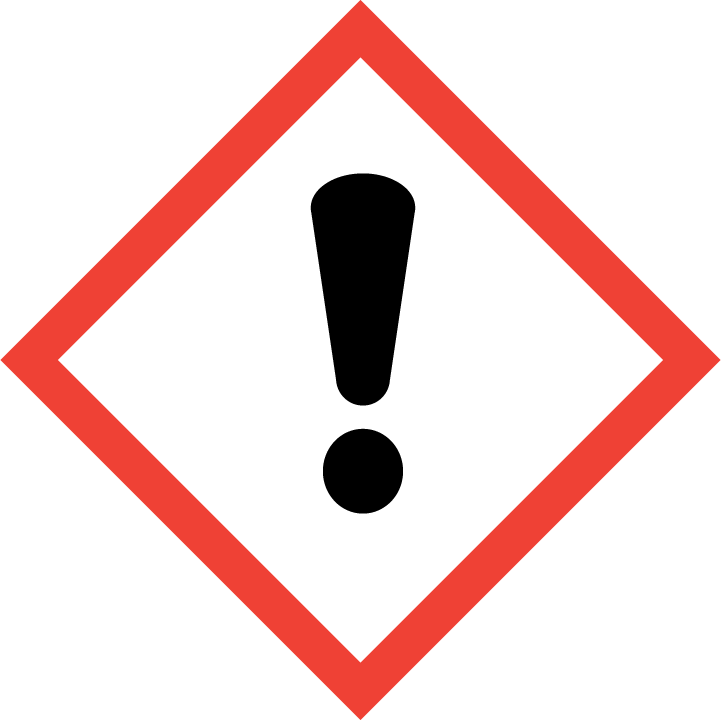
- Signal Words
- Warning
- Hazard Statement(s)
- H315: Causes skin irritation.
- H335: May cause respiratory irritation.
- Precautionary Statement(s)
- P261: Avoid breathing dust/spray/ fume/gas/ mist/ vapours.
- P264: wash skin thoroughly after handling.
- P271: Use only outdoors or in well-ventilated area.
- P405: Store locked up.
- P280: Wear protective gloves/eye & face protection.
- P302 ± P352: If on skin gently wash with plenty of soap & water.
- P301 ± P312: If Swallowed: Call Poison Center or doctor/physician if you feel unwell.
- P304 ± P340: If inhaled: remove to fresh air and keep at rest in a position comfortable for breathing.
- P305 ± P351 ± P338: If in Eyes: Rinse cautiously with water for several minutes. Remove contact lenses, if present & easy to do so. Continue Rinsing.
- P321: Specific treatment (see supplemental first aid instructions).
- P332 ± P313: If skin irritation occurs: consult physician.
- P337 ± P313: If eye irritation occurs: consult physician.
- P362: Take off contaminated clothing and wash before reuse.
- P312: Call Poison Center or doctor/physician if you feel unwell.
- P403 ± P233: Store in a well ventilated place. Keep container tightly closed. P501: Dispose of contents/container to an approved waste disposal plant.
- P405 Store locked up.
- P501 Dispose of contents/container to an approved waste disposal plant.
Primary route(s) of entry
Not available.
Human Health
- Inhalation
- May be harmful by inhalation.
- Ingestion
- Harmful if swallowed.
- Eyes
- Risk of serious damage to eyes.
- Skin
- Harmful in contact with skin.
Environment
Not available.
3. Composition / Information on Ingredients
| Name | CAS No. | Content (w/w) | Classification |
|---|---|---|---|
| Phenol Red | 143-74-8 | 90-100% | - |
4. First Aid Measures
- Ingestion
- Do not induce vomiting without medical advice. Rinse with water. Consult physician.
- Inhalation
- Move to fresh air. Consult a physician
- Skin Contact
- Rinse with plenty of soap & water and seek medical advice.
- Eye Contact
- In the case of contact with eyes, rinse immediately with plenty of water and seek medical advice.
- Other Information
- Treat symptomatically and supportively.
5. Firefighting Measures
Suitable extinguishing equipment
- Fire
- Use water spray, Carbon Dioxide, dry chemical powder, or alcohol-resistant foam.
- HAZCHEM
- Emits toxic fumes under fire conditions. Special Hazards Arising: Carbon & sulphur oxides.
Special protective equipment and precautions for fire fighters
As in any fire, wear a self-contained breathing apparatus in pressure-demand, MSHA/NIOSH approved or equivalent, and full protective gear.
6. Accidental Release Measures
- Personal precautions, protective equipment and emergency procedures
- Use proper personal protective equipment as indicated in Section 8.
- Environmental precautions
- Not available.
- Methods and materials for containment and clean up
- Clean up spills immediately, observing precautions in the Protective Equipment section. Avoid generating dusty conditions. Provide ventilation.
7. Handling and Storage
- Precautions for safe handling
- Wash thoroughly after handling. Avoid contact with eyes, skin, and clothing. Avoid ingestion and inhalation. Minimize dust generation and accumulation.
- Conditions for safe storage
- Store in a tightly closed container. Store in a cool, dry, well-ventilated area away from incompatible.
8. Exposure Controls / Personal Protection
Exposure Standards
- Engineering controls
- Facilities storing or utilising this material should be equipped with an eyewash facility and safety shower. Use adequate ventilation to keep airborne concentrations low.
Personal protective equipment
- Eye and face protection
- Wear appropriate protective eyeglasses or chemical safety goggles as described by OSHA's eye and face protection regulation in 29 CFR 1910.133 or European Standard EN 166.
- Skin protection
- Wear appropriate protective gloves to prevent skin exposure. 0.11mm thick nitrile.
- Body protection
- Wear appropriate protective clothing to prevent skin exposure.
- Respiratory protection
- Follow the OSHA respirator regulations found in 29 CFR 1910.134 or European Standard EN 149. Always use a NIOSH or European Standard EN 149 approved respirator when necessary.
9. Physical and Chemical Properties
General information
- Appearance
- Bright red to a dark red powder.
- Odour
- Odorless.
- pH
- Not available.
- Vapour Pressure
- Not available.
- Density
- ca.200-300kg/m3
- Boiling Point
- Not available.
- Melting Point
- >300°C
- Solubility
- 0.77g/l at 100°C
- Specific Gravity of Density
- Not available.
- Flash Point
- Not available.
- Flammable (Explosive) Limits
- Not available.
- Ignition Temperature
- Not available.
- Formula
- C19H14O5S
10. Stability and Reactivity
- Reactivity
- No further relevant information available.
- Chemical stability
- Stable under ordinary conditions of use and storage.
- Possibility of hazardous reactions
- No further relevant information available.
- Conditions to avoid
- Incompatible material.
- Incompatible materials
- Strong oxidising agents.
11. Toxicological Information
- Acute effects
- No further relevant information available.
- Eye contact
- No further relevant information available.
- Skin contact
- No further relevant information available.
- Ingestion
- No further relevant information available.
- Inhalation
- May cause respiratory irritation.
- Toxicity and irritation
- No further relevant information available.
12. Ecological Information
- Ecotoxicity
- No further relevant information available.
- Persistence and degradability
- No further relevant information available.
- Bioaccumulative potential
- No further relevant information available.
- Other adverse effects
- No further relevant information available.
13. Disposal Considerations
General information
Chemical waste generators must determine whether a discarded chemical is classified as a hazardous waste. US EPA guidelines for the classification determination are listed in 40 CFR Parts 261.3. Additionally, waste generators must consult state and local hazardous waste regulations to ensure complete and accurate classification.
14. Transport Information
ADG label required
- HAZCHEM
- Emits toxic fumes under fire conditions. Special Hazards Arising: Carbon & sulphur oxides.
- UN Number
- None
- Proper shipping name
- Not regulated.
- Transport hazard class
- 0
- Packing group
- None.
- Environmental hazard
- No information available.
- Special precautions for users
- No information available.
- Additional information
- No information available.
15. Regulatory Information
- Poisons Schedule Number
- Not listed.
- Other Information
- No further relevant information available.
16. Other Information
- SDS preparation date
- 29 November 2024
- Comments
- This information is based on our present knowledge. However, this shall not constitute a guarantee for any specific product features and shall not establish a legally valid contractual relationship.