
Safety Data Sheets / Ryu's Flagella Stain
Safety Data Sheet
Ryu's Flagella Stain
1. Identification
Product Identifiers
- Product Name
- Ryu's Flagella Stain - DISCONTINUED
- Other Names
- Flagella stain
- Product Number(s)
- ARYU-500
- CAS Number
- -
Recommended use of the chemical and restriction on use
- Laboratory use.
- Used in hospital and pathology laboratories for Flagella staining only
Company Details
ProSciTech Pty Ltd
11 Carlton Street
KIRWAN QLD 4817
Australia
(07) 4773 9444
pst@proscitech.com
proscitech.com.au
11 Carlton Street
KIRWAN QLD 4817
Australia
(07) 4773 9444
pst@proscitech.com
proscitech.com.au
Emergency Contact Details
ProSciTech Pty Ltd
11 Carlton Street
KIRWAN QLD 4817
Australia
(07) 4773 9444
pst@proscitech.com
proscitech.com.au
11 Carlton Street
KIRWAN QLD 4817
Australia
(07) 4773 9444
pst@proscitech.com
proscitech.com.au
2. Hazards Identification
Classification of the substance or mixture
HAZARDOUS SUBSTANCE, NON-DANGEROUS GOOD
Label Elements
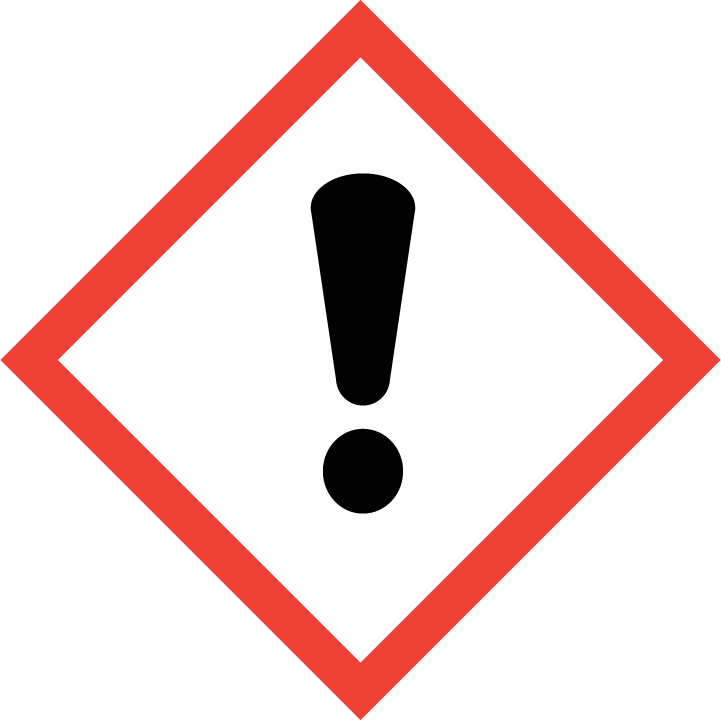
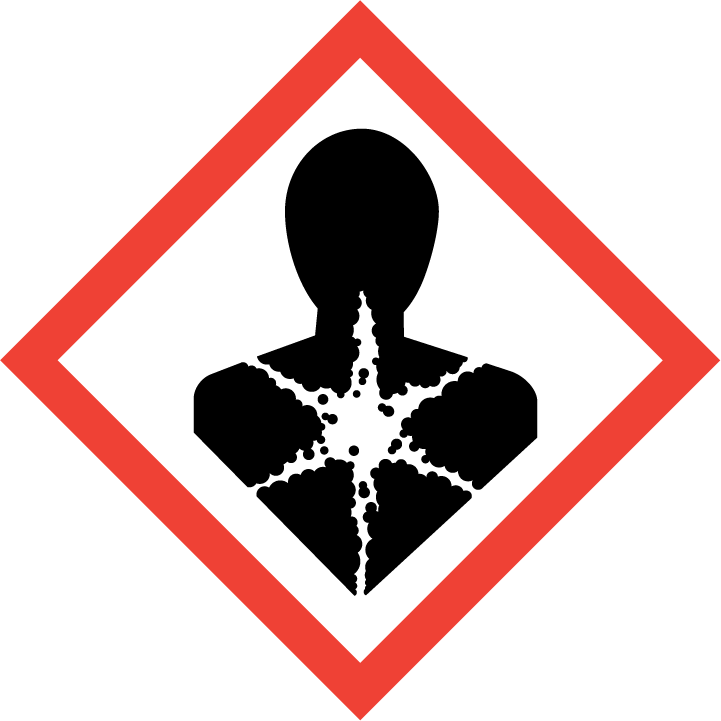
- Signal Words
- Warning
- Hazard Statement(s)
- Not available.
- Precautionary Statement(s)
- Not available.
Primary route(s) of entry
Not available.
Human Health
- Inhalation
- Move victim to fresh air. Apply resuscitation if victim is not breathing.
- Ingestion
- Not available.
- Eyes
- Eye wash fountain, safety shower and normal wash room facilities.
- Skin
- Not available.
Environment
Not available.
3. Composition / Information on Ingredients
| Name | CAS No. | Content (w/w) | Classification |
|---|---|---|---|
| TANNIC ACID(Below Cutoff) | -1401-55-4 | 1 to 10% | - |
| PHENOL | 108-95-2 | 1 to 10% | - |
| ALUMINIUM SULFATE (Below Cutoff) | 16828-11-8 | 1 to 10%- | - |
| CRYSTAL VIOLET (Below Cutoff) | 548-62-9 | < 1% | - |
| ETHANOL | 64-17-5 | < 36% | - |
| WATER | 7732-18-5 | > 60% | - |
4. First Aid Measures
- Ingestion
- If swallowed, DO NOT induce vomiting. Give 3 to 4 glasses of water to drink. Seek immediate medical assistance.
- Inhalation
- Move victim to fresh air. Apply resuscitation if victim is not breathing.
- Skin Contact
- If material is splashed onto the skin, remove any contaminated clothing and wash skin thoroughly with soap and water. If irritation persists transport to hospital or doctor.
- Eye Contact
- If material is splashed into eyes, immediately, flush with plenty of water for 15 minutes, ensuring eye lids are held open. If irritation persists transport to hospital or doctor.
- Other Information
- Additional information for Skin If product contains less than 25 % phenol, then remove any contaminated clothing, wash thoroughly with soap and water, then methylated spirits. If product contains greater than 25 % phenol, then remove any contaminated clothing, swab repeatedly with glycerin, PEG (polyethylene glycol) or PEG - methylated spirits mixture or if necessary or available methylated spirits alone.
5. Firefighting Measures
Suitable extinguishing equipment
- Fire
- Use extinguishing media suitable for surrounding fire situation.
- HAZCHEM
- Not available.
Special protective equipment and precautions for fire fighters
- Decomposes on heating emitting oxides of carbon.
- Emits smoke and fumes when heated to decomposition. Fire fighters to wear Self-contained breathing apparatus (SCBA) in confined spaces, in oxygen deficient atmospheres or if exposed to products of decomposition. Full protective clothing is also recommended.
- If safe to do so, move undamaged containers from fire area.
6. Accidental Release Measures
- Personal precautions, protective equipment and emergency procedures
- Material may be slippery when spilt. Walk cautiously. Ventilate area. Wear protective equipment to prevent skin and eye contact, as outlined under personal protection in this MSDS.
- Environmental precautions
- Not available.
- Methods and materials for containment and clean up
- Bund area using sand or soil - to prevent run off into drains and waterways. Use absorbent (soil, sand, vermiculite or other inert material). Collect and seal in properly labeled containers for disposal.
7. Handling and Storage
- Precautions for safe handling
- Not available.
- Conditions for safe storage
- Store in a cool place and out of direct sunlight. Store away from sources of heat or ignition. Store away from oxidising agents. Keep containers closed, when not using the product. Store in original packages as approved by manufacturer.
8. Exposure Controls / Personal Protection
Exposure Standards
| Material | TWA ppm | TWA mg/m³ | STEL ppm | STEL mg/m³ |
|---|---|---|---|---|
| PHENOL | 5 ppm | 4 mg/m³ | - | - |
| ETHANOL | 1,000 ppm | 1,880 mg/m³ | - | - |
| TANNIC ACID(Below Cutoff) | No Exposure details available | - | - | - |
| ALUMINIUM SULFATE (Below Cutoff) | No Exposure details available | - | - | - |
| CRYSTAL VIOLET | No Exposure details available | - | - | - |
| WATER | No Exposure details available | - | - | - |
- Engineering controls
- Maintain adequate ventilation at all times. In most circumstances natural ventilation systems are adequate unless the material is heated, reacted or otherwise changed in some type of chemical reaction, then the use of a local exhaust ventilation system is recommended.
Personal protective equipment
- Eye and face protection
- Chemical goggles or faceshield to protect eyes.
- Skin protection
- Not normally required, however, if handling large quantities or if the skin is likely to be exposed to this product over prolonged periods, then the use of PVC or natural rubber is recommended.
- Body protection
- No information available.
- Respiratory protection
- Avoid breathing of vapours/gases. Select and use respirators in accordance with AS/NZS 1715/1716. The use of a dust mask (disposable) or a half-face respirator with P1 filter is recommended. Filter capacity and respirator type depends on exposure levels and type of contaminant. If entering spaces where the airborne concentration of a contaminant is unknown then the use of a Self-contained breathing apparatus (SCBA) with positive pressure air supply complying with AS/NZS 1715 / 1716, or any other acceptable International Standard is recommended.
9. Physical and Chemical Properties
General information
- Appearance
- Purple brown liquid
- Odour
- Not available.
- pH
- Not available.
- Vapour Pressure
- 25hPa@20°C
- Density
- 1L=1.02kg
- Boiling Point
- Not available.
- Melting Point
- Not available.
- Solubility
- Soluble in all proportions in water.
- Specific Gravity of Density
- Not available.
- Flash Point
- Not applicable.
- Flammable (Explosive) Limits
- Not applicable.
- Ignition Temperature
- Not available.
- Formula
- Not available.
10. Stability and Reactivity
- Reactivity
- No further relevant information available.
- Chemical stability
- Stable under normal conditions of use.
- Possibility of hazardous reactions
- Will not occur.
- Conditions to avoid
- High temperatures and incompatibles.
- Incompatible materials
- Strong alkalis, acids and oxidising agents.
11. Toxicological Information
- Acute effects
- Prolonged or repeated skin contact may lead to dermatitis.
- Prolonged contact may cause severe eye irritation and some form of permanent eye damage may occur.
- Product may also be absorbed through the skin with resultant toxic effects.
- Prolonged or repeated exposure may lead to irreversible damage to health.
- Eye contact
- Will cause irritation to the eyes, with effects including: tearing, pain, stinging and blurred vision. These effects are considered to be of a short acting nature and no long term injury is anticipated, if the product is removed promptly.
- Skin contact
- Harmful by skin contact. Will cause irritation to the skin, with effects including; Redness, itchiness, and drying/defatting.
- Ingestion
- Harmful if swallowed. May cause irritation to mouth, throat and stomach with effects including mucous build up, irritation to the tongue and lips and pains in the stomach, which may lead to nausea, vomiting and diarrhoea.
- Inhalation
- Mists from the product may cause irritation to the nose, throat and respiratory system with effects including: Cough, discomfort, difficulty breathing and shortness of breath.
- Toxicity and irritation
- No adverse health effects are expected, if the product is handled in accordance with this Material Safety Data Sheet and the product label. Symptoms and effects that may arise if the product is mishandled and overexposure occurs are:
12. Ecological Information
- Ecotoxicity
- No further relevant information available.
- Persistence and degradability
- No further relevant information available.
- Bioaccumulative potential
- No further relevant information available.
- Other adverse effects
- No further relevant information available.
13. Disposal Considerations
General information
Refer to appropriate authority in your State. Dispose of material through a licensed waste contractor. Normally suitable for disposal by approved waste disposal agent.
14. Transport Information
ADG label required
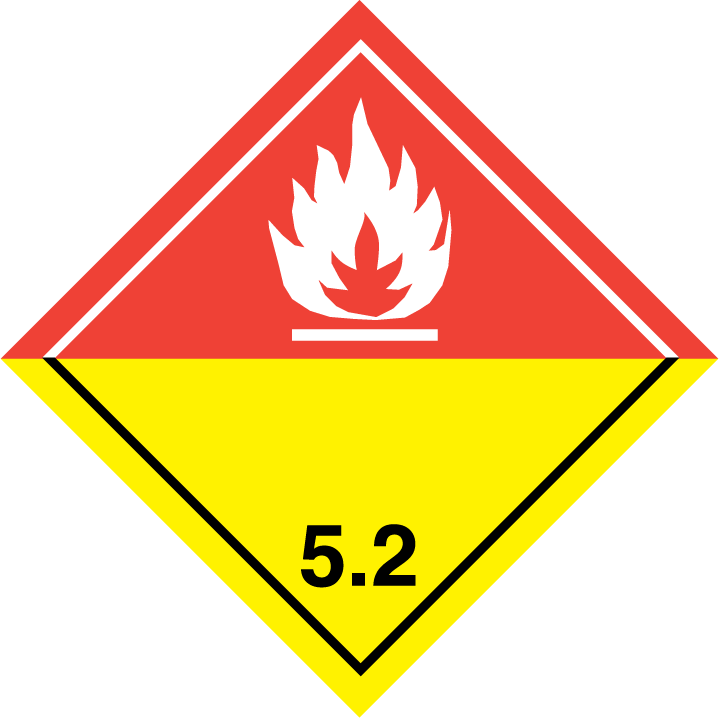
- HAZCHEM
- Not available.
- UN Number
- None.
- Proper shipping name
- Not regulated.
- Transport hazard class
- 0
- Packing group
- None.
- Environmental hazard
- No information available.
- Special precautions for users
- No information available.
- Additional information
- No information available.
15. Regulatory Information
- Poisons Schedule Number
- Poison Schedule: S5
- Other Information
- No further relevant information available.
16. Other Information
- SDS preparation date
- 27 February 2026
- Comments
- This information is based on our present knowledge. However, this shall not constitute a guarantee for any specific product features and shall not establish a legally valid contractual relationship.