
Safety Data Sheets / Safranin O, C.I. 50240
Safety Data Sheet
Safranin O, C.I. 50240
1. Identification
Product Identifiers
- Product Name
- Safranin O, C.I. 50240
- Other Names
- 3,7-Diamino-2,8-dimethyl-5-phenylphenazinium chloride, Basic Red 2, Safranin T, Cotton Red, Gossypimine
- Product Number(s)
- C138
- CAS Number
- 477-73-6
Recommended use of the chemical and restriction on use
Laboratory use.
Company Details
ProSciTech Pty Ltd
11 Carlton Street
KIRWAN QLD 4817
Australia
(07) 4773 9444
pst@proscitech.com
proscitech.com.au
11 Carlton Street
KIRWAN QLD 4817
Australia
(07) 4773 9444
pst@proscitech.com
proscitech.com.au
Emergency Contact Details
ProSciTech Pty Ltd
11 Carlton Street
KIRWAN QLD 4817
Australia
(07) 4773 9444
pst@proscitech.com
proscitech.com.au
11 Carlton Street
KIRWAN QLD 4817
Australia
(07) 4773 9444
pst@proscitech.com
proscitech.com.au
2. Hazards Identification
Classification of the substance or mixture
Serious Eye Damage (Category 1)
Label Elements
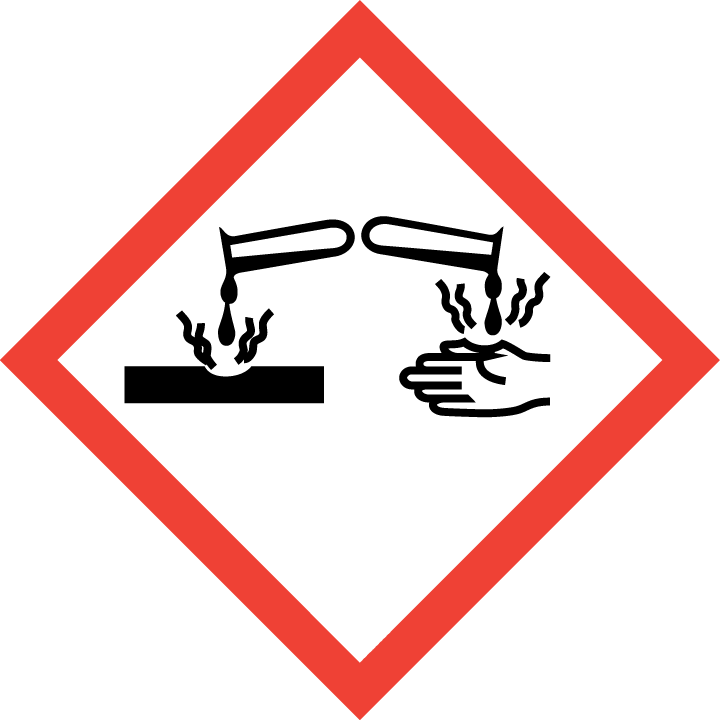
- Signal Words
- None
- Hazard Statement(s)
- H318: Causes serious eye damage.
- Precautionary Statement(s)
- P280: Wear protective gloves/eye & face protection
- P310:Immediately Call Poison Center or doctor/physician
- P305 ± P351 ± P338: If in Eyes: Rinse cautiously with water for several minutes. Remove contact lenses, if present & easy to do so. Continue Rinsing.
Primary route(s) of entry
Not available.
Human Health
- Inhalation
- Harmful by inhalation.
- Ingestion
- Harmful if swallowed.
- Eyes
- Risk of serious damage to eyes.
- Skin
- Harmful in contact with skin.
Environment
No further relevant information available.
3. Composition / Information on Ingredients
| Name | CAS No. | Content (w/w) | Classification |
|---|---|---|---|
| 3,7-Diamino-2,8-dimethyl-5-phenylphenazinium chloride | 477-73-6 | 95% | - |
4. First Aid Measures
- Ingestion
- Do not induce vomiting without medical advice. Rinse with water. Consult physician.
- Inhalation
- Move to fresh air. Consult a physician.
- Skin Contact
- Rinse with plenty of soap & water and seek medical advice.
- Eye Contact
- In the case of contact with eyes, rinse immediately with plenty of water and seek medical advice.
- Other Information
- Notes to Physician: Treat symptomatically and supportively.
5. Firefighting Measures
Suitable extinguishing equipment
- Fire
- Use water spray, dry chemical, carbon dioxide, or alcohol-resistant foam.
- Large Fire
- Use water spray, dry chemical, carbon dioxide, or alcohol-resistant foam.
- HAZCHEM
- Not available.
Special protective equipment and precautions for fire fighters
- Special Hazards Arising: Carbon & nitrogen oxides, hydrogen chloride gas.
- During a fire, irritating and highly toxic gases may be generated by thermal decomposition or combustion. Vapors may be heavier than air. They can spread along the ground and collect in low or confined areas.
6. Accidental Release Measures
- Personal precautions, protective equipment and emergency procedures
- Use proper PPE as indicated in Section 8
- Environmental precautions
- Not available.
- Methods and materials for containment and clean up
- Vacuum or sweep up material and place into a suitable disposal container. Avoid generating dusty conditions. Provide ventilation
7. Handling and Storage
- Precautions for safe handling
- Wash thoroughly after handling. Use with adequate ventilation. Keep container tightly closed. Do not get on skin or in eyes. Wash clothing before reuse. Avoid breathing dust.
- Conditions for safe storage
- Store in a tightly closed container. Keep from contact with oxidising materials. Store in a cool, dry, well-ventilated area away from incompatible substances
8. Exposure Controls / Personal Protection
Exposure Standards
| Material | TWA ppm | TWA mg/m³ | STEL ppm | STEL mg/m³ |
|---|---|---|---|---|
| Safranine O | - | - | - | - |
- Engineering controls
- Facilities storing or utilising this material should be equipped with an eyewash facility and a safety shower. Use adequate ventilation to keep airborne concentrations low.
Personal protective equipment
- Eye and face protection
- Safety glasses with side-shields. Skin:
- Skin protection
- Usual safety precautions while handling the product will provide adequate protection against this potential effect. Pvc or other plastic material gloves. 0.11mm thick nitrile. Handle in accordance with good industrial hygiene and safety practice.
- Body protection
- Wear appropriate protective clothing to prevent skin exposure.
- Respiratory protection
- Breathing apparatus only if aerosol or dust is formed.
9. Physical and Chemical Properties
General information
- Appearance
- Red- brown - brown - green powder
- Odour
- Not available.
- pH
- Not available.
- Vapour Pressure
- Not available.
- Density
- Not available.
- Boiling Point
- Not available.
- Melting Point
- Not available.
- Solubility
- Not available.
- Specific Gravity of Density
- Not available.
- Flash Point
- Not available.
- Flammable (Explosive) Limits
- Not available.
- Ignition Temperature
- Not available.
- Formula
- Not available.
10. Stability and Reactivity
- Reactivity
- Stable. However, may decompose if heated.
- Chemical stability
- Not available.
- Possibility of hazardous reactions
- No further relevant information available.
- Conditions to avoid
- Excess Heat, temperatures above 240 C.
- Incompatible materials
- Strong oxidising agents.
11. Toxicological Information
- Acute effects
- No further relevant information available.
- Eye contact
- Eye irritation
- Skin contact
- No further relevant information available.
- Ingestion
- No further relevant information available.
- Inhalation
- No further relevant information available.
- Toxicity and irritation
- No further relevant information available.
12. Ecological Information
- Ecotoxicity
- No further relevant information available.
- Persistence and degradability
- No further relevant information available.
- Bioaccumulative potential
- No further relevant information available.
- Other adverse effects
- No further relevant information available.
13. Disposal Considerations
General information
Chemical waste generators must determine whether a discarded chemical is classified as a hazardous waste. US EPA guidelines for the classification determination are listed in 40 CFR Parts 261.3. Additionally, waste generators must consult state and local hazardous waste regulations to ensure complete and accurate classification.
14. Transport Information
ADG label required
- HAZCHEM
- Not available.
- UN Number
- None.
- Proper shipping name
- Not regulated.
- Transport hazard class
- 0
- Packing group
- None.
- Environmental hazard
- No information available.
- Special precautions for users
- No information available.
- Additional information
- No information available.
15. Regulatory Information
- Poisons Schedule Number
- No information available.
- Other Information
- No further relevant information available.
16. Other Information
- SDS preparation date
- 27 February 2026
- Comments
- This information is based on our present knowledge. However, this shall not constitute a guarantee for any specific product features and shall not establish a legally valid contractual relationship.