
Safety Data Sheets / Sodium Thiosulphate Aqueous Solutions - 0.2%
Safety Data Sheet
Sodium Thiosulphate Aqueous Solutions - 0.2%
1. Identification
Product Identifiers
- Product Name
- Sodium Thiosulphate Aqueous Solutions - 0.2%
- Other Names
- Nil
- Product Number(s)
- 26123-07, EMS26123-07
- CAS Number
- 7732-18-5
Recommended use of the chemical and restriction on use
Laboratory chemicals, Laboratory use
Company Details
ProSciTech Pty Ltd
11 Carlton Street
KIRWAN QLD 4817
Australia
(07) 4773 9444
pst@proscitech.com
proscitech.com.au
11 Carlton Street
KIRWAN QLD 4817
Australia
(07) 4773 9444
pst@proscitech.com
proscitech.com.au
Emergency Contact Details
ProSciTech Pty Ltd
11 Carlton Street
KIRWAN QLD 4817
Australia
(07) 4773 9444
pst@proscitech.com
proscitech.com.au
11 Carlton Street
KIRWAN QLD 4817
Australia
(07) 4773 9444
pst@proscitech.com
proscitech.com.au
2. Hazards Identification
Classification of the substance or mixture
- GHS07: Eye Irritation 2 H319 Causes serious eye irritation.
- Label elements
- GHS label elements The substance is classified and labeled according to the Globally Harmonized System (GHS).
Label Elements
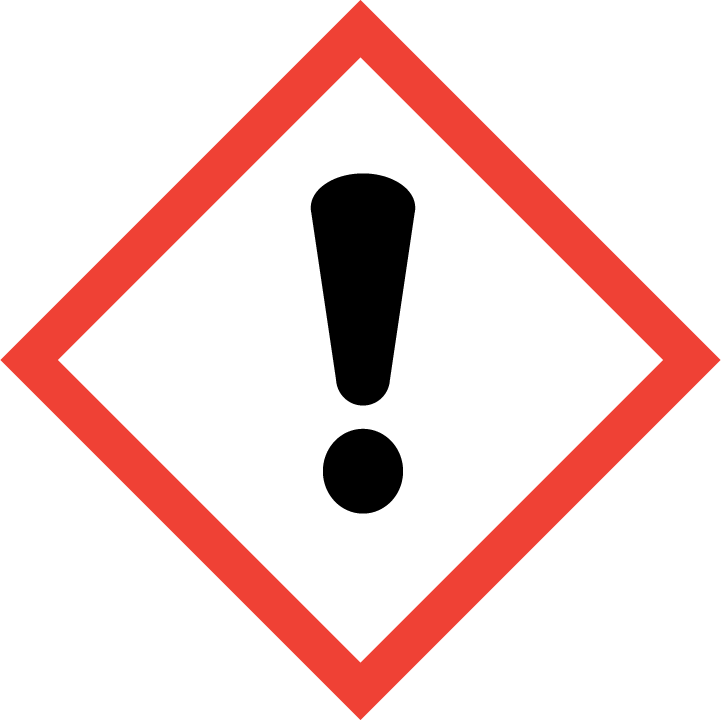
- Signal Words
- Warning
- Hazard Statement(s)
- Causes serious eye irritation.
- Precautionary Statement(s)
- Wash thoroughly after handling.
- Wear eye protection / face protection.
- If in eyes: Rinse cautiously with water for several minutes. Remove contact lenses, if present and easy to do.
- Continue rinsing.
- If eye irritation persists: Get medical advice/attention.
Primary route(s) of entry
Not applicable
Human Health
- Inhalation
- Not applicable
- Ingestion
- Not applicable
- Eyes
- Wear eye protection / face protection
- Skin
- Wash thoroughly after handling.
3. Composition / Information on Ingredients
| Name | CAS No. | Content (w/w) | Classification |
|---|---|---|---|
| Sodium Thiosulphate Pentahydrate | Not Available | Not Available |
4. First Aid Measures
- Ingestion
- If symptoms persist consult doctor.
- Inhalation
- Supply fresh air; consult doctor in case of complaints
- Skin Contact
- Generally the product does not irritate the skin.
- Eye Contact
- Rinse opened eye for several minutes under running water. If symptoms persist, consult a doctor.
- Other Information
- Most important symptoms and effects, both acute and delayed No further relevant information available.
- Indication of any immediate medical attention and special treatment needed
- No further relevant information available.
5. Firefighting Measures
Suitable extinguishing equipment
- Fire
- Use fire fighting measures that suit the environment.
- HAZCHEM
- No further relevant information available.
Special protective equipment and precautions for fire fighters
No special measures required.
6. Accidental Release Measures
- Personal precautions, protective equipment and emergency procedures
- Not required.
- Environmental precautions
- No special measures required.
- Methods and materials for containment and clean up
- Absorb with liquid-binding material (sand, diatomite, acid binders, universal binders, sawdust).
- Ensure adequate ventilation.
7. Handling and Storage
- Precautions for safe handling
- Ensure good ventilation/exhaustion at the workplace.
- Prevent formation of aerosols.
- Information about protection against explosions and fires: No special measures required.
- Conditions for safe storage
- Requirements to be met by storerooms and receptacles: No special requirements.
- Information about storage in one common storage facility: Not required.
- Further information about storage conditions: Keep receptacle tightly sealed.
- Specific end use(s) No further relevant information available.
8. Exposure Controls / Personal Protection
Exposure Standards
- Engineering controls
- Components with limit values that require monitoring at the workplace: Not required.
- Additional information: The lists that were valid during the creation were used as basis.
- Exposure controls
- Appropriate engineering controls No further data; see section 7.
Personal protective equipment
- Eye and face protection
- Tightly sealed goggles
- Body protection
- Protection of hands:
- The glove material has to be impermeable and resistant to the product/ the substance/ the preparation.
- Due to missing tests no recommendation to the glove material can be given for the product/ the preparation/ the
- chemical mixture.
- Selection of the glove material on consideration of the penetration times, rates of diffusion and the degradation
- Material of gloves
- The selection of the suitable gloves does not only depend on the material, but also on further marks of quality and
- varies from manufacturer to manufacturer.
- Penetration time of glove material
- The exact break through time has to be found out by the manufacturer of the protective gloves and has to be
- observed.
- Respiratory protection
- In case of brief exposure or low pollution use respiratory filter device. In case of intensive or longer exposure use
- respiratory protective device that is independent of circulating air.
9. Physical and Chemical Properties
General information
- Appearance
- Clear Liquid
- Odour
- odourless
- pH
- Not determined.
- Vapour Pressure
- Not determined.
- Density
- at 20 °C (68 °F): 1.01 g/cm³ (8.42845 lbs/gal)
- Boiling Point
- 100 °C (212 °F)
- Melting Point
- 0 °C (32 °F)
- Solubility
- Not applicable
- Specific Gravity of Density
- Not applicable
- Flash Point
- Not determined.
- Flammable (Explosive) Limits
- Not applicable
- Ignition Temperature
- Product does not present an explosion hazard.
- Formula
- Na₂S₂O?·5H₂O
10. Stability and Reactivity
- Reactivity
- No further relevant information available.
- Hazardous decomposition products: No dangerous decomposition products known.
- Chemical stability
- No decomposition if used according to specifications.
- Possibility of hazardous reactions
- No dangerous reactions known
- Conditions to avoid
- No further relevant information available
- Incompatible materials
- : No further relevant information available.
11. Toxicological Information
- Acute effects
- No sensitizing effects known.
- Interactive effects No interactive effects between components are known
- Eye contact
- Irritating effect.
- Skin contact
- No irritant effect.
12. Ecological Information
- Ecotoxicity
- No further relevant information available.
- Persistence and degradability
- No further relevant information available.
- Bioaccumulative potential
- No further relevant information available.
- Other adverse effects
- Mobility in soil No further relevant information available.
- Results of PBT and vPvB assessment
- PBT: Not applicable.
- vPvB: Not applicable.
- Other adverse effects
- Additional ecological information:
- General notes: Not hazardous for water.
13. Disposal Considerations
General information
- Waste treatment methods
- Recommendation:
- Must not be disposed of together with household garbage. Do not allow product to reach sewage system.
- Uncleaned packagings:
- Recommendation: Disposal must be made according to official regulations
14. Transport Information
ADG label required
- HAZCHEM
- No further relevant information available.
- UN Number
- Void
- Proper shipping name
- Void
- Transport hazard class
- Void
- Packing group
- Void
- Environmental hazard
- Not applicable.
- Special precautions for users
- Not applicable.
- Additional information
- Not applicable.
15. Regulatory Information
- Poisons Schedule Number
- Safety, health and environmental regulations/legislation specific for the substance or mixture
- No further relevant information available.
- Other Information
- Signal word Warning
- Hazard statements
- Causes serious eye irritation.
- Precautionary statements
- Wash thoroughly after handling.
- Wear eye protection / face protection.
- If in eyes: Rinse cautiously with water for several minutes. Remove contact lenses, if present and easy to do.
- Continue rinsing.
- If eye irritation persists: Get medical advice/attention.
- Chemical safety assessment: A Chemical Safety Assessment has not been carried out.
16. Other Information
- SDS preparation date
- 2 March 2026
- Comments
- Abbreviations and acronyms:
- ADR: Accord relatif au transport international des marchandises dangereuses par route (European Agreement Concerning the International
- Carriage of Dangerous Goods by Road)
- IMDG: International Maritime Code for Dangerous Goods
- (Contd. on page 8)
- US
- Page 8/8
- Safety Data Sheet
- acc. to OSHA HCS
- Date of issue: 04/21/2025 Reviewed on 08/26/2022
- Trade name: SODIUM THIOSULFATE, 0.2% AQUEOUS SOLUTION
- (Contd. of page 7)
- 60023DOT: US Department of Transportation
- IATA: International Air Transport Association
- EINECS: European Inventory of Existing Commercial Chemical Substances
- CAS: Chemical Abstracts Service (division of the American Chemical Society)
- NFPA: National Fire Protection Association (USA)
- HMIS: Hazardous Materials Identification System (USA)
- VOC: Volatile Organic Compounds (USA, EU)
- PBT: Persistent, Bioaccumulative and Toxic
- vPvB: very Persistent and very Bioaccumulative
- NIOSH: National Institute for Occupational Safety
- OSHA: Occupational Safety Health
- TLV: Threshold Limit Value
- PEL: Permissible Exposure Limit
- REL: Recommended Exposure Limit
- Eye Irritation 2: Serious eye damage/eye irritation - Category 2
- References
- EMS SDS Sodium Thiosulphate, 0.2% Aqueous Solution https://www.emsdiasum.com/docs/technical/msds/26123-07.pdf 26/08/2025