
Safety Data Sheets / Uranyl Magnesium Acetate
Safety Data Sheet
Uranyl Magnesium Acetate
1. Identification
Product Identifiers
- Product Name
- Uranyl Magnesium Acetate
- Other Names
- Magnesium bis(acetato-O)dioxouranate, magnesium uranyl acetate
- Product Number(s)
- 22500, 22501, EMS22501
- CAS Number
- 20596-93-4
Recommended use of the chemical and restriction on use
Laboratory chemicals
Company Details
ProSciTech Pty Ltd
11 Carlton Street
KIRWAN QLD 4817
Australia
(07) 4773 9444
pst@proscitech.com
proscitech.com.au
11 Carlton Street
KIRWAN QLD 4817
Australia
(07) 4773 9444
pst@proscitech.com
proscitech.com.au
Emergency Contact Details
ProSciTech Pty Ltd
11 Carlton Street
KIRWAN QLD 4817
Australia
(07) 4773 9444
pst@proscitech.com
proscitech.com.au
11 Carlton Street
KIRWAN QLD 4817
Australia
(07) 4773 9444
pst@proscitech.com
proscitech.com.au
2. Hazards Identification
Classification of the substance or mixture
- Very toxic.
- GHS06: Toxic Environ Damaging GHS08: Health Hazard GHS09: Environ Damaging
Label Elements
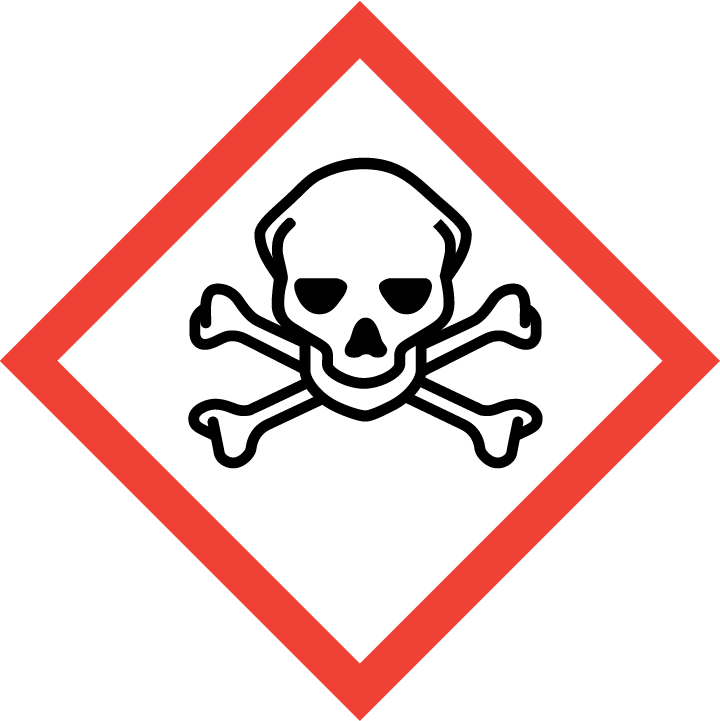
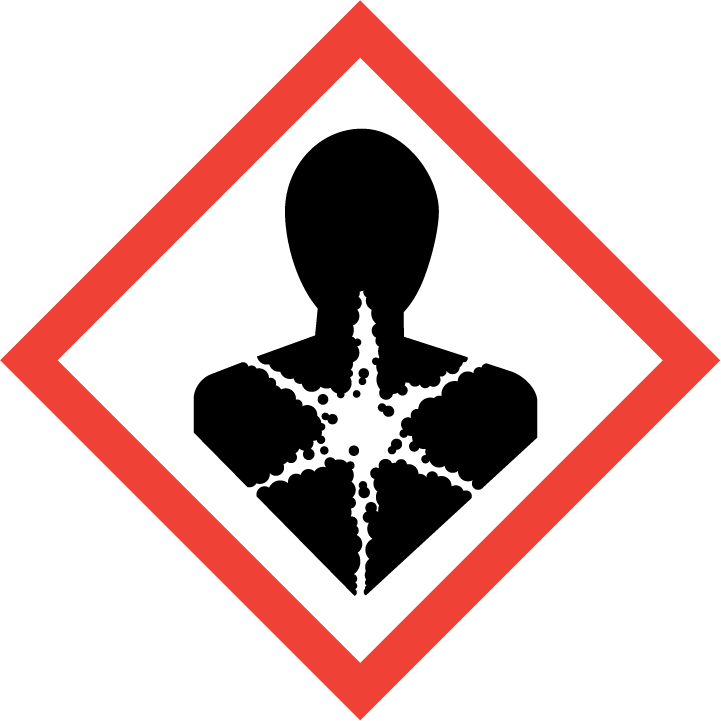
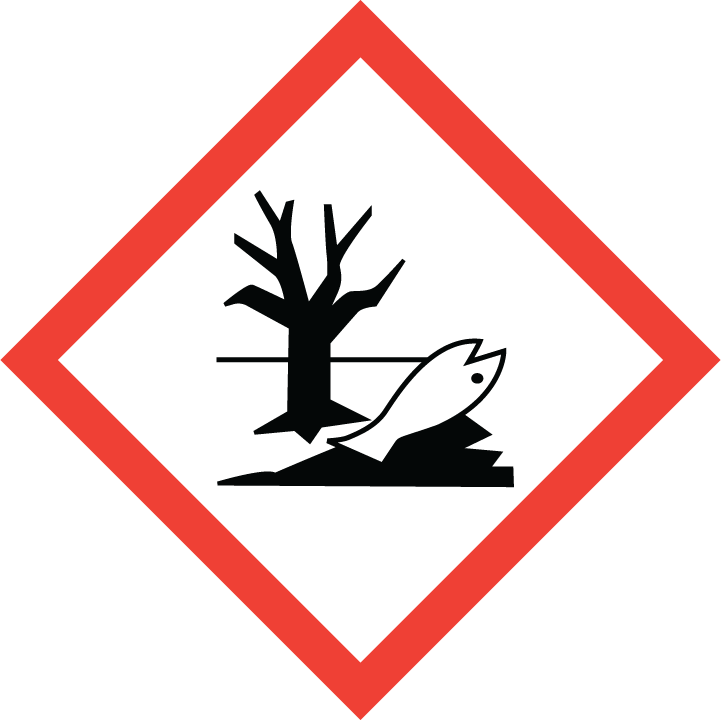
- Signal Words
- None
- Hazard Statement(s)
- H301 Toxic if swallowed.
- H331 Toxic if inhaled.
- GHS08 Health hazard.
- GHS09: Environ Damaging
- H373 May cause damage to organs through prolonged or repeated exposure. Specific Target Organ Toxicity - Repeated Exposure 2
- Precautionary Statement(s)
- P260 Do not breathe dust/ fume/ gas/ mist/ vapours/ spray.
- P264 Wash skin thoroughly after handling.
- P270 Do not eat, drink or smoke when using this product.
- P271 Use only outdoors or in a well-ventilated area.
- P273 Avoid release to the environment.
- P284 Wear respiratory protection.
- P301 ± P310 IF SWALLOWED: Immediately call a POISON CENTER or doctor/physician.
- P304 ± P340 IF INHALED: Remove victim to fresh air and keep at rest in a position comfortable for breathing.
- P310 Immediately call a POISON CENTER or doctor/ physician.
- P320 Specific treatment is urgent (see supplemental first aid instructions on this label).
- P330 Rinse mouth. P391 Collect spillage.
- P403 ± P233 Store in a well-ventilated place. Keep container tightly closed.
- P405 Store locked up.
- P501 Dispose of contents/ container to an approved waste disposal plant.
- Do not breathe dust/fume/gas/mist/vapours/spray.
- Wash thoroughly after handling.
- Do not eat, drink or smoke when using this product.
- Use only outdoors or in a well-ventilated area.
- If swallowed: Immediately call a poison center/doctor. Specific treatment (see on this label).
- Rinse mouth.
Primary route(s) of entry
Inhalation, ingestion, eye and skin contact.
Human Health
- Inhalation
- Immediately call a POISON CENTER or doctor/ physician. May cause damage to organs through prolonged or repeated exposure.
- Ingestion
- IF SWALLOWED: Remove person to fresh air and keep comfortable for breathing. Immediately call a POISON CENTER or doctor/physician May cause damage to organs through prolonged or repeated exposure.
- Eyes
- no information
- Skin
- no information
Environment
See Ecological Information (Section 12)
3. Composition / Information on Ingredients
| Name | CAS No. | Content (w/w) | Classification |
|---|---|---|---|
| Bis(acetato-O)dioxouranium dihydrate | 6159-44-0 | >100 | EC-No. : 208-767-5 Index-No. : 092-002-00-3 |
4. First Aid Measures
- Ingestion
- Never give anything by mouth to an unconscious person. Rinse mouth with water. Consult a physician.
- Inhalation
- If breathed in, move person into fresh air. If not breathing, give artificial respiration. Consult a physician.
- Skin Contact
- Wash off with soap and plenty of water. Take victim immediately to hospital. Consult a physician
- Eye Contact
- Flush eyes with water as a precaution
- Other Information
- Note to physician
- Treatment: ND
- Medical Conditions generally Aggravated by Exposure: ND
5. Firefighting Measures
Suitable extinguishing equipment
- Fire
- Use water spray, alcohol-resistant foam, dry chemical or carbon dioxide.
- HAZCHEM
- No information
Special protective equipment and precautions for fire fighters
Wear self-contained breathing apparatus for fire-fighting if necessary.
6. Accidental Release Measures
- Personal precautions, protective equipment and emergency procedures
- Steps to be Taken in Case Material is Released or Spilled: Wear respiratory protection. Avoid dust formation. Avoid breathing vapours, mist or gas. Ensure adequate ventilation
- Environmental precautions
- Prevent further leakage or spillage if safe to do so. Do not let product enter drains. Discharge into the environment must be avoided Evacuate personnel to safe areas. Avoid breathing dust. Methods and materials for containment and cleaning up: Pick up and arrange disposal without creating dust. Sweep up and shovel. Keep in suitable, closed containers for disposal. Environmental precautions: Prevent further leakage or spillage if safe to do so. Do not let product enter drains. Discharge into the environment must be avoided.
- Methods and materials for containment and clean up
- Must not be disposed together with household garbage. Do not allow product to reach sewage system. Dispose of waste according to Federal, State and Local Regulations.
7. Handling and Storage
- Precautions for safe handling
- Avoid contact with skin and eyes. Avoid breathing vapours, mist or gas. Wear respiratory protection. Avoid formation of dust and aerosols. Provide appropriate exhaust ventilation at places where dust is formed.
- Conditions for safe storage
- Keep container tightly closed in a dry and well-ventilated place. Store in metal can supplied with product.
- Storage temperature: Room temperature.
- Storage Pressure: NA
8. Exposure Controls / Personal Protection
Exposure Standards
- Engineering controls
- General protective and hygienic measures:
- Keep away from foodstuffs, beverages and feed.
- Immediately remove all soiled and contaminated clothing.
- Wash hands before breaks and at the end of work.
- Store protective clothing separately.
Personal protective equipment
- Eye and face protection
- Face shield and safety glasses Use equipment for eye protection tested and approved under appropriate government standards such as NIOSH (US) or EN 166(EU).
- Skin protection
- Full contact Material: Nitrile rubber, Minimum layer thickness: 0.11 mm, Break through time: 480 min Material tested: Dermatril® nitrile gloves
- Body protection
- Protection of Hands: The glove material has to be impermeable and resistant to the product/ the substance/ the preparation. Due to missing tests no recommendation to the glove material can be given for the product/ the preparation/ the chemical mixture.
- Selection of the glove material on consideration of the penetration times, rates of diffusion and the degradation. · Material of gloves The selection of the suitable gloves does not only depend on the material, but also on further marks of quality and varies from manufacturer to manufacturer.
- Respiratory protection
- In case of brief exposure or low pollution use respiratory filter device. In case of intensive or longer exposure use respiratory protective device that is independent of circulating air.
9. Physical and Chemical Properties
General information
- Appearance
- Crystalline powder. Color: Yellow.
- Odour
- ND
- pH
- ND
- Vapour Pressure
- ND
- Density
- NA
- Boiling Point
- ND
- Melting Point
- 110c
- Solubility
- 77g/L
- Specific Gravity of Density
- 20890g/cm3
- Flash Point
- NA
- Flammable (Explosive) Limits
- NA
- Ignition Temperature
- NA
- Formula
- C4H6O6U 2H2O Monecular weight: 424.15g/mol
10. Stability and Reactivity
- Reactivity
- Stability: Stable under recommended storage conditions.
- Chemical stability
- Stable under normal conditions
- Possibility of hazardous reactions
- NA
- Conditions to avoid
- Strong Sunlight.
- Incompatible materials
- Strong oxidising agents.
11. Toxicological Information
- Acute effects
- Results of component toxicity test performed: Acute toxicity: LD50 Oral - rat - 204 mg/kg
- Remarks: Behavioral: Tremor. Skin and Appendages: Other: Hair. Nutritional and Gross Metabolic: Changes in: Body temperature decrease.
- Dermal: No data available LD50 Subcutaneous - rat - 8.300 mg/kg
- Remarks: Behavioral: Tremor. Skin and Appendages: Other: Hair. Nutritional and Gross Metabolic:
- Changes in: Body temperature decrease.
- Eye contact
- No irritant effect.
- Skin contact
- No data available
- Ingestion
- No irritant effect.
- Inhalation
- No data available
- Toxicity and irritation
- Specific target organ toxicity - single exposure: No data available
- Specific target organ toxicity - repeated exposure: May cause damage to organs through prolonged or repeated exposure.
12. Ecological Information
- Ecotoxicity
- Toxic to aquatic life with long lasting effects
- Persistence and degradability
- Persistence and degradability: No data available
- Bioaccumulative potential: No data available
- Mobility in soil: No data available
- Bioaccumulative potential
- No Data
- Other adverse effects
- An environmental hazard cannot be excluded in the event of unprofessional handling or disposal.
- Chemical Fate Information: ND
13. Disposal Considerations
General information
Offer surplus and non-recyclable solutions to a licensed disposal company. Contact a licensed professional waste disposal service to dispose of this material. Federal, State and local laws governing disposal of materials can differ. Ensure proper disposal compliance with proper authorities before disposal.
14. Transport Information
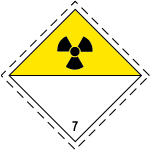
ADG label required
- HAZCHEM
- No information
- UN Number
- UN2910
- Proper shipping name
- Toxic solid, inorganic, n.o.s. (Bis(acetato-O)dioxouranium dihydrate)
- Transport hazard class
- 7
- Packing group
- II
- Environmental hazard
- No Information
- Special precautions for users
- No Information
- Additional information
- Radioactive material, excepted package-limited quantity of material ·
- ADR 2910 RADIOACTIVE MATERIAL, EXCEPTED PACKAGE LIMITED QUANTITY OF MATERIAL ·
- IMDG, IATA RADIOACTIVE MATERIAL, EXCEPTED PACKAGE - LIMITED QUANTITY OF MATERIAL
15. Regulatory Information
- Other Information
- Signal word Danger
- Hazard-determining components of labeling:
- Uranyl Magnesium Acetate
- Hazard statements
- Toxic if swallowed or if inhaled.
- May cause damage to organs through prolonged or repeated exposure.
- Precautionary statements
- Do not breathe dust/fume/gas/mist/vapours/spray.
- Wash thoroughly after handling.
- Do not eat, drink or smoke when using this product.
- Use only outdoors or in a well-ventilated area.
- If swallowed: Immediately call a poison center/doctor.
- Specific treatment (see on this label). Rinse mouth.
- IF INHALED: Remove person to fresh air and keep comfortable for breathing. Call a poison center/doctor.
- Wash contaminated clothing before reuse.
- Use water spray to extinguish.
- Use foam to extinguish.
- Use fire-extinguishing powder to extinguish.
- Use carbon dioxide to extinguish.
- Store in a well-ventilated place. Keep container tightly closed. Store locked up.
- Dispose of contents/container in accordance with local/regional/national/international regulations. · Chemical safety assessment:A Chemical Safety Assessment has not been carried out.
16. Other Information
- SDS preparation date
- 2 March 2026
- References
- /chrome-extension://efaidnbmnnnibpcajpcglclefindmkaj/https://www.emsdiasum.com/docs/technical/msds/22500.pdf Safety Data Sheet Uranyl Magnesium Acetate 06/09/2022
- chrome-extension://efaidnbmnnnibpcajpcglclefindmkaj/https://www.tedpella.com/SDS_html/19481_sds.pdf Ted Pella Safety Data Sheet 31/08/2017